 ZOOMRY

Quick answer: A truck unloader is a drive-over receiving hopper that lets trucks discharge bulk material directly into a conveyor system. A hopper feeder is a feeding device that controls material flow from a stockpile, loader, or truck into a downstream conveyor. Many terminals use both — the truck unloader receives, the hopper feeder regulates. The choice depends on whether your priority is fast truck turnaround, controlled feed rate, or both.
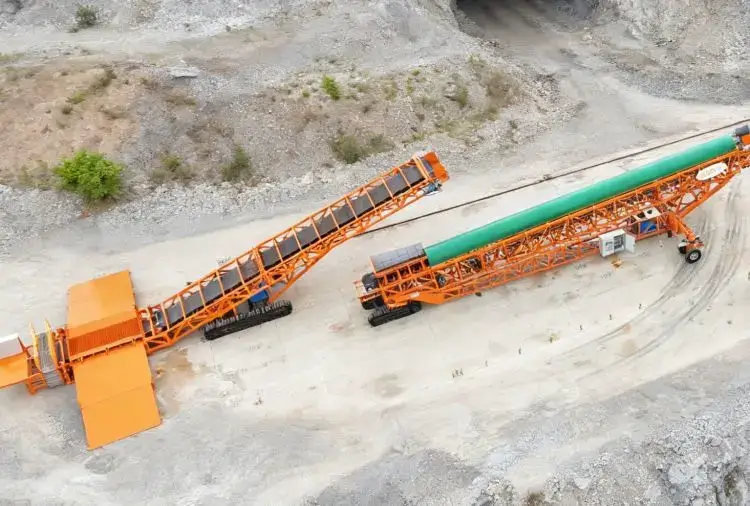
Core Functional Difference
A truck unloader is built around a drive-over hopper. Trucks drive onto the ramp, discharge material through the hopper, and the integrated conveyor moves it to the next stage. ZOOMRY truck unloaders are available in wheeled (ZRLS) and tracked (ZRLD) configurations, with 2-ramp or 4-ramp layouts, and standard capacities from 200 to 1,800 t/h.
A hopper feeder is a feeding device, not a receiving device. It accepts material from a truck, loader, or stockpile and controls the discharge rate onto a downstream conveyor. ZOOMRY hopper feeders cover four configurations — Static (HF-ST), Low Feed (HF-LF), Tracked (HF-TR), and Heavy Duty (HF-HD) — with hopper capacities from 5 to 24 m³ and feed rates from 800 to 3,000 TPH.
In short: the truck unloader is the entry point; the hopper feeder is the flow controller.
Key Differences at a Glance
| Comparison Factor | Truck Unloader | Hopper Feeder |
|---|---|---|
| Primary function | Receive trucks and discharge to conveyor | Control feed rate to downstream conveyor |
| Truck interaction | Truck drives over the hopper | Truck or loader discharges into hopper |
| Standard capacity | 200–1,800 t/h (custom up to 3,000 t/h) | 800–3,000 TPH |
| Hopper capacity | 3.5–5.7 m wide receiving area | 5–24 m³ |
| Mobility | Wheeled (ZRLS) or tracked (ZRLD) | Static, wheeled, or tracked |
| Ramp options | 2 or 4 truck ramps | Not applicable |
| Best suited for | Fast truck turnaround, high-volume receiving | Controlled feed, blending, surge protection |
| Typical pairing | Feeds into belt conveyor or hopper feeder | Feeds into belt conveyor, stacker, or shiploader |
When a Truck Unloader Makes Sense
- High truck volume: Terminals receiving 30+ trucks per hour need fast, drive-over receiving.
- Reduced loader dependency: A truck unloader eliminates the wheel loader that would otherwise push material into a hopper.
- Port and barge loading: ZOOMRY crawler truck unloaders feed directly into mobile ship loaders for truck-to-ship transfer.
- Temporary or mobile operations: Wheeled and tracked units relocate without civil works.
- Aggregate, sand, grain, and coal receiving: Standard configurations cover these materials at 200–1,800 t/h.
ZOOMRY project data: In a 2025 port terminal project, a ZRLD-TU1800 tracked truck unloader reduced truck turnaround time by 35% compared with a fixed receiving hopper with wheel loader assistance.
When a Hopper Feeder Makes Sense
- Controlled feed rate: When the downstream conveyor or stacker requires a steady, regulated feed.
- Blending and surge protection: The hopper acts as a buffer between intermittent truck arrivals and continuous conveying.
- Low-feed height: ZOOMRY HF-LF low feed hopper feeder accepts material from small dump trucks at feed heights as low as 1.2–1.5 m.
- Heavy-duty mining feed: The HF-HD handles 12–24 m³ and up to 3,000 TPH for continuous mining and crushing circuits.
- Integration with stackers and shiploaders: A hopper feeder is often the link between truck receiving and mobile stacking or ship loading.
ZOOMRY project data: In a 2024 aggregate quarry project, an HF-HD heavy duty hopper feeder with a 24 m³ hopper and 3,000 TPH capacity stabilized feed to a radial telescopic stacker, reducing stacker downtime caused by uneven material flow by 28%.
Can You Use Both Together?
Yes — and many ZOOMRY projects do.
A typical layout:
- Truck unloader receives trucks at 1,800 t/h and discharges to a belt conveyor.
- Hopper feeder receives material from the conveyor or directly from loaders, regulates the flow to 1,000 TPH, and feeds a stacker or shiploader.
- Downstream equipment — radial stacker, telescopic stacker, or mobile shiploader — operates at a stable, controlled feed rate.
This combination reduces truck turnaround time, eliminates wheel loader re-handling, and protects downstream equipment from surge loads.
Configuration Options
Truck unloaders and hopper feeders are available in several configurations to match terminal conditions.
- Wheeled truck unloader (ZRLS): Fast relocation on paved quays and yards.
- Tracked truck unloader (ZRLD): Soft ground, unpaved yards, and temporary docks.
- 2-ramp and 4-ramp layouts: 2-ramp for lower upfront investment; 4-ramp for higher truck throughput.
- Static hopper feeder (HF-ST): Fixed installation for stable, long-term feed.
- Low feed hopper feeder (HF-LF): Low-level rear feeding from small dump trucks.
- Tracked hopper feeder (HF-TR): Mobile feed for complex ground conditions.
- Heavy duty hopper feeder (HF-HD): 12–24 m³, up to 3,000 TPH for mining and crushing.
Key Selection Factors
- Truck volume per hour: High volume favors a 4-ramp truck unloader.
- Feed control requirement: Downstream equipment that needs steady feed favors a hopper feeder.
- Ground conditions: Soft or unpaved ground favors tracked configurations.
- Material type: Abrasive materials require wear liners and heavy-duty components.
- Project timeline: Mobile units deploy in months; fixed hopper feeders may require civil works.
- Integration: Confirm compatibility with existing conveyors, stackers, or shiploaders.
Frequently Asked Questions
Can a truck unloader replace a hopper feeder?
Not directly. A truck unloader receives trucks; a hopper feeder controls feed rate. Some truck unloaders include a small hopper and feeder section, but for high-capacity or precision feeding, a separate hopper feeder is recommended.
How much does a truck unloader cost compared to a hopper feeder?
A wheeled 2-ramp truck unloader typically has a lower upfront cost than a heavy duty hopper feeder with a 24 m³ hopper. Final cost depends on capacity, mobility, wear protection, and control system.
What is the maximum capacity of a ZOOMRY truck unloader?
Standard ZOOMRY truck unloaders cover 200–1,800 t/h. Custom configurations up to 3,000 t/h can be evaluated for specific projects.
Can a hopper feeder handle sticky or wet material?
Yes, with the right liner and hopper design. ZOOMRY hopper feeders can be supplied with wear-resistant and anti-stick liners for wet or sticky materials.
What is the difference between a hopper feeder and a belt feeder?
A hopper feeder is a complete system — hopper, feeder, and discharge conveyor. A belt feeder is the feeding mechanism inside the hopper feeder. ZOOMRY hopper feeders can be supplied with belt or chain plate feeding.
Related Products
Drive-over receiving system for ports, mines, and quarries
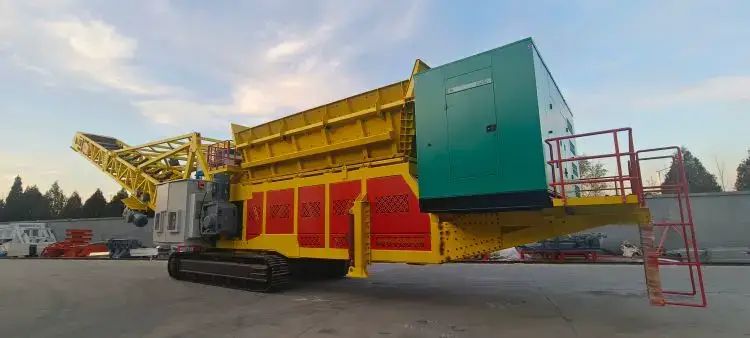
Static, low feed, tracked, and heavy duty configurations

Quay-traveling loader for multi-berth operations
Industry Applications
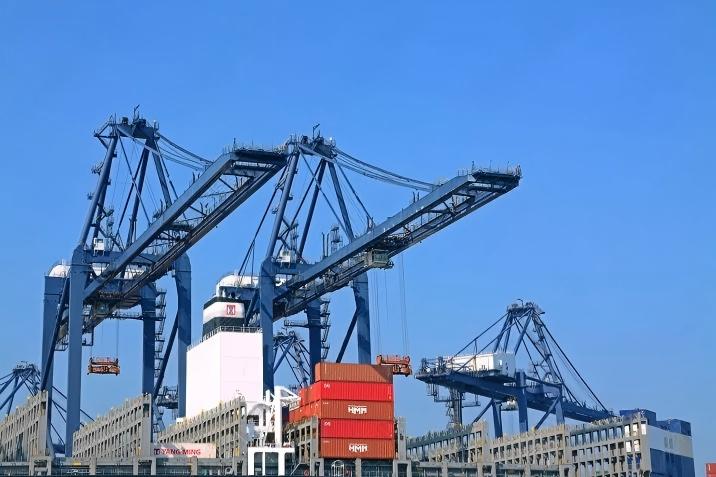
Truck-to-ship and terminal receiving solutions
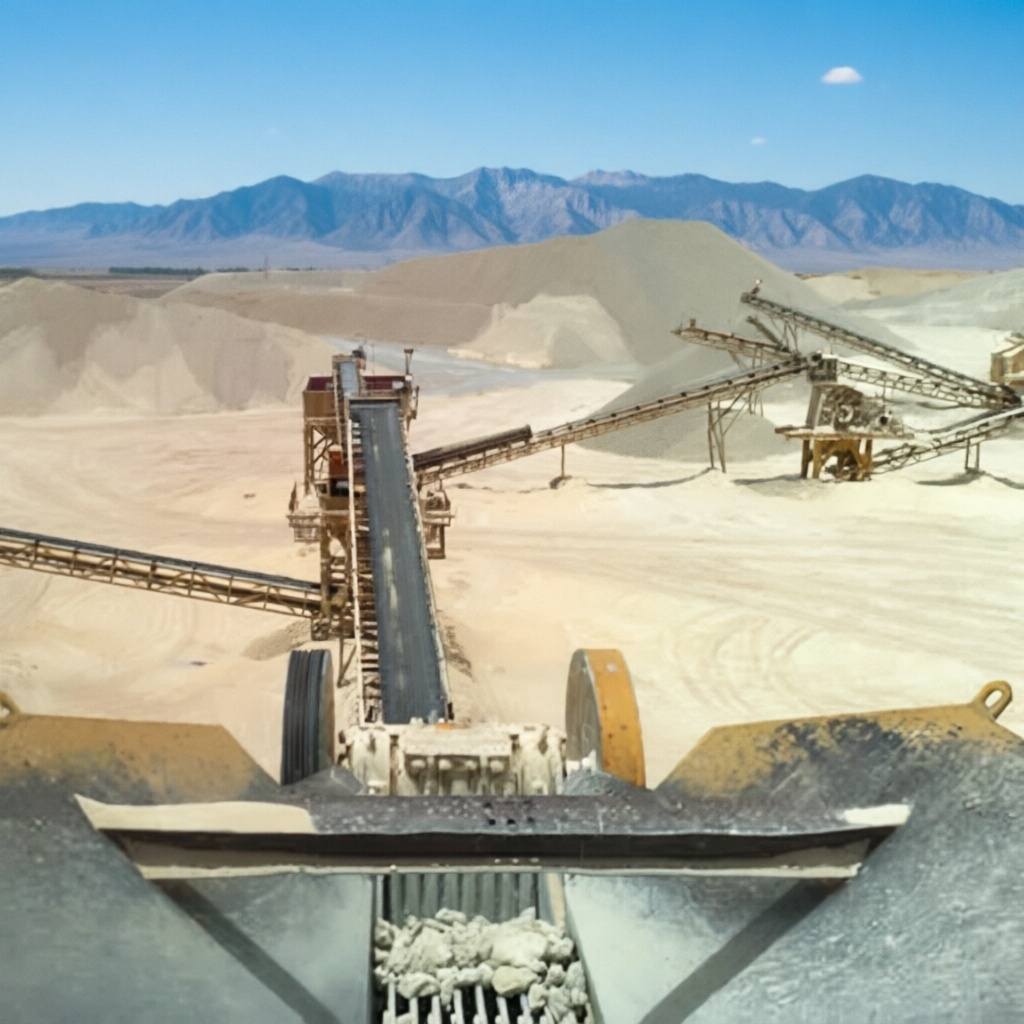
Mobile receiving and feeding for quarry operations
Choosing Between a Truck Unloader and a Hopper Feeder?
Share your truck volume, material type, ground conditions, and downstream equipment. ZOOMRY can help determine whether a truck unloader, hopper feeder, or both fit your operation.
Contact Us →