 ZOOMRY

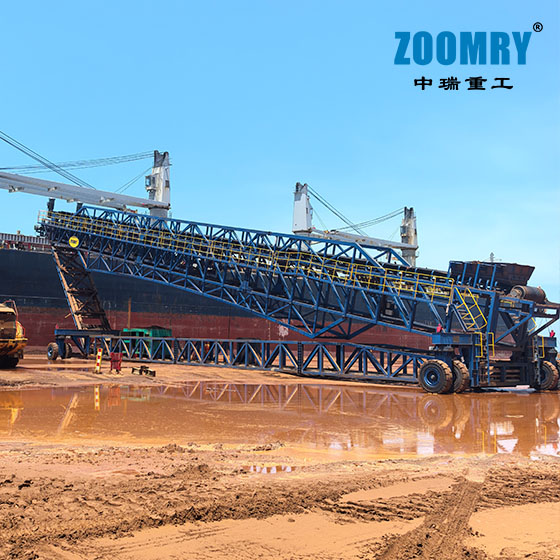
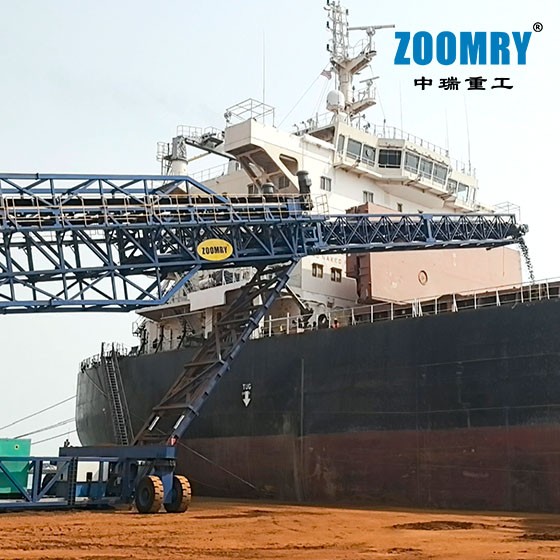
The difference between a mobile ship loader and an all-travel mobile shiploader lies in how the machine moves along the quay. A standard mobile ship loader is designed for flexible loading and can be relocated between positions, but it usually requires external towing or limited self-propulsion. An all-travel mobile shiploader is built to travel continuously along the dock under its own power, serving multiple berths or hatches without repositioning the vessel or relying on external towing equipment.
Core Functional Difference
A mobile ship loader is a self-contained bulk loading machine that can be moved between loading positions. Most models use wheeled or tracked undercarriages and are either towed by a terminal tractor or driven at low speed for short repositioning. Once in position, the boom slews, luffs, and telescopes to load the vessel.
An all-travel mobile shiploader is a specialized type of mobile ship loader engineered for continuous travel along the quay. It features a robust self-propelled undercarriage that allows the entire machine to move parallel to the berth while loading, covering multiple hatches or even multiple berths without moving the ship.
Key Differences at a Glance
| Comparison Factor | Mobile Ship Loader | All-Travel Mobile Shiploader |
|---|---|---|
| Primary movement | Repositioned between fixed loading points | Travels continuously along the quay |
| Travel method | Towed or limited self-propulsion | Full self-propelled travel along the dock |
| Berth coverage | One or two hatches per setup | Multiple hatches or multiple berths |
| Ship repositioning | Often required for full loading | Usually not required |
| Typical undercarriage | Wheeled or tracked | Heavy-duty wheeled with travel drives |
| Best for | Single-berth or occasional multi-position use | Multi-berth terminals and high vessel utilization |
| Typical capacity | 100–3,500 t/h | 100–3,500 t/h |
When a Standard Mobile Ship Loader Makes Sense
A conventional mobile ship loader is the practical choice when the terminal has relatively simple loading requirements.
- Single primary berth: When most vessels are loaded at one dedicated position, the extra travel capability of an all-travel machine is unnecessary.
- Lower capital budget: Standard mobile units are generally less expensive than full all-travel configurations.
- Occasional repositioning: If the machine only needs to move a few times per month, towing or short self-propelled moves are acceptable.
- Mixed cargo or temporary terminals: Flexible mobile loaders work well at multi-purpose or seasonal facilities.
When an All-Travel Mobile Shiploader Makes Sense
An all-travel mobile shiploader is selected when continuous quay mobility delivers clear operational advantages.
- Multi-berth or long quay operations: The machine can travel between loading positions without waiting for a terminal tractor.
- High vessel turnaround pressure: Eliminating ship shifting or multiple machine setups reduces total loading time.
- Limited quay space or no rail infrastructure: All-travel units avoid the need for fixed rails or multiple fixed loaders.
- Frequent hatch changes: The loader can move along the ship while the boom trims each hatch in sequence.
Capacity and Configuration Range
Both standard mobile ship loaders and all-travel models from ZOOMRY cover the same core capacity range of 100–3,500 t/h. Boom lengths typically range from 33 m to 67 m, covering vessels from barge and Handysize up to Capesize class. The main difference is not in conveying capacity but in the undercarriage and travel system design.
Key Selection Factors
- Number of berths or hatches to be served: More positions favor all-travel designs.
- Quay length and surface condition: Long, paved quays suit all-travel wheeled machines.
- Vessel scheduling intensity: High-frequency or multi-hatch loading benefits from continuous travel.
- Available towing equipment: If terminal tractors are limited, self-propelled all-travel units reduce dependency.
- Budget versus operational flexibility: All-travel machines cost more but can replace multiple fixed or semi-mobile units.
Frequently Asked Questions
Is an all-travel mobile shiploader the same as a radial telescopic shiploader?
No. “Radial telescopic” refers to the boom functions (slewing and telescoping). “All-travel” refers to the undercarriage’s ability to drive the entire machine along the quay. Many all-travel machines also have radial telescopic booms, but the two terms describe different features.
Can a standard mobile ship loader be upgraded to all-travel?
In most cases, no. All-travel capability requires a specifically designed undercarriage, drive system, and structural reinforcement. It is usually more practical to select the correct configuration at the initial purchase.
Which type is better for Capesize vessels?
Both types can handle Capesize vessels when equipped with sufficient boom length and capacity. The decision depends more on whether the terminal needs the loader to travel along a long quay or multiple berths while loading.
Do all-travel shiploaders need rails?
No. ZOOMRY all-travel mobile shiploaders use rubber-tired wheeled undercarriages and do not require rails. They travel directly on the paved quay surface.
Related Products
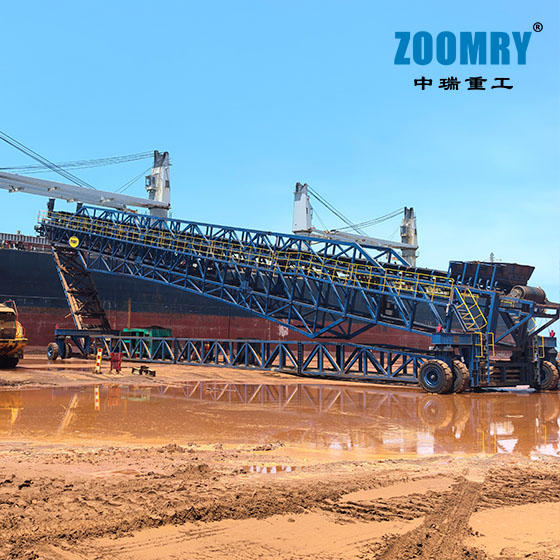
Flexible bulk loading for ports and terminals
Self-propelled travel along the quay for multi-berth loading
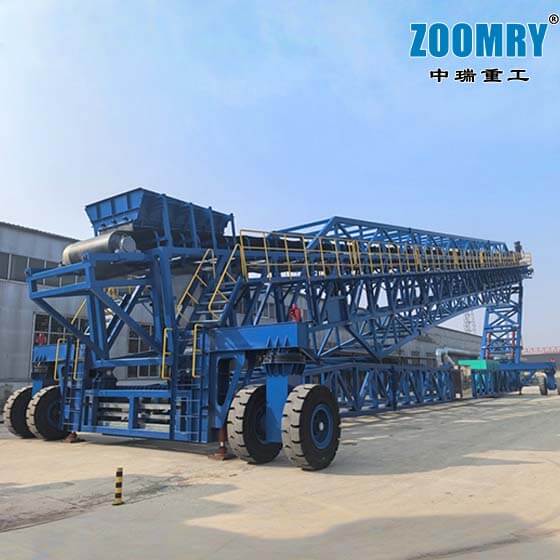
Crawler mobility for unpaved quays and temporary docks
Industry Applications
Efficient ship loading for coal, ore, grain and fertilizer
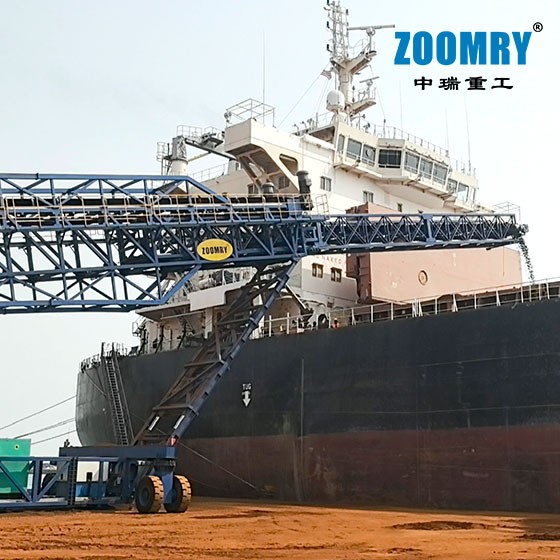
High-capacity loading for iron ore and coal export
Need Help Choosing Between a Mobile Ship Loader and an All-Travel Model?
Share your quay length, vessel range, and loading capacity requirements. ZOOMRY can help determine whether a standard mobile ship loader or an all-travel configuration fits your terminal best.
Contact Us →