 ZOOMRY

The difference between a grasshopper conveyor and a portable conveyor lies in how each machine is designed to move, how far it can transfer material, and how quickly it can be relocated. A grasshopper conveyor is a modular, wheel-mounted conveyor system that links multiple sections into a long, flexible transfer line — it moves material over distance across a site. A portable conveyor is a single, self-contained conveyor unit — typically shorter, lighter, and designed to be moved frequently between small stockpiles or loading points. Both handle bulk material, but they solve different problems: one prioritizes reach, the other prioritizes mobility.
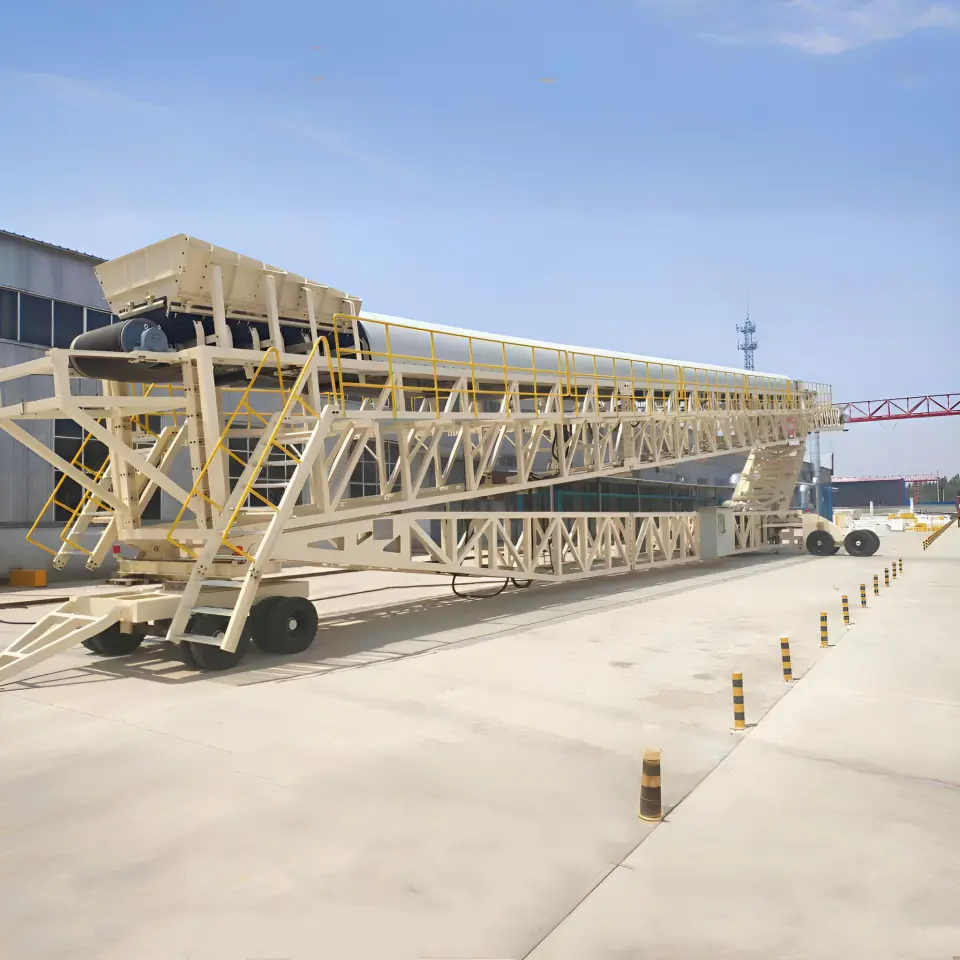
Core Functional Difference
A grasshopper conveyor is built from multiple linked conveyor sections mounted on wheeled frames. Each section can be towed independently, and the sections connect to form a single long transfer line. This modular design lets the conveyor follow the working face, extend as the pile grows, or be reconfigured as site conditions change. The key advantage is transfer distance: a grasshopper conveyor can span hundreds of meters by adding sections.
A portable conveyor is a single, compact conveyor unit with its own frame and wheels. It is designed to be moved frequently and set up quickly, often by a single operator. Its strength is not distance but flexibility at short range — moving material from a truck, loader, or crusher to a nearby stockpile or bin. Where a grasshopper conveyor builds a line, a portable conveyor handles a single transfer point.
Key Differences at a Glance
| Comparison Factor | Grasshopper Conveyor | Portable Conveyor |
|---|---|---|
| Structure | Multiple linked modular sections | Single self-contained unit |
| Transfer distance | Long — extends by adding sections | Short — single transfer point |
| Relocation | Sections towed individually or as a train | Moved as one unit, often by one operator |
| Setup time | Longer — sections must be aligned and connected | Fast — ready to run after positioning |
| Typical use | Site-wide transfer, stockpile lines, heap leach | Truck unloading, small stockpiles, bins |
| Stockpile strategy | Builds long, continuous piles along a line | Builds small, localized piles at one point |
| Typical capacity | 200–1,500 t/h depending on belt width | 50–500 t/h depending on belt width |
When a Grasshopper Conveyor Makes Sense
Grasshopper conveyors are selected when material must move across a site over distance, or when the transfer line needs to grow and change with the operation.
- Long-distance site transfer: When material must move from a pit, crusher, or unloading point to a distant stockpile, linked sections span the distance without trucks.
- Growing or shifting stockpiles: Sections can be added or repositioned as the pile extends, keeping the discharge point close to the working face.
- Heap leaching and stacking: Modular sections follow the leach pad as it expands, placing ore where it is needed.
- Reducing truck traffic: A grasshopper line replaces short-haul trucking, cutting fuel, labor, and dust.
When a Portable Conveyor Makes Sense
Portable conveyors are selected when the job is short-range, frequent, and needs to be set up fast.
- Truck unloading: A portable conveyor under a truck hopper moves material to a nearby stockpile or bin quickly.
- Small or scattered stockpiles: When material is stored in several small piles, one portable conveyor can serve each in turn.
- Frequent relocation: Lightweight frames and wheels let one operator move and set up the conveyor without support equipment.
- Temporary or rental jobs: Portable conveyors suit short projects, seasonal operations, or sites where permanent conveyors are not practical.
Combined Use: Grasshopper and Portable Conveyors Together
On many sites, the two work as a system. A portable conveyor handles the short transfer from a truck or loader, feeding a grasshopper conveyor line that carries material across the site. This combination keeps the short-range flexibility of a portable unit and the long-range reach of a modular line.
Mobility Options
Both conveyor types are available in several mobility configurations:
- Wheel-mounted: For prepared surfaces and frequent towing between points.
- Tracked: For soft ground, unpaved yards, and sites where low ground pressure is required.
- Fixed-frame: For semi-permanent installations where the conveyor stays in one position for a long period.
Capacity and Belt Width
Grasshopper conveyors are specified by belt width, section length, and drive power. Portable conveyors are specified by belt width, unit length, and discharge height. Grasshopper conveyor capacities typically range from 200 to 1,500 t/h, while portable conveyors typically range from 50 to 500 t/h, depending on belt width, material characteristics, and drive configuration.
Key Selection Factors
- Transfer distance: Long distance favors grasshopper; short distance favors portable.
- Relocation frequency: Frequent moves favor portable; longer setup favors grasshopper.
- Stockpile layout: Long, continuous piles favor grasshopper; small, scattered piles favor portable.
- Site conditions: Soft or uneven ground may require tracked undercarriages for either type.
- Integration: Both types can be combined with stackers, hoppers, or truck unloaders.
Frequently Asked Questions
Can a grasshopper conveyor work as a portable conveyor?
A grasshopper conveyor is portable in the sense that each section is wheel-mounted and can be towed. However, it is designed as a linked system, not as a single short-range unit. For short transfers that need fast, repeated relocation, a dedicated portable conveyor is simpler and faster to set up.
Can a portable conveyor be linked into a longer line?
Some portable conveyors can be linked in series to extend reach, but the design is not optimized for long-distance transfer. Beyond a few units, alignment, transfer points, and stability become harder to manage. For long lines, a grasshopper conveyor system is the more practical choice.
Which type is better for heap leaching?
Heap leaching typically uses tracked or wheel-mounted grasshopper conveyor systems because the leach pad expands over time and the conveyor line must follow it. Portable conveyors can be used for short transfers on the pad, but the main transfer line is usually built from modular grasshopper sections.
Which type has higher capacity?
Grasshopper conveyors generally cover higher capacity ranges because they use wider belts and larger drive units. Portable conveyors cover lower capacity ranges, which suits their short-range, frequent-move role. Capacity is determined by belt width, material characteristics, and drive configuration rather than by the conveyor type alone.
Related Products
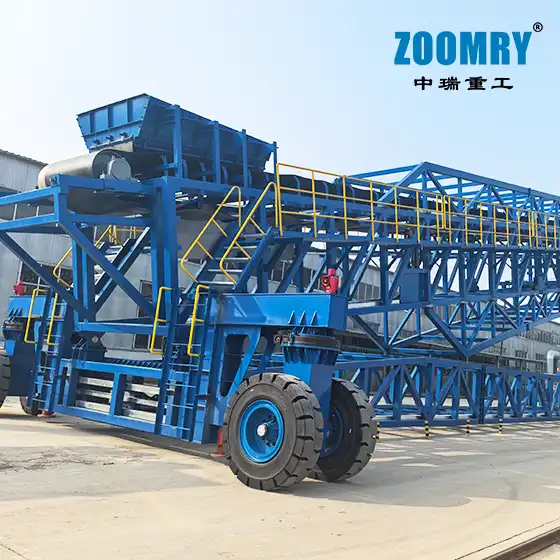
Extendable boom with 360° slewing for flexible stockpiling
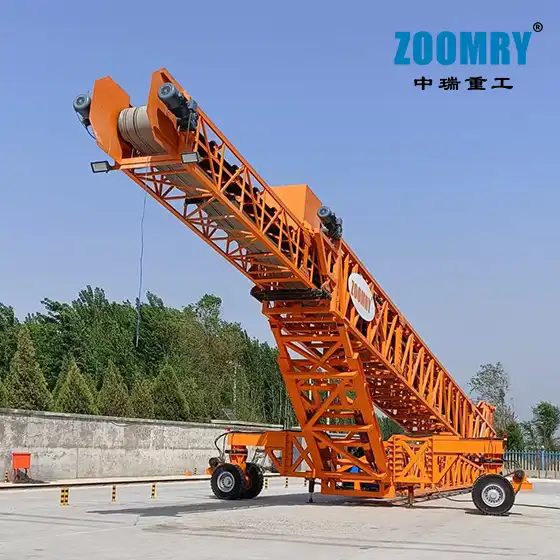
Radial slewing for fan-shaped stockpiles
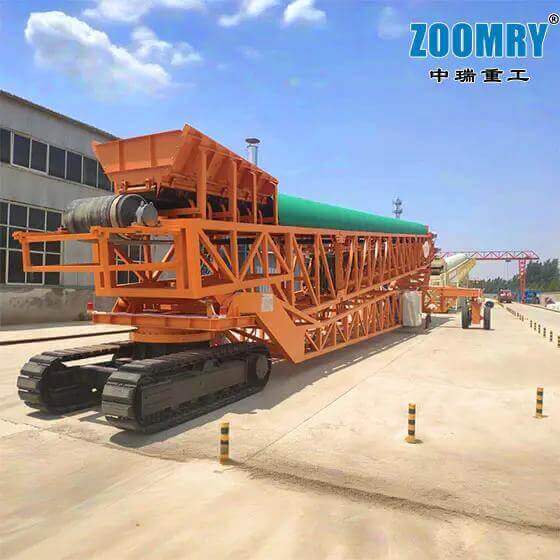
Crawler mobility for soft ground and heap leaching
Industry Applications
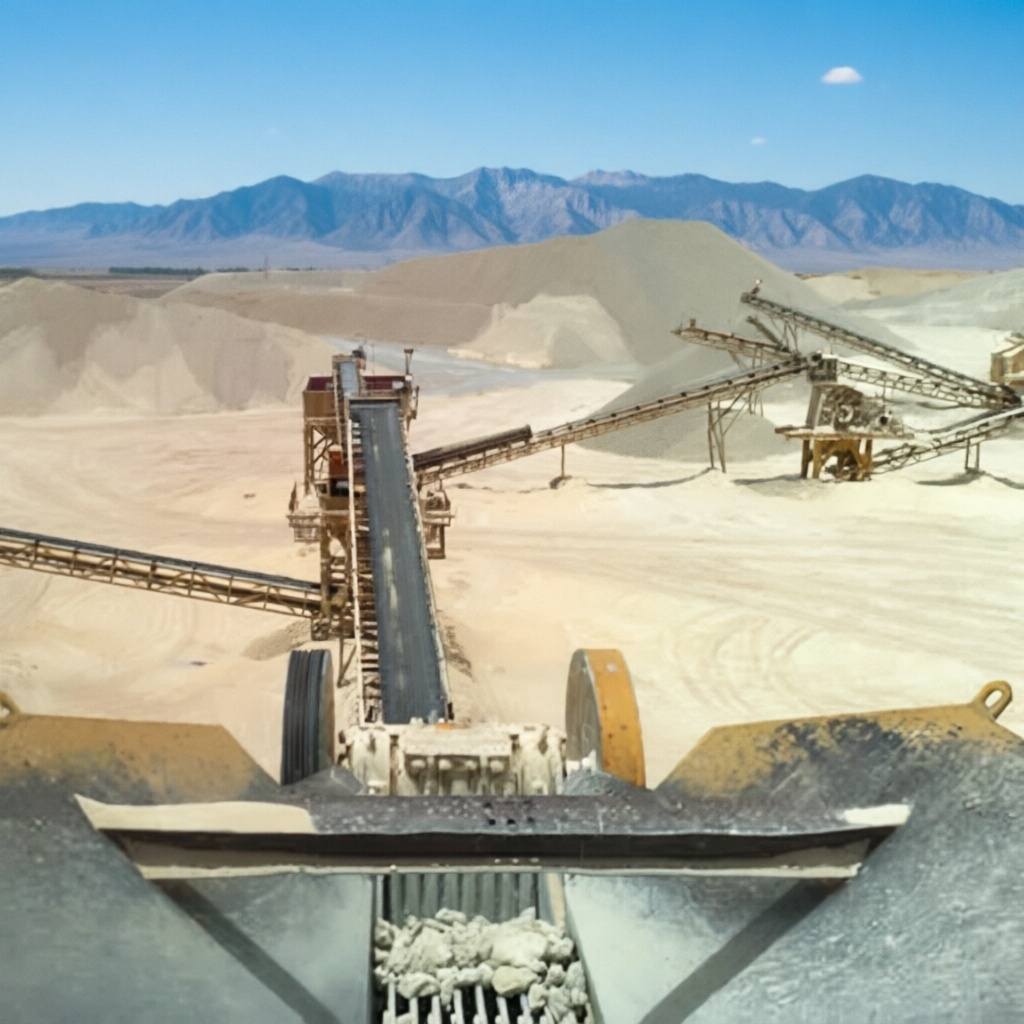
Stockpile management with grasshopper and portable conveyors
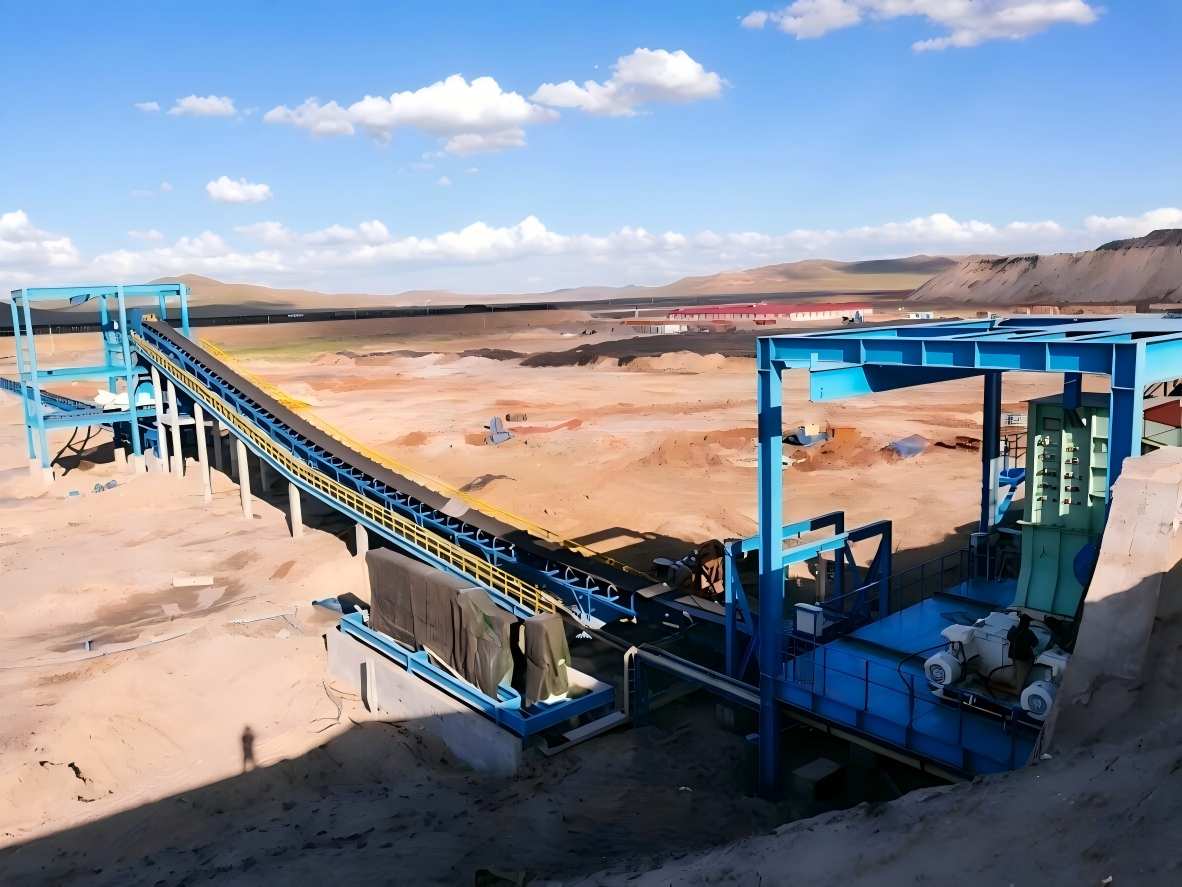
Material transfer for surface and underground mines
Choosing Between a Grasshopper Conveyor and a Portable Conveyor?
Share your transfer distance, material type, and relocation requirements. ZOOMRY can help determine whether a grasshopper conveyor, a portable conveyor, or a combined system fits your operation.
Contact Us →