 ZOOMRY

When selecting a mobile ship loader for port operations, the undercarriage configuration is one of the most critical decisions. The choice directly impacts mobility, setup time, maintenance costs, and overall loading efficiency. Three primary types dominate the market: wheel type, tracked (crawler) type, and rail-mounted type. Each offers distinct advantages and limitations, making them suitable for different operational environments.
1. Wheel Type (Self-Propelled) – The Industry Standard
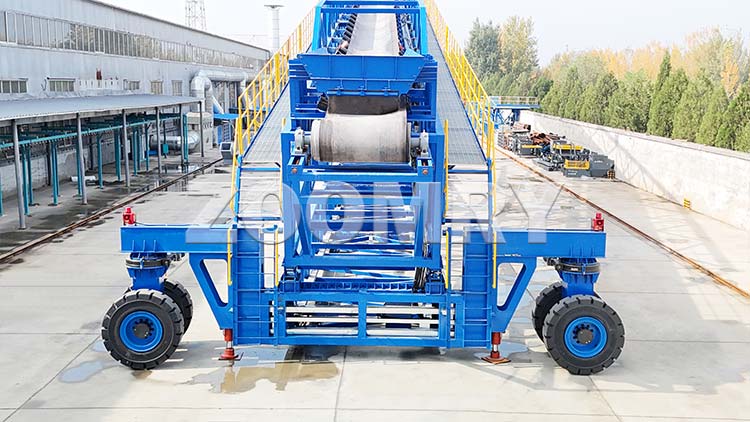
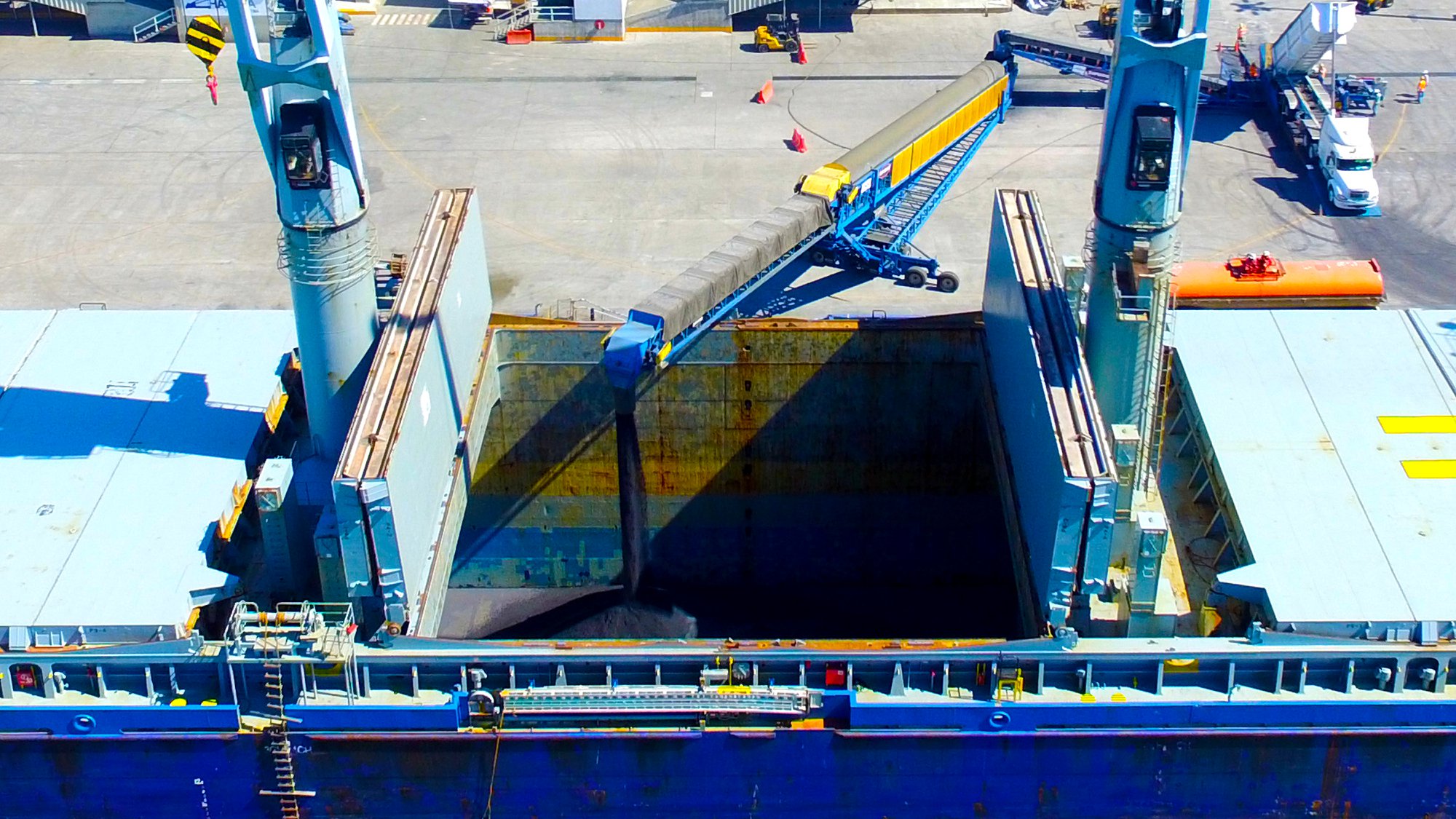
The wheel type is the most widely adopted configuration for mobile ship loaders, featuring four-wheel drive with hydraulic steering. It is designed for paved dock surfaces and offers a balanced combination of mobility, speed, and cost-effectiveness.
Key Advantages
- High travel speed: Wheel-type loaders can relocate quickly between loading points, reducing idle time between vessels.
- Lower maintenance costs: Compared to tracked systems, wheeled undercarriages have fewer moving parts and simpler maintenance requirements.
- Excellent maneuverability: Hydraulic steering enables precise positioning along the dock, even in confined spaces.
- Radial slewing capability: The ability to slew radially allows operators to adjust the discharge point without repositioning the entire machine.
- Cost-effective: Lower initial investment and operational costs compared to tracked alternatives.
Best Suited For
- Ports with hard-standing, paved quays
- High-frequency loading operations requiring rapid repositioning
- Operations where speed and cost efficiency are primary considerations
- Docks with good surface conditions and minimal obstructions
2. Tracked (Crawler) Type – The Terrain Master
Tracked undercarriages, often utilizing excavator-style chassis (such as those from SANY), provide superior traction and stability on challenging surfaces. While less common in standard port applications, they excel in demanding environments.
Key Advantages
- Superior ground pressure distribution: Tracks evenly distribute the machine's weight, reducing ground pressure to approximately one-third that of wheeled equivalents – critical for soft or unstable surfaces.
- Exceptional traction: The tracked design provides grip on uneven, muddy, or gravel surfaces where wheeled units would struggle.
- Enhanced stability: The wider footprint offers better stability during telescopic conveyor operation, especially in windy conditions.
- Versatile movement: Capable of forward/backward, inline, vertical, and radial movement, similar to wheeled types.
- Adaptability to harsh terrain: Can operate on temporary docking areas, unpaved surfaces, or construction sites without extensive site preparation.
Limitations
- Higher maintenance costs due to track wear and more complex running gear
- Slower travel speeds compared to wheeled units
- Higher initial investment
- Increased noise and vibration levels
Best Suited For
- Ports with unpaved or uneven docking areas
- Temporary loading operations where infrastructure is limited
- Remote mine sites or construction material loading terminals
- Environments with soft ground conditions (e.g., riverbanks, coastal areas)
3. Rail-Mounted Type – The Infrastructure-Dependent Option
Rail-mounted ship loaders operate on fixed rails along the quay, offering precise positioning and stable operation for high-frequency loading of same-sized vessels.
Key Advantages
- Precise positioning: Rail guidance ensures consistent alignment with vessel hatches.
- High operational stability: Fixed rail paths eliminate positioning errors.
- Suitable for high-frequency operations: Ideal for ports handling a consistent flow of similar vessel types.
- Lower per-cycle operating costs: Once rail infrastructure is in place, ongoing operating costs can be lower.
Limitations
- High capital investment: Rail infrastructure installation is expensive and time-consuming.
- Limited flexibility: Cannot easily adapt to different vessel sizes or docking positions.
- Infrastructure dependency: Requires dedicated rail systems along the entire operational quay.
- Reduced mobility: Cannot move to other areas of the port without additional rail infrastructure.
Best Suited For
- Ports with high-volume, consistent vessel traffic
- Dedicated bulk terminals handling a single material type
- Operations where precision and stability outweigh flexibility requirements
- Long-term, established port facilities with existing rail infrastructure
Comparative Summary
| Factor | Wheel Type | Tracked Type | Rail-Mounted Type |
|---|---|---|---|
| Infrastructure Requirement | Paved surface | Unpaved/uneven ground | Rail system |
| Mobility | High | High | Limited to rails |
| Travel Speed | Fast | Moderate | N/A |
| Ground Pressure | Medium | Very Low | Low |
| Maintenance Cost | Low | Medium-High | Medium |
| Initial Investment | Competitive | Higher | Very High |
| Operational Flexibility | Excellent | Excellent | Limited |
| Best For | Paved docks | Challenging terrain | High-volume, fixed routes |
Key Considerations for Selection
When choosing an undercarriage type, port operators should evaluate:
- Dock surface conditions: Paved vs. unpaved, load-bearing capacity, and surface evenness.
- Operational frequency: High-frequency operations may justify higher initial investment.
- Vessel diversity: Wide range of vessel sizes requires greater mobility and flexibility.
- Budget constraints: Balance between capital expenditure and long-term operating costs.
- Future expansion plans: Infrastructure investments should align with future operational needs.
- Maintenance capacity: Assess available maintenance resources and expertise.
Conclusion
The choice of undercarriage for a mobile ship loader is not a one-size-fits-all decision. Wheel-type loaders remain the preferred choice for most standard port operations, offering the best balance of cost, speed, and flexibility. Tracked types provide a compelling solution for challenging terrains and specialized applications, while rail-mounted systems deliver superior precision for high-volume, consistent operations where infrastructure investment is justified.
For most modern ports, the wheel-type configuration represents the optimal balance of operational efficiency and cost-effectiveness, which is why it has become the industry standard. However, each port's unique conditions should guide the final decision, ensuring the chosen configuration delivers maximum value over the equipment's lifecycle.
Need Help Choosing the Right Mobile Ship Loader?
Contact ZOOMRY for expert guidance on selecting the ideal undercarriage configuration for your port operations.
Contact Us Today