 ZOOMRY

How to select the right Conveyor Belt for your bulk material handling application — a complete guide comparing steel cord, fabric, solid woven, heat resistant, fire resistant, and chevron belt types.
Choosing the right conveyor belt is one of the most critical decisions in any bulk material handling project. The wrong belt specification leads to premature failure, unplanned downtime, material spillage, and increased total cost of ownership. Yet with so many belt types available — steel cord, fabric, solid woven, heat resistant, fire resistant, chevron, and more — how do you know which one is right for your application?
This guide walks you through the key factors in conveyor belt selection: carcass type, cover grade, operating environment, and material characteristics. With over 20 years of experience in bulk material handling, ZOOMRY has supplied belts to mining, cement, port, and power generation operations across 100+ countries.
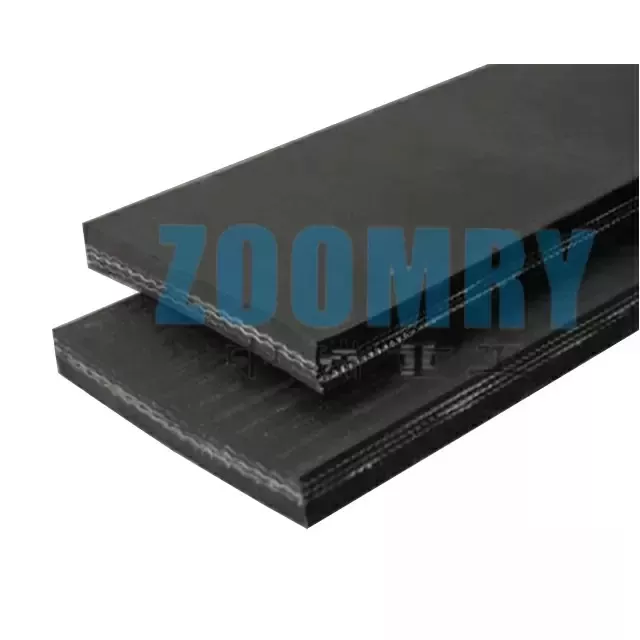
ZOOMRY Conveyor Belt Range — Steel Cord, Fabric, Solid Woven, Heat Resistant, Fire Resistant & Chevron Types
What Are the Main Types of Conveyor Belts?
Conveyor belts are classified primarily by their carcass construction — the internal skeleton that provides tensile strength — and by their cover compound, which protects the carcass and determines suitability for specific materials and environments.
| Belt Type | Carcass | Best For | Tensile Strength |
|---|---|---|---|
| Steel Cord Belt | Steel wire ropes | Long-distance, high-tension, high-speed | Up to 4,000 N/mm |
| EP Belt | Polyester warp + nylon weft | Medium-long distance, wet/humid conditions | EP-80 to EP-450 |
| NN Belt | Nylon warp + nylon weft | High impact, high elasticity | NN-100 to NN-300 |
| Solid Woven Belt | Single-layer woven fabric | Underground mining, fire safety mandatory | EP315 to EP1250 |
| Patterned/Chevron Belt | EP or NN with molded pattern | Inclined conveying up to 45° | 8-25 MPa |
How to Match Belt Carcass to Your Conveying Distance?
The conveying distance and elevation change determine the total belt tension, which directly affects which carcass type you need:
- Short to medium distance (under 2 km): Fabric belts (EP or NN) are the most economical choice. EP belts offer lower elongation for inclined conveyors; NN belts provide maximum impact absorption for heavy loading zones.
- Medium to long distance (2-10 km): Multiple-ply EP belts with higher tensile ratings (EP-250 to EP-450) handle moderate tensions. For inclined long-distance conveyors, EP belts are preferred due to their low elongation characteristics.
- Long distance (over 10 km): Steel cord belts are the standard choice. With tensile strength up to 4,000 N/mm and elongation below 0.25%, they minimize take-up travel and splice maintenance on overland conveyors.
How to Select the Right Cover Grade for Your Material?
The cover rubber compound determines how well the belt resists abrasion, heat, fire, oil, and chemical attack. Here's how to match cover grade to your material and environment:
| Material / Environment | Recommended Cover Grade | Belt Type |
|---|---|---|
| Coal, limestone, sand (standard abrasion) | 12-15 MPa | EP or NN fabric belt |
| Iron ore, granite, quartz (high abrasion) | 18-26 MPa | Wear-resistant EP or steel cord |
| Cement clinker, sinter, hot coke (up to 200°C) | Heat-resistant compound | Heat resistant belt (HR/SHR/UHR) |
| Underground coal, combustible materials | Flame-retardant, anti-static | Fire resistant belt (FR/FRU) |
| Chemicals, fertilizers, oils | Chemical/oil-resistant compound | Specialty EP belt with resistant cover |
| Inclined conveying (over 18°) | Patterned/chevron surface | Patterned belt or concave chevron |
EP Belt vs NN Belt: Which Fabric Belt Should You Choose?
Both EP and NN belts use fabric carcasses, but the fiber orientation creates distinct performance characteristics:
- EP Belt (Polyester-Nylon): Polyester warp fibers provide low elongation and high tensile strength. Nylon weft fibers provide troughability. EP belts are the preferred choice for most bulk handling applications — especially inclined conveyors, long-distance systems, and humid environments. Polyester resists moisture and mold growth, maintaining dimensional stability in outdoor installations.
- NN Belt (Nylon-Nylon): Nylon in both directions provides maximum elasticity and impact absorption. NN belts excel in applications with high impact forces at the loading point — such as primary crusher discharge conveyors. However, they exhibit higher elongation under sustained tension, requiring more take-up travel. Nylon absorbs moisture, so NN belts are less suitable for wet environments.
When Do You Need a Specialty Belt?
Underground Mining: Fire Resistant Belts
In underground coal mines, solid woven PVC/PVG belts are the mandatory choice. Compliant with ISO 340 (flame retardancy) and ISO 284 (antistatic), these belts self-extinguish when the ignition source is removed. For surface applications with combustible materials, fire resistant FR grade belts provide flame-retardant protection at a more economical price point.
High-Temperature Materials: Heat Resistant Belts
When conveying clinker, sinter, hot coke, or foundry sand, standard rubber covers harden and crack within months. Heat resistant belts in HR (T1), SHR (T2), and UHR (T3) grades handle material temperatures up to 200°C continuous. For extreme applications like red hot clinker direct from the cooler, UHR grade belts with EPDM-based compounds provide maximum thermal protection.
Steep Inclines: Patterned and Chevron Belts
Standard flat belts lose grip on inclines above 18°. Patterned conveyor belts with chevron, herringbone, or concave V-groove profiles prevent material rollback up to 45°. The pattern type and height should be matched to your material particle size and conveyor angle — ZOOMRY's engineering team provides expert specification guidance.
Related Industry Solutions
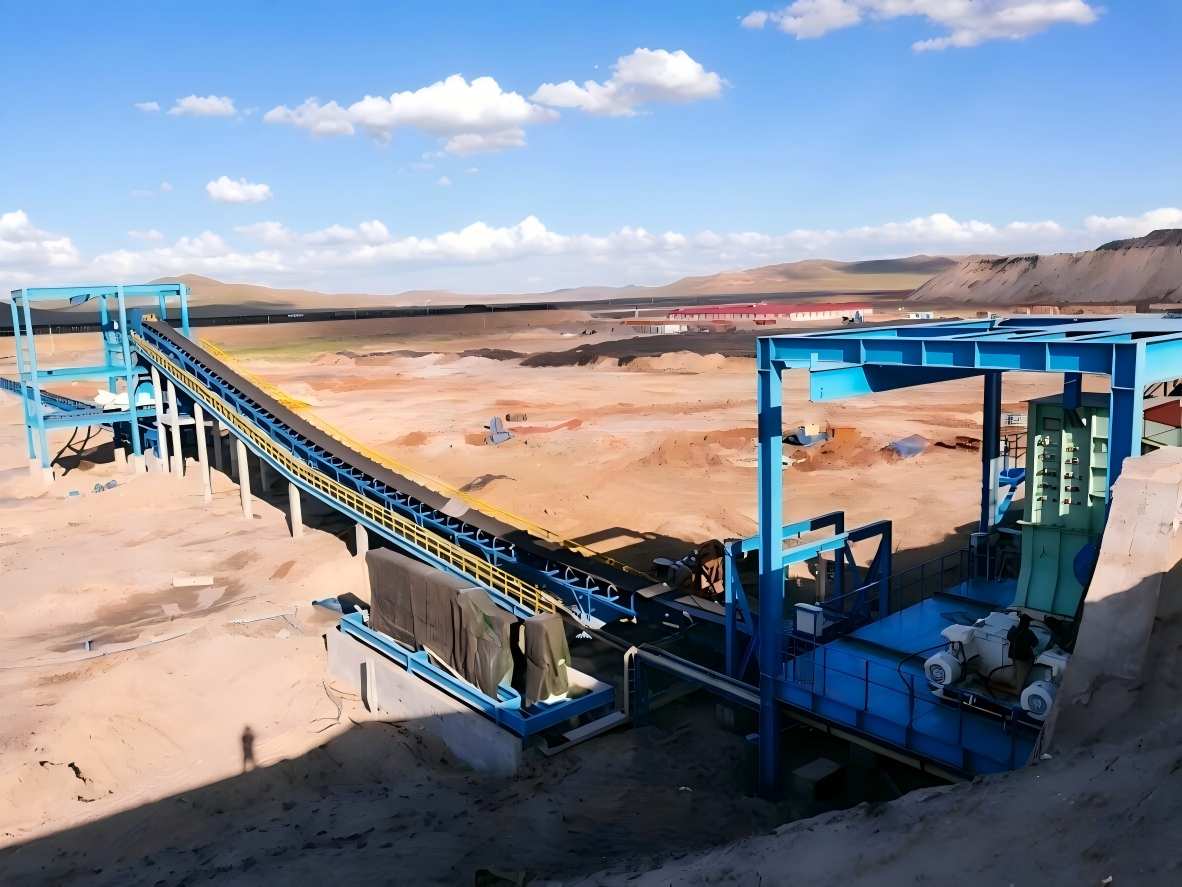
Mining Conveyor Solutions
Heavy-duty conveyor systems for surface and underground mining — long-distance curved belt conveyors, Pipe conveyors, and Bucket Wheel Stacker Reclaimers for abrasive ores and 24/7 operation. Steel cord belts up to ST4000 for overland distances exceeding 15 km.
Learn More →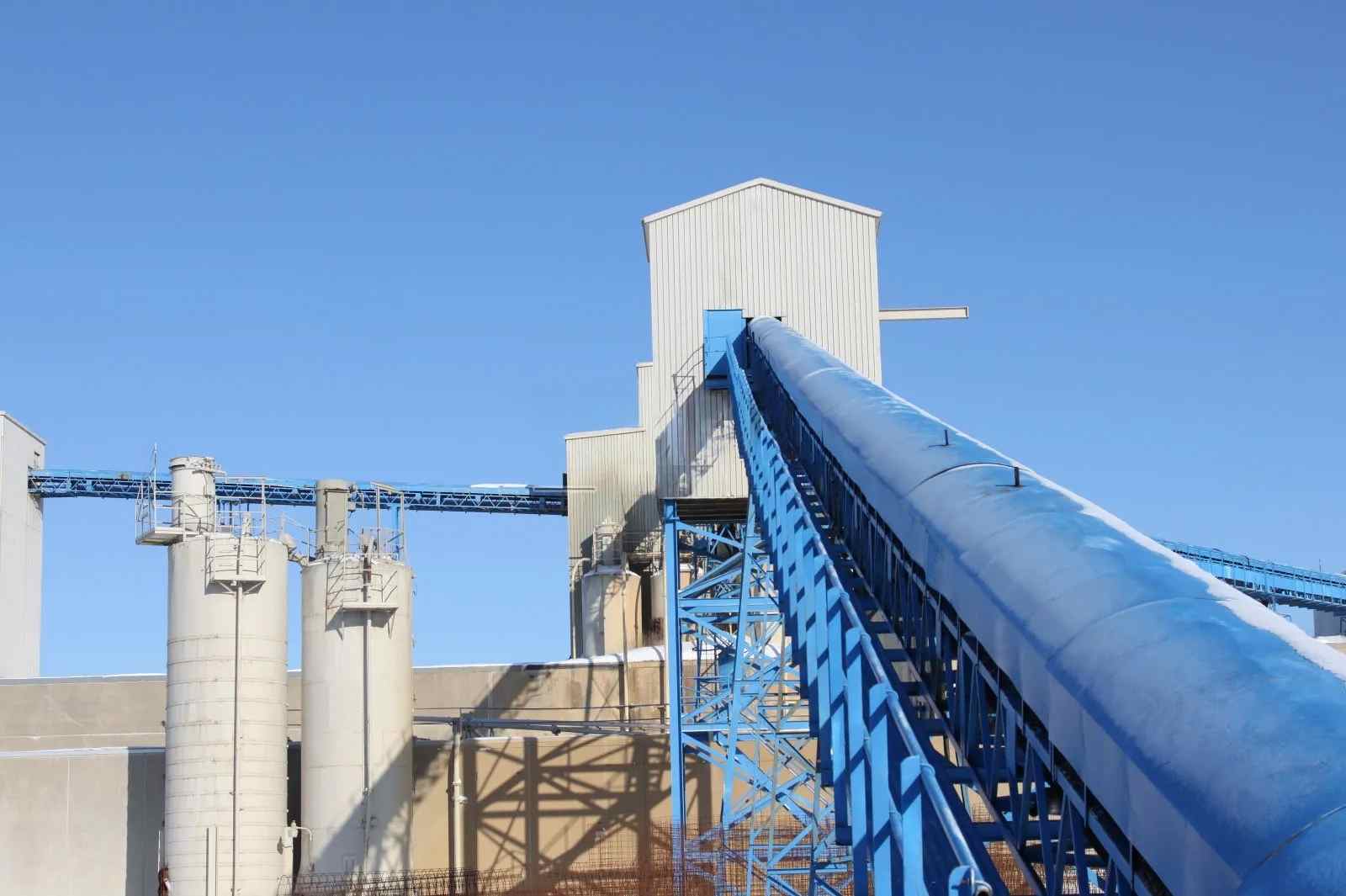
Cement & Clinker Conveyor Solutions
Complete conveyor systems for cement plants — long-distance curved belt conveyors for quarry-to-plant limestone transport, enclosed pipe conveyors for dust-free raw meal handling, and heat-resistant belts for clinker up to 200°C.
Learn More →Need Help Selecting the Right Conveyor Belt?
Contact ZOOMRY's engineering team for expert belt selection guidance — backed by 20+ years of experience across 100+ countries.
Contact Us Today