 ZOOMRY

Whether you're feeding crushed aggregates onto a belt conveyor system, loading bulk coal into a port stockyard, or transferring iron ore from trucks to a downstream processing line, the hopper feeder you choose directly determines your operation's throughput, reliability, and operating cost. But with configurations ranging from stationary hoppers bolted to concrete foundations to self-propelled tracked units that crawl across unpaved terrain, how do you decide which type fits your site? This guide compares ZOOMRY's four hopper feeder configurations — Heavy Duty, Low Feed, Tracked, and Static — across the metrics that matter most: capacity, mobility, feed method, and material compatibility.
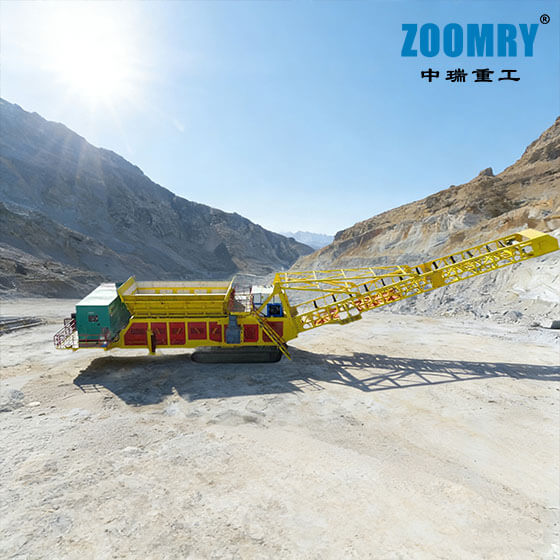
ZOOMRY hopper feeder series — four configurations for mining, port, and quarry applications
What Are the Four Main Types of Hopper Feeders?
A hopper feeder is the critical interface between batch delivery — dump trucks, wheel loaders, excavators — and continuous conveying. The right hopper feeder smooths out surge loads, filters oversize material through grizzly screens, and meters feed rate to match downstream belt capacity. ZOOMRY manufactures four distinct configurations, each optimized for different operating conditions:
| Hopper Feeder Type | Hopper Capacity | Max Capacity | Mobility | Best For |
|---|---|---|---|---|
| Heavy Duty Hopper Feeder | 12–24 m³ | 3,000 tph | Fixed / Wheeled | Mining, high-volume crushing circuits |
| Low Feed Hopper Feeder | 7–12 m³ | 800 tph | Wheeled | Wheel loaders, small dump trucks |
| Tracked Hopper Feeder | 7–15 m³ | 1,000 tph | Self-propelled crawler | Soft ground, remote port terminals |
| Static Hopper Feeder | 5–15 m³ | 1,000 tph | Fixed installation | Fixed conveyor lines, quarry stockyards |
Heavy Duty Hopper Feeder: When Throughput Is Everything
The Heavy Duty Hopper Feeder is engineered for operations where a hopper feeder with conveyor belt must handle continuous, high-volume feeding without pause. With 12–24 m³ hopper capacity and up to 3,000 tph throughput, it's the go-to choice for mining crusher feed stations and large-scale aggregate processing plants.
- Dual feeding options: Belt feeder or chain plate feeder — chain plate handles particle sizes up to 250mm
- 15–24m heavy-duty tilting arm: Feeds directly into tall downstream equipment
- Wear-resistant lining: Hardox or ceramic options for abrasive ores
- Ideal for: Iron ore, copper concentrate, limestone crushing circuits
Tracked Hopper Feeder: Self-Propelled Mobility for Difficult Terrain
When your operation spans unpaved port yards, soft ground mining sites, or temporary stockpile areas, a Tracked Hopper Feeder eliminates the need for concrete foundations and towing equipment. Its independent crawler mobility lets you reposition in minutes.
- 7–15 m³ hopper capacity: Up to 1,000 tph throughput
- Steel or rubber track options: Rubber for paved surfaces, steel for rocky terrain
- Optional 360° slewing: Feed multiple downstream conveyors from a single position
- Ideal for: Heap leaching operations, temporary port terminals, remote mining sites
Low Feed Hopper Feeder: Optimized for Wheel Loaders and Small Trucks
Not every site needs 3,000 tph. The Low Feed Hopper Feeder is designed specifically for operations where wheel loaders or small dump trucks are the primary feed source. Its defining feature is an ultra-low feed height — as low as 1.2–1.5m — so loaders can dump directly without a ramp.
- 7–12 m³ hopper capacity: Up to 800 tph throughput
- Feed height 1.2–1.5m: No ramp required for wheel loaders
- Handles particles up to 200mm: Suitable for aggregates and biomass
- Ideal for: Aggregate quarries, sand & gravel yards, port stacking operations
Static Hopper Feeder: Fixed Installation for Permanent Conveyor Lines
For permanent installations where the feed point never moves, a Static Hopper Feeder delivers reliable, low-maintenance performance. Fixed to a concrete foundation or mounted on a wheeled chassis for limited repositioning, it's the economical choice for dedicated processing lines.
- 5–15 m³ hopper capacity: Up to 1,000 tph throughput
- EP 500 belt with IP65 protection: Built for outdoor environments
- Seamlessly connects front-end loaders to belt conveyors: Reduces secondary handling
- Ideal for: Fixed quarry lines, port terminals with dedicated berths, cement plants
How to Select Your Hopper Feeder: Decision Matrix by Application
Use the table below to match your operating conditions with the right hopper feeder configuration. Each variable — material type, feed source, ground conditions, and throughput — pushes the decision toward a specific model.
| Your Operating Condition | Recommended Hopper Feeder | Why |
|---|---|---|
| Continuous 2,500+ tph mine output | Heavy Duty | Highest capacity, chain plate option for large lump sizes |
| Unpaved ground, frequent repositioning | Tracked | Self-propelled crawler, no towing equipment needed |
| Wheel loader is the primary feed source | Low Feed | Ultra-low 1.2m feed height, no ramp required |
| Permanent installation, fixed conveyor line | Static | Lowest upfront cost, minimal maintenance |
| Handling sticky nickel ore or wet coal | Heavy Duty or Tracked | Heated hopper walls available, anti-clogging grille |
| Feeding directly into a mobile ship loader | Tracked or Wheeled | Quick repositioning between berths, no fixed infrastructure |
How to Match a Hopper Feeder with Your Conveyor Belt System
A hopper feeder and conveyor belt function as a single integrated system — mismatching the two leads to spillage, belt damage, or underutilized capacity. Here are three critical rules for pairing them correctly:
- Belt Width Compatibility: The hopper discharge opening should never exceed 80% of the receiving belt width. For example, a hopper feeding a 1,400mm wide conveyor belt should have a discharge width no greater than 1,100mm to prevent side spillage during surge loads.
- Capacity Staging: The feeder's metered output should be 10–20% below the conveyor's maximum capacity. If the belt runs at 1,000 tph, set the hopper feeder's control gate to deliver 800–900 tph — this buffer absorbs surge loads when a truck dumps its full payload in seconds.
- Impact Zone Protection: The transfer point from hopper to conveyor belt is a high-impact zone. Install an impact bed beneath the loading point to protect the belt from puncture and extend its service life.
Frequently Asked Questions About Hopper Feeders
What's the difference between a hopper feeder and a conveyor feeder?
A hopper feeder uses a hopper (bin) to receive bulk material from trucks or loaders and discharges it onto a conveyor at a controlled rate via a belt, chain, or vibrating mechanism. A conveyor feeder is the broader category — including belt feeders, apron feeders, and vibrating feeders — that may or may not include a hopper. In practice, "hopper feeder" and "hopper conveyor" are often used interchangeably in quarry and mining contexts. The hopper type with a belt discharge is the most common configuration for port and aggregate applications.
What capacity hopper feeder do I need for a 1,200mm conveyor belt?
For a 1,200mm belt running at 2.0 m/s, typical capacity ranges from 800–1,200 tph depending on material density. Match this with a Low Feed Hopper Feeder (up to 800 tph) for moderate operations, or a Heavy Duty Hopper Feeder if you plan to run the belt at maximum throughput. Always specify the feeder's metered output 10–20% below the belt's rated capacity to accommodate surge loads.
Can a tracked hopper feeder operate on soft ground?
Yes. The Tracked Hopper Feeder is specifically designed for low ground pressure operation on unpaved surfaces. Steel tracks distribute the machine's weight across a wider contact area, preventing sinking in mud, sand, or soft soil. For extremely wet conditions common in tropical ports, wider track shoes are available to further reduce ground pressure.
Related Solutions for Your Material Handling Operation
Food-grade enclosed conveyor systems for gentle raw and refined sugar transport.

Enclosed dust-free conveying for combustible biomass materials with ATEX compliance.
Need Help Selecting the Right Hopper Feeder?
Tell us your material type, throughput target, and site conditions — our engineers will recommend the optimal hopper feeder and conveyor configuration for your operation.
Get a Custom Recommendation