 ZOOMRY

A mobile ship loader is a bulk-material handling machine designed to transfer dry bulk commodities, such as coal, grain, ore, and fertilizer, from a quayside feed point into vessel cargo holds. Depending on the selected travel arrangement and terminal layout, the equipment can serve multiple loading positions and vessel classes ranging from barges to Capesize vessels. Representative ZOOMRY configurations cover capacities from 800 to 3,500 t/h; final capacity, boom reach, and mobility features are confirmed for the specific terminal and cargo.
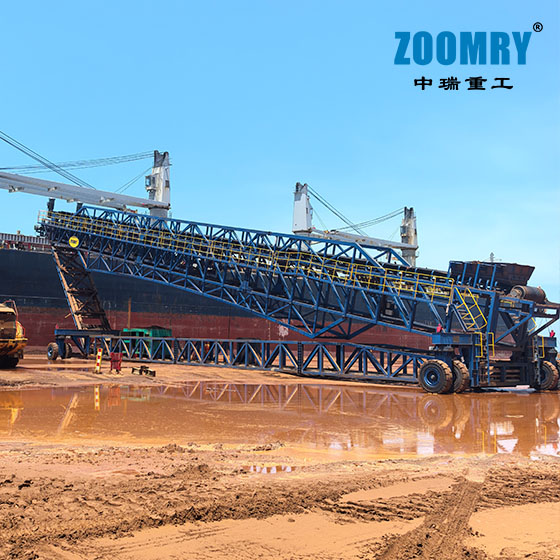
How a Mobile Ship Loader Works
A mobile ship loader receives bulk material from a quayside feeding system — typically a hopper feeder, truck unloader, or fixed belt conveyor — and transfers it through an elevating boom conveyor into the vessel's cargo hold. The machine combines several key functions in one unit:
- Boom conveying: A belt conveyor runs along the boom, carrying material from the receiving point to the discharge chute above the ship hatch.
- Telescopic extension: Many configurations feature a telescopic boom that extends and retracts to reach different hatch positions without repositioning the entire machine.
- Slewing and luffing: The boom slews horizontally and luffs vertically, allowing the operator to direct material flow across multiple hatch openings and trim the load evenly.
- Mobility system: Mobility arrangements may include wheeled, tracked, rail-based, or other project-specific travel systems.
- Dust suppression: Integrated spray systems and telescopic loading chutes help contain airborne dust during discharge into the cargo hold.
Control arrangements may include an operator cab, local controls, or remote-control options, depending on the project configuration.
Mobile Ship Loader Configurations
Mobile ship loaders are built in several configurations to match different port conditions and operational requirements. The three primary mobility types are:
Wheel-Mounted All-Travel Shiploaders
Wheel-mounted machines travel along the quay on rubber-tired undercarriages, moving between loading positions without rail infrastructure, subject to quay bearing capacity, travel route, and terminal safety requirements. This configuration is widely used at ports that serve multiple berths or require equipment redeployment during operations. The all-travel mobile shiploader configuration allows a single machine to serve several vessel positions along a quay, eliminating the need for dedicated loading infrastructure at each berth.
Tracked Shiploaders
Tracked configurations can be considered where ground conditions, mobility needs, and allowable ground pressure favor crawler travel. The tracked ship loader provides an alternative mobility solution in port environments where wheeled units may encounter traction or bearing capacity limitations.
Radial Telescopic Shiploaders
Radial telescopic configurations combine a slewing boom with telescopic extension, allowing the discharge point to cover a wide arc from a single feed position. This design is effective for loading vessels with multiple hatches, helping reduce repositioning between hatch locations. A radial telescopic shiploader can trim multiple holds from one station.
Capacity Range and Vessel Matching
Mobile ship loaders are sized by capacity, boom length, and belt width to match the vessel classes calling at a terminal. The table below shows representative configurations and their corresponding vessel matching.
| Configuration | Boom Length | Capacity | Belt Width | Vessel Class |
|---|---|---|---|---|
| ZRSL-33 | 33 m | 800 t/h | 800 mm | Barge / Handysize |
| ZRSL-40 | 40 m | 1,000 t/h | 1,000 mm | Barge / Handysize |
| ZRSL-45 | 45 m | 1,500 t/h | 1,200 mm | Handysize / Handymax |
| ZRSL-52 | 52 m | 2,000 t/h | 1,400 mm | Panamax |
| ZRSL-58 | 58 m | 3,000 t/h | 1,600 mm | Panamax / Capesize |
| ZRSL-67 | 67 m | 3,500 t/h | 1,600 mm | Capesize |
Capacity values are indicative and depend on material bulk density, particle size, moisture content, belt speed, conveyor inclination, loading arrangement, and final equipment configuration. Final vessel suitability depends on berth geometry, hatch dimensions, freeboard, tidal range, loading reach, and terminal operating requirements.
Common Bulk Materials Handled
Mobile ship loaders handle a wide range of dry bulk commodities. Material characteristics influence Conveyor Belt selection, chute design, and dust suppression requirements.
- Coal and coke: May require dust suppression at transfer points and discharge. A coal ship loader can be configured with sealed transfer chutes and integrated dust collection to support environmental compliance at export terminals.
- Iron ore: High-density and abrasive material that may require reinforced belts, wear-resistant liners, and impact protection at loading zones.
- Grain and oilseeds: Handling may require dust-explosion risk assessment and project-specific protection measures. Food-grade contact materials can be specified where required.
- Fertilizers: Corrosive materials that may require corrosion-resistant roller, chute, coating, and sealing selections.
- PKE and PKS: Palm kernel expeller and palm kernel shells may require sealed transfer and chute arrangements to help limit fines leakage and dust.
- Aggregates and minerals: Abrasive materials that may require wear protection on belts, chutes, and impact zones.
When a Mobile Ship Loader Makes Sense
Port and terminal operators select mobile ship loaders over fixed loading systems under several operational conditions:
- Multiple berths served by one machine: When a terminal loads vessels at several quay positions, a mobile unit can travel between them, reducing total equipment investment.
- No fixed loading infrastructure: For temporary operations, new terminals, or sites where rail-mounted loaders are not viable, mobile units may provide loading capability while potentially reducing permanent civil works compared with a fixed installation, subject to berth and foundation requirements.
- Short-term contracts or phased development: Mobile equipment can be redeployed as terminal operations evolve, protecting the capital investment if cargo flows shift.
- Mixed vessel sizes: A mobile loader with telescopic boom can serve small barges and larger bulk carriers from the same quay position.
- Constrained site conditions: Ports with limited space, tidal restrictions, or existing infrastructure that prevents fixed loader installation may benefit from the compact footprint of a mobile unit.
Feeding Options for Mobile Ship Loaders
A mobile ship loader requires a consistent feed source. Common feeding arrangements include:
- Truck unloader direct feed: A truck unloader receives material from dump trucks at the quayside and feeds the ship loader's receiving hopper directly. This arrangement enables truck-to-ship loading without intermediate stockpiling.
- Hopper feeder link: A mobile hopper feeder regulates material flow from loaders or trucks onto the ship loader's feed conveyor, providing a controlled material stream.
- Quayside belt conveyor: In terminals with existing conveying infrastructure, the ship loader receives material from a fixed belt conveyor running along the quay, with a traveling tripper or transfer point feeding the loader.
The feeding method affects overall system throughput, dust control requirements, and equipment coordination at the berth.
Project Applications
As a bulk material handling equipment manufacturer, ZOOMRY has delivered mobile ship loading systems for terminals handling a range of commodities. One representative application involved a specialized mobile ship loading system for a Southeast Asian port handling palm kernel expeller and palm kernel shells, where the system was designed for dust suppression and adapted to the terminal's tidal and space constraints.
Key Selection Factors
When evaluating a mobile ship loader for a port or terminal project, the following factors should be confirmed with the equipment manufacturer:
- Vessel dimensions and hatch layout: Boom length and telescopic reach must cover all hatch positions at the maximum vessel size the terminal expects to serve.
- Required loading rate: Capacity affects conveyor belt width, drive power, and overall machine dimensions.
- Material properties: Bulk density, particle size, moisture content, and abrasiveness influence belt selection, chute design, and wear protection.
- Quay bearing capacity: Wheel and track loading must be compatible with the quay structure.
- Environmental requirements: Dust suppression, noise limits, and spillage control may require enclosed transfer points and telescopic loading chutes.
- Power source: Diesel, electric, or dual-power configurations are available depending on terminal infrastructure and emissions requirements.
Frequently Asked Questions
What is the difference between a mobile ship loader and a fixed ship loader?
A mobile ship loader travels along the quay to serve multiple berths or loading positions. A fixed ship loader is installed at a dedicated berth, typically on rails or a fixed structure, and serves one loading location. Mobile units may require less permanent civil infrastructure and offer operational flexibility, while fixed systems are generally specified for terminals with very high sustained loading rates at a dedicated berth.
Can a mobile ship loader load Capesize vessels?
ZRSL-58 and ZRSL-67 representative configurations may be considered for Capesize-class vessels. Final suitability must be confirmed from berth geometry, vessel hatch arrangement, freeboard, tidal range, loading reach, cargo characteristics, and the vessel loading plan.
What power sources are available for mobile ship loaders?
Mobile ship loaders may be configured with diesel engine drive, electric motor drive connected to shore power, or dual-power arrangements. Diesel configurations offer independence from terminal power infrastructure, while electric configurations reduce operating emissions and are preferred where shore power is available.
How does dust suppression work on a mobile ship loader?
Dust suppression on mobile ship loaders is typically achieved through integrated water spray systems at transfer points and discharge zones, combined with telescopic loading chutes that contain material flow into the cargo hold. The specific configuration is matched to the material being loaded and the terminal's environmental compliance requirements.
Related Products
Quay-traveling loader for multi-berth operations
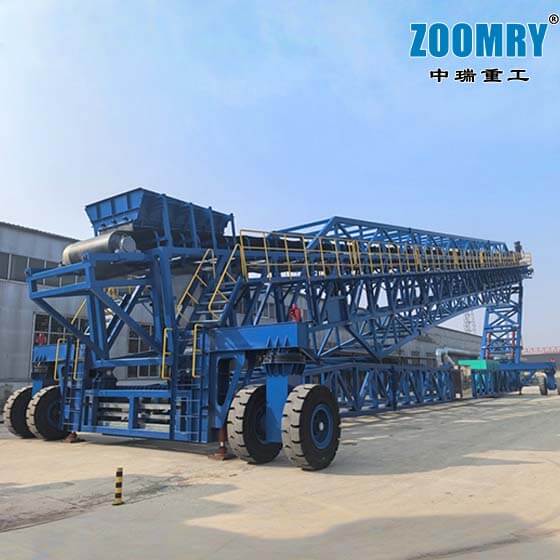
Crawler mobility for challenging ground conditions
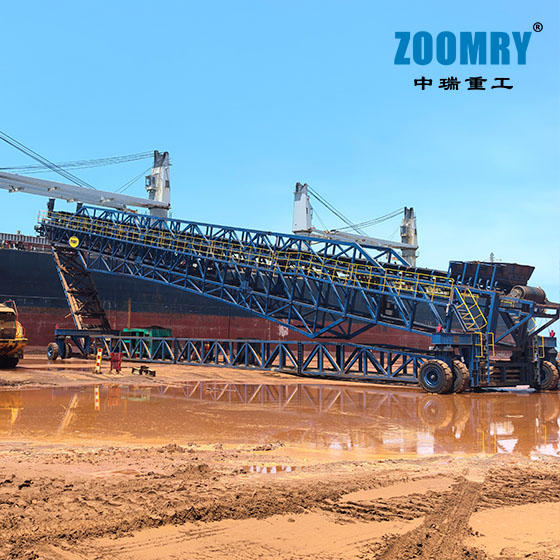
Multi-hatch loading from a single position
Industry Applications
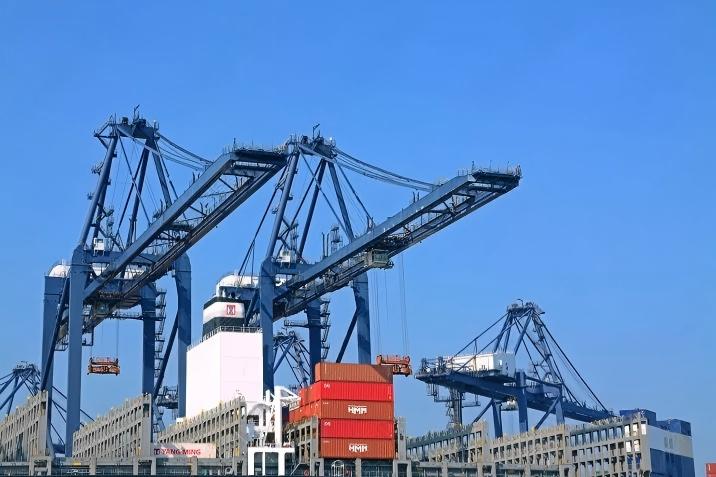
Mobile ship loading and terminal conveying systems
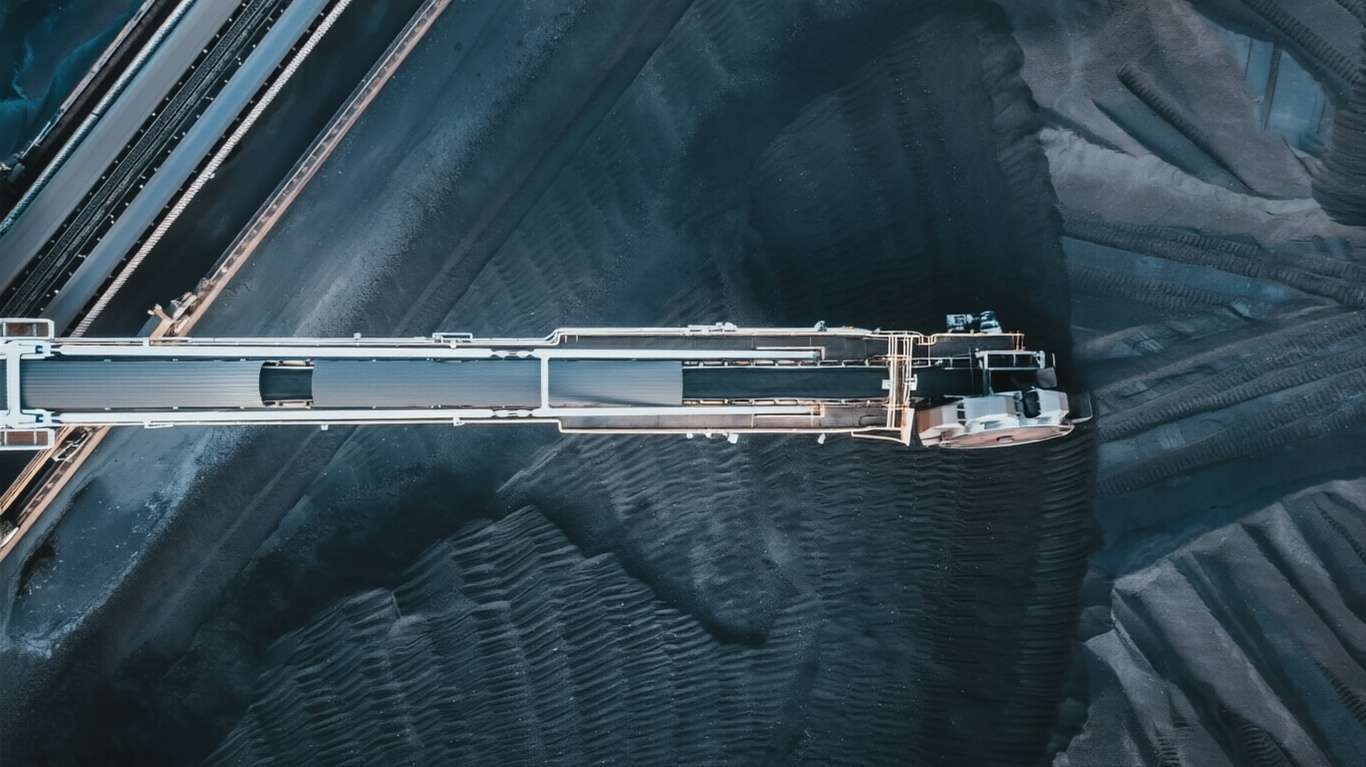
Coal export terminal loading solutions
Evaluating a Mobile Ship Loader for Your Terminal?
Share your vessel sizes, loading rate, quay conditions, and material characteristics. ZOOMRY can help match a mobile ship loader configuration to your port operation.
Contact Us →