 ZOOMRY

The difference between a drive pulley and a bend pulley lies in their function within the belt conveyor system. A drive pulley is the powered pulley that transmits torque from the motor to the belt, driving the entire belt loop. A bend pulley is a non-powered pulley that changes the direction of the belt as it travels through the conveyor, without adding or removing power from the system. The drive pulley powers the conveyor; the bend pulley guides it.
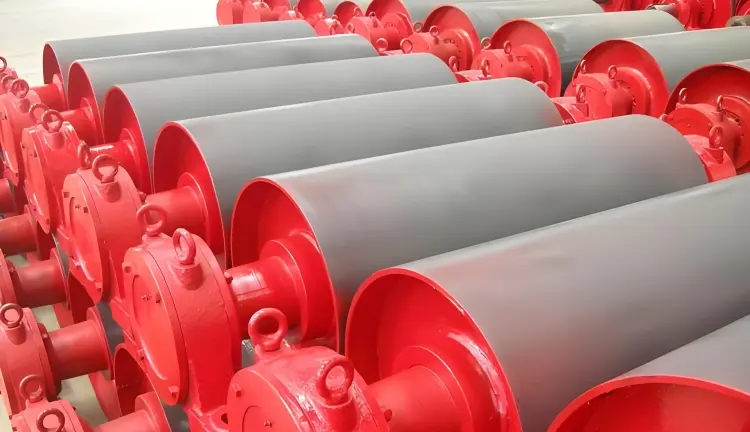
Core Functional Difference
A drive pulley, also called the head pulley, is connected to the conveyor drive system through a gear reducer, coupling, or motorized drum. It rotates under power and transmits that rotation to the belt through friction between the pulley surface and the belt. Drive pulleys are always lagged — with rubber, ceramic, or diamond-grooved rubber — to increase friction and prevent belt slippage under load.
A bend pulley is a non-powered pulley that redirects the belt at a specific point along the conveyor route. It is mounted on bearings and rotates freely as the belt passes over it. Bend pulleys are used to change the belt direction — typically to route the belt around obstacles, to increase the wrap angle around the drive pulley, or to guide the belt into the take-up system. They do not transmit power and do not require lagging in most applications.
Key Differences at a Glance
| Comparison Factor | Drive Pulley | Bend Pulley |
|---|---|---|
| Function | Transmits power to the belt | Changes belt direction |
| Power source | Connected to motor or gear reducer | Passive — rotates with the belt |
| Position | Head end of the conveyor | Along the belt route where direction changes |
| Lagging | Always lagged (rubber, ceramic, or diamond-grooved) | Usually smooth, lagged only in special cases |
| Load | Highest load in the system — carries full belt tension | Lower load — carries only the belt tension at that point |
| Quantity per conveyor | Usually one | Zero to several, depending on belt route |
Drive Pulley Details
The drive pulley is the most heavily loaded pulley in the conveyor system. It must transmit the full driving torque required to move the belt and its load, and it must maintain friction against the belt under all operating conditions — including startup, load surges, and wet or dusty environments.
Lagging
Drive pulleys are always lagged to increase the coefficient of friction between the pulley and the belt. Common lagging options include:
- Plain rubber lagging: Standard for most applications. Provides good friction under dry conditions.
- Diamond-grooved rubber lagging: Grooves channel water and debris away from the contact surface, maintaining friction in wet conditions.
- Ceramic lagging: Alumina ceramic tiles embedded in rubber provide the highest friction coefficient and longest wear life. Used in abrasive or high-tension applications.
Drive Arrangements
Drive pulleys are driven by several arrangements:
- Motor + gear reducer + coupling: Standard arrangement for most conveyors. The motor drives the reducer, which drives the pulley through a coupling.
- Motorized pulley (drum motor): The motor and gear reducer are integrated inside the pulley drum. Used in space-constrained or low-power applications.
- Dual drive: Two motors drive the same pulley or two pulleys at the head end, used for high-power conveyors.
Bend Pulley Details
Bend pulleys are installed at specific points along the belt route to change the belt direction. Unlike drive pulleys, they do not transmit power and are not connected to the drive system.
Common Applications
- Increasing wrap angle: A bend pulley positioned near the drive pulley can increase the angle of belt contact around the drive pulley, improving traction without increasing belt tension.
- Routing around obstacles: Bend pulleys allow the belt to change direction to avoid structures, equipment, or access routes.
- Guiding the belt into the take-up system: Bend pulleys direct the belt into gravity or mechanical take-up arrangements.
- Vertical curve transitions: Bend pulleys support the belt through vertical curve transitions in long conveyors.
Design Considerations
- Belt wrap angle: The angle at which the belt contacts the bend pulley determines the minimum pulley diameter required.
- Bearing selection: Bend pulley bearings must handle the belt tension at that point in the route, which varies with conveyor profile and load.
- Surface finish: Bend pulleys are usually smooth. Lagging is applied only when additional friction is required.
Other Pulley Types in a Conveyor System
Beyond drive and bend pulleys, several other pulley types perform specific functions:
- Tail pulley: Located at the return end of the conveyor, redirects the belt from the return side to the carrying side.
- Snub pulley: Positioned near the drive pulley to increase wrap angle and improve traction.
- Take-up pulley: Maintains belt tension as the belt stretches or contracts under load and temperature change.
Selection Factors
- Belt tension: Determines the minimum pulley diameter and the required shaft and bearing size.
- Belt width: Determines the pulley face width.
- Belt speed: Affects bearing selection and lagging choice.
- Operating environment: Wet, dusty, or corrosive environments affect lagging and bearing seal selection.
- Wrap angle: Determines the minimum pulley diameter and whether lagging is required.
Frequently Asked Questions
Can a bend pulley be used as a drive pulley?
No. Bend pulleys are not designed to transmit drive torque or handle the belt tension present at the drive position. Using a bend pulley as a drive pulley would result in rapid failure. The two pulley types are engineered for different load conditions and must be specified accordingly.
Does a bend pulley need lagging?
In most applications, bend pulleys do not require lagging because they do not transmit power and only redirect the belt. Lagging may be applied in special cases where additional friction is needed, but standard bend pulleys are supplied with smooth surfaces.
How many bend pulleys does a conveyor have?
The number of bend pulleys depends on the conveyor profile and route. A simple straight conveyor may have no bend pulleys. A conveyor that routes around obstacles, includes vertical curves, or uses a take-up system may have one or more bend pulleys.
What is the difference between a bend pulley and a snub pulley?
A snub pulley is a specific type of bend pulley positioned near the drive pulley to increase the wrap angle of the belt around the drive pulley. All snub pulleys are bend pulleys, but not all bend pulleys are snub pulleys — bend pulleys may be used for routing, curve transitions, or take-up guidance.
Related Products
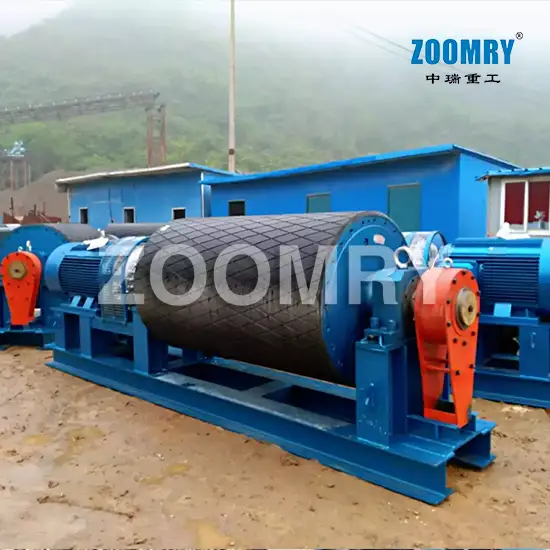
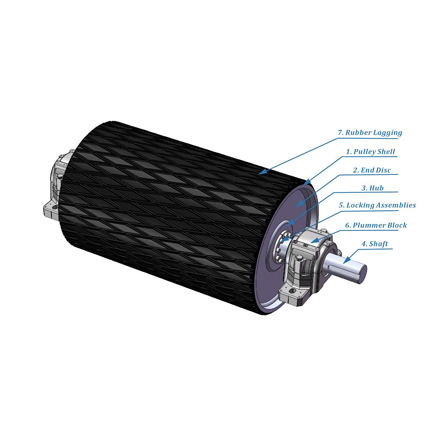
Powered head pulley with rubber or ceramic lagging
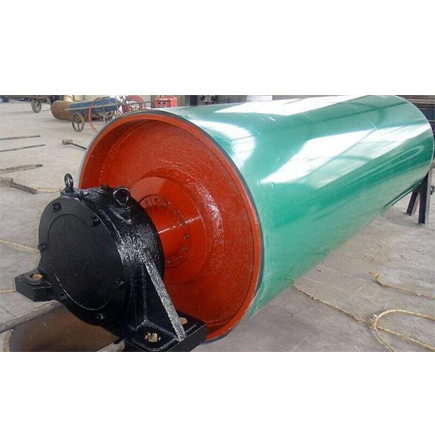
Belt direction change and return end redirection
Industry Applications
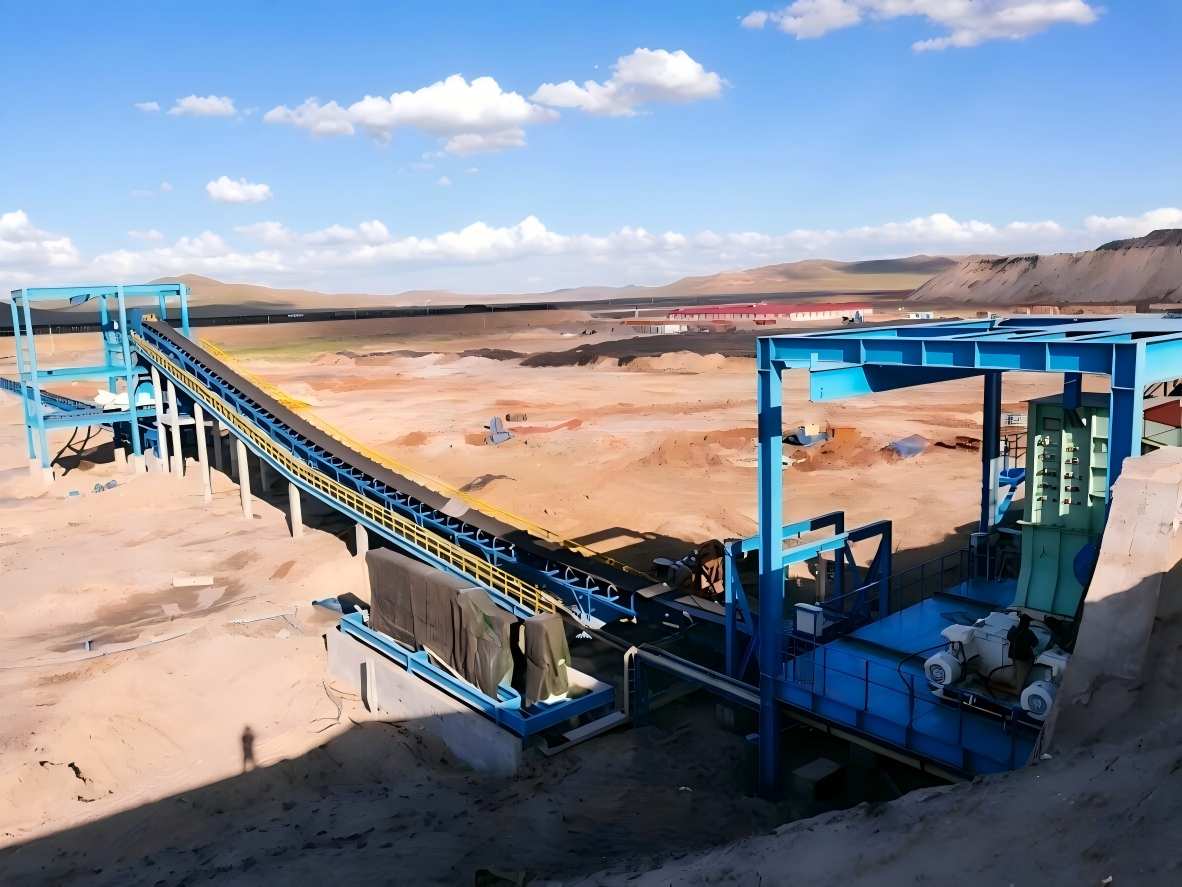
Pulley systems for high-capacity mine conveyors

Conveyor pulleys for quarry and aggregate operations
Selecting Conveyor Pulleys for Your System?
Share your belt width, tension, conveyor profile, and operating environment. ZOOMRY can help match drive pulleys, bend pulleys, and other pulley types to your conveyor requirements.
Contact Us →