 ZOOMRY

The difference between a belt conveyor and a roller conveyor lies in how material is moved along the conveying path. A belt conveyor uses a continuous loop of belting that carries material on its surface, driven by a motorized pulley at one end. A roller conveyor uses a series of rotating cylindrical rollers mounted in a frame, with material moving either by gravity on an incline or by powered rollers on a flat surface. For bulk material handling applications, belt conveyors are the standard choice because they contain material and handle high capacities, while roller conveyors are primarily used for unit loads such as boxes, pallets, and packaged goods.
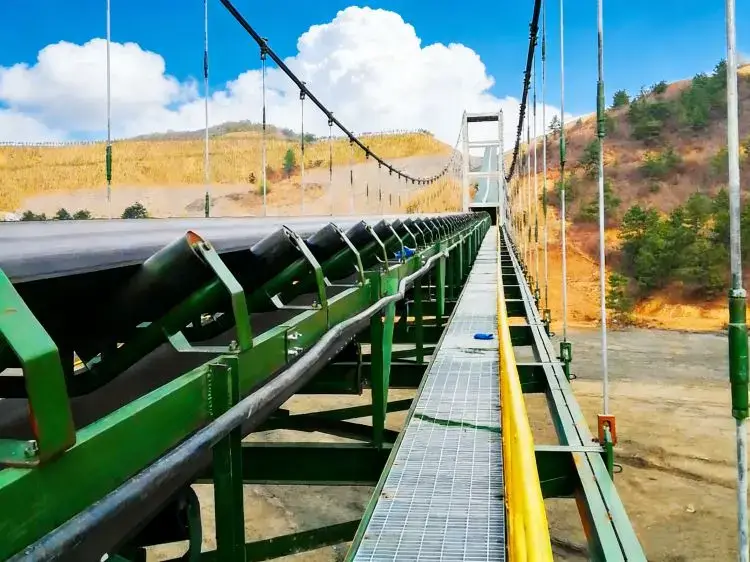
Core Structural Difference
A belt conveyor consists of a continuous belt looped around a drive pulley at the head end and a tail pulley at the return end. The belt is supported along its length by idler rollers that form it into a trough shape, containing the material on the carrying side. The belt itself is the load-bearing surface — material sits on top of the belt and moves with it as the belt travels.
A roller conveyor consists of a series of cylindrical rollers mounted at intervals along a frame. Each roller rotates independently on its own bearings. Material placed on the rollers moves either by gravity when the conveyor is set at a decline, or by powered rotation when the rollers are driven by chains, belts, or motorized rollers.
Key Differences at a Glance
| Comparison Factor | Belt Conveyor | Roller Conveyor |
|---|---|---|
| Material type | Bulk materials — coal, ore, grain, aggregates, powders | Unit loads — boxes, pallets, cartons, packaged goods |
| Load-bearing surface | Continuous belt carries material | Rotating rollers support material |
| Material containment | Troughed belt contains and controls material | No containment — material must be stable on rollers |
| Incline capability | Up to 18–20° standard, higher with specialized belts | Limited — gravity or powered incline only |
| Capacity | High — up to thousands of tons per hour | Low to moderate — unit load throughput |
| Dust control | Enclosed options available — Pipe conveyors, covers | Generally open — not designed for dust containment |
| Curve capability | Curved belt conveyors navigate horizontal and vertical curves | Curved roller sections available for unit loads |
When a Belt Conveyor Wins
Belt conveyors are the primary choice for any bulk material handling application where loose, granular, or powdered material must be transported.
- Mining and quarrying: Moving ore, coal, aggregates, and overburden from extraction points to processing facilities.
- Port and terminal operations: Feeding ship loaders, stackers, and stockyard systems with bulk commodities.
- Power plants: Delivering coal and biomass fuel to boiler feed systems.
- Cement plants: Transporting limestone, clinker, and finished cement between process stages.
- Long-distance overland conveying: Single-flight systems extending multiple kilometers to replace truck haulage.
When a Roller Conveyor Wins
Roller conveyors are selected for unit load handling in warehousing, distribution, and manufacturing environments.
- Warehouse and distribution: Moving boxes, cartons, and totes through picking and packing operations.
- Pallet handling: Transporting palletized goods between loading docks, storage areas, and shipping zones.
- Assembly lines: Supporting manufactured products as they move through production stages.
- Package sorting: Facilitating parcel movement through sorting and routing systems.
- Gravity flow applications: Moving stable items on slight declines without power consumption.
Why Belt Conveyors Dominate Bulk Material Handling
For bulk materials — loose, granular substances such as minerals, grains, and powders — belt conveyors offer capabilities that roller conveyors cannot match:
- Material containment: The troughed belt profile keeps material on the conveyor, preventing spillage along the route.
- High capacity: Belt conveyors handle thousands of tons per hour, far exceeding roller conveyor throughput.
- Long distances: Single-flight belt conveyors extend to 15 km or more, while roller conveyors are limited to facility-scale layouts.
- Steep inclines: Belt conveyors with specialized belting climb inclines up to 60°.
- Environmental control: Enclosed belt conveyor systems — pipe conveyors, covered conveyors — contain dust and protect material from weather.
Curved Belt Conveyors vs Curved Roller Conveyors
Both conveyor types offer curve capability, but the scale is different. A curved belt conveyor navigates horizontal curves with radii measured in hundreds of meters, allowing bulk material transport routes to follow terrain over long distances. Curved roller conveyors navigate tight turns in warehouse layouts, guiding boxes and pallets through facility floor plans.
Key Selection Factors
- Material type: Bulk granular material requires a belt conveyor. Unit loads and packaged goods suit roller conveyors.
- Throughput requirement: High-capacity bulk transport demands belt conveyor technology.
- Conveying distance: Belt conveyors handle long distances and complex routes. Roller conveyors serve facility-scale layouts.
- Dust and environmental control: Bulk material dust containment requires belt conveyor enclosures or pipe conveyor systems.
- Incline requirements: Bulk material elevation changes are handled by belt conveyors with appropriate belt profiles.
Frequently Asked Questions
Can a roller conveyor handle bulk materials?
No. Roller conveyors are designed for unit loads with stable bottoms — boxes, pallets, and packaged goods. Bulk materials would fall between the rollers and create spillage along the conveying path. Bulk material transport requires a belt conveyor with a continuous carrying surface that contains the material.
Can a belt conveyor handle boxes and packaged goods?
Yes, belt conveyors can transport unit loads in addition to bulk materials. Many manufacturing and logistics facilities use flat belt conveyors for moving boxes and packages. However, for pure unit load handling, roller conveyors are often more economical and easier to integrate with warehouse automation.
Which conveyor type is better for a mining operation?
Mining operations require belt conveyors. The abrasive, heavy, and high-volume nature of mined materials demands the continuous carrying surface and high capacity that only belt conveyors provide. Roller conveyors have no application in primary mining material transport.
What is the cost difference between the two conveyor types?
For comparable lengths in industrial applications, roller conveyors are generally less expensive per meter than belt conveyors because they have simpler construction — rollers mounted in frames without the belt, drive pulleys, and idler systems that belt conveyors require. However, the two conveyor types serve different purposes and are not directly interchangeable for most applications.
Related Products
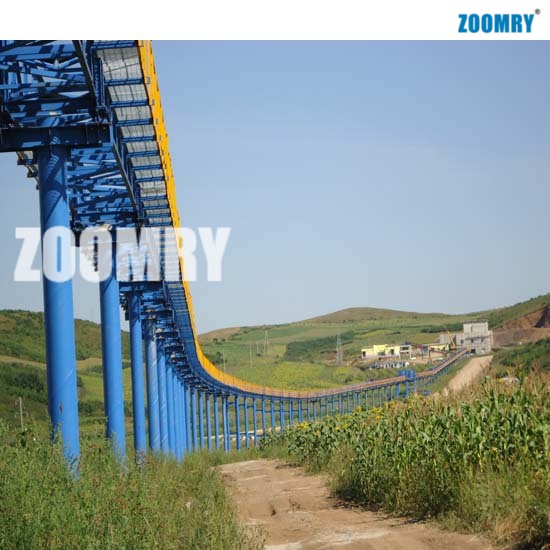
Complete belt conveyor systems for bulk material handling
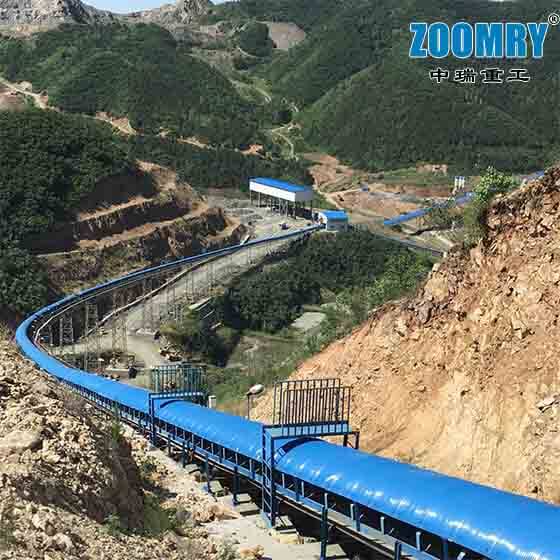
Terrain-following curves without transfer points
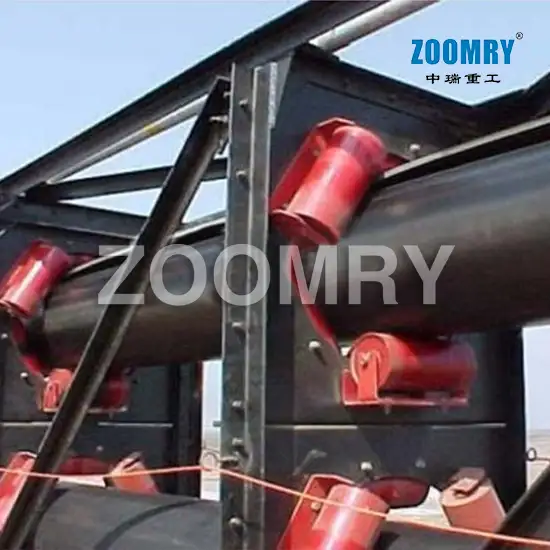
Enclosed tubular conveying for dust-sensitive applications
Industry Applications
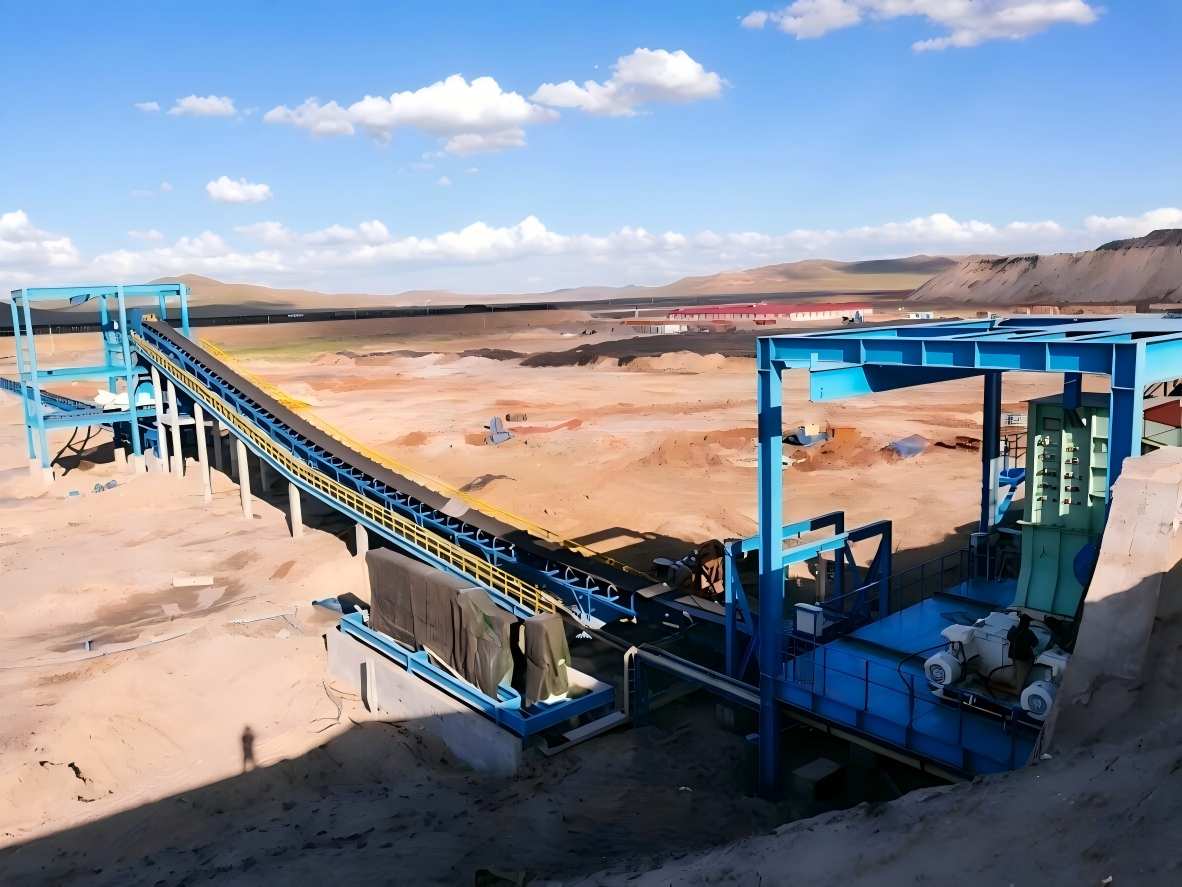
Belt conveying solutions for surface and underground mining
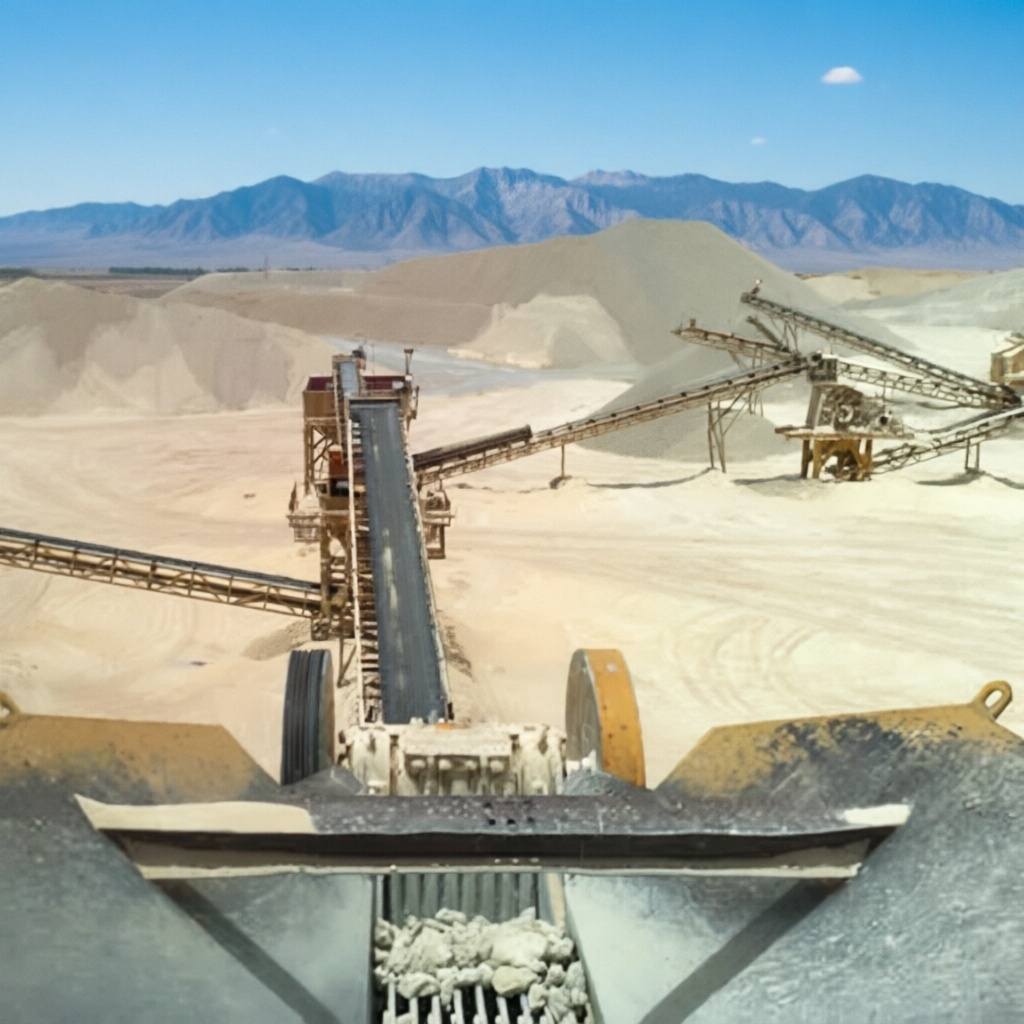
Bulk material conveying for quarry operations
Choosing Between a Belt Conveyor and a Roller Conveyor?
Share your material type, throughput, and conveying distance. ZOOMRY can help determine which conveyor system fits your bulk material handling operation.
Contact Us →