 ZOOMRY

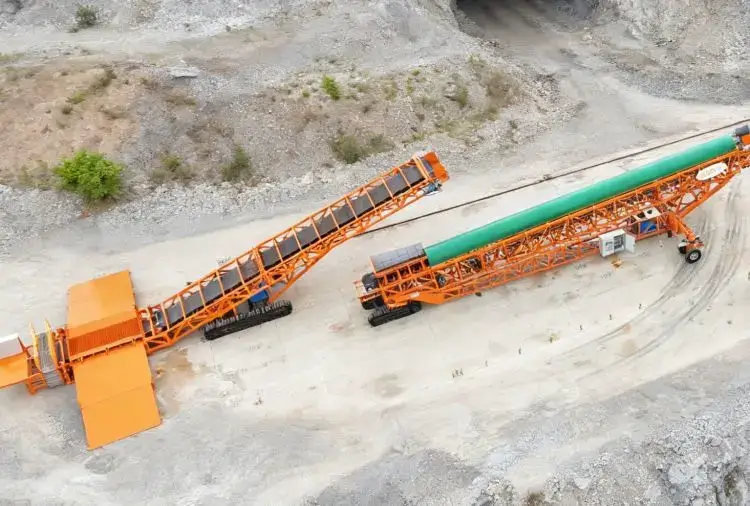
The difference between a truck unloader and a hopper feeder lies in their primary function within a bulk material receiving system. A truck unloader is a drive-over receiving station that allows dump trucks to discharge directly into a hopper, transferring material onto a conveyor for transport to stockpiles, ship loaders, or processing equipment. A hopper feeder is a controlled feeding device that receives material from loaders, trucks, or upstream equipment and regulates the flow rate onto a downstream conveyor. While both handle incoming bulk material, the truck unloader is designed for fast truck turnaround, while the hopper feeder is designed for consistent, metered material feed.
Core Functional Difference
A truck unloader is positioned at the receiving end of a bulk material handling system. Dump trucks drive onto ramps, position over the receiving hopper, and discharge their load directly into it. The material falls through the hopper onto a takeaway conveyor, which carries it to the next stage — stockpiling, ship loading, or processing. The primary goal is to minimize truck turnaround time and eliminate intermediate material re-handling.
A hopper feeder sits between a material source and a downstream conveyor. It receives material from wheel loaders, excavators, or trucks and discharges it at a controlled rate onto a belt conveyor. The feeder's hopper capacity and discharge mechanism — typically a belt feeder or apron feeder — regulate material flow so the downstream conveyor receives a consistent, manageable stream rather than intermittent surges.
Key Differences at a Glance
| Comparison Factor | Truck Unloader | Hopper Feeder |
|---|---|---|
| Primary function | Receive material directly from dump trucks | Regulate material flow onto a downstream conveyor |
| Material source | Dump trucks driving over the hopper | Wheel loaders, excavators, trucks, or upstream equipment |
| Discharge control | Direct gravity flow through hopper to conveyor | Metered discharge via belt or apron feeder |
| Truck turnaround | Fast — drive on, dump, drive off | Not designed for direct truck discharge |
| Mobility options | Wheeled, tracked, or crawler configurations | Static, wheeled, or tracked configurations |
| Best suited for | Truck-to-conveyor receiving, truck-to-ship transfer | Continuous feeding to conveyors, crushers, and stackers |
When a Truck Unloader Makes Sense
Truck unloaders are specified when the operation receives material by dump truck and needs to move it quickly onto a conveyor system without intermediate stockpiling.
- Quayside truck-to-ship loading: At ports where material arrives by truck and is loaded directly onto vessels, a truck unloader feeds a mobile ship loader directly, eliminating double handling.
- Aggregate and quarry receiving: Quarries and aggregate yards receiving material from multiple truck suppliers benefit from fast turnaround and continuous conveyor feed.
- Grain receiving stations: Drive-over hoppers allow grain trucks to unload quickly into the elevator system, reducing wait times during harvest peaks.
- Mining site receiving: Where ore is trucked from the pit to a central processing area, a truck unloader transfers it onto the plant feed conveyor without loader assistance.
When a Hopper Feeder Makes Sense
Hopper feeders are specified when the operation needs to control material flow from a variable source onto a conveyor or processing system.
- Loader-fed stockpiling: When wheel loaders feed material to a radial stacker or stockpiling conveyor, a hopper feeder provides a buffer and regulates the feed rate.
- Crusher feed control: In crushing circuits, a hopper feeder ensures the crusher receives a steady material stream rather than surges from loader buckets.
- Port stacking operations: A mobile hopper feeder can receive material from trucks or loaders at the quayside and feed a ship loader or stacker at a controlled rate.
- Continuous process feeding: Cement plants, power stations, and processing facilities use hopper feeders to maintain consistent material flow into process equipment.
Combined Operation: Truck Unloader + Hopper Feeder
In many bulk handling systems, truck unloaders and hopper feeders work together. A common configuration uses a truck unloader at the receiving point to handle truck discharge, with the truck unloader's takeaway conveyor feeding into a hopper feeder that meters material onto the main conveyor. This combination provides both fast truck turnaround and controlled downstream feeding.
At port terminals, a crawler truck unloader can position directly at the quayside and feed a mobile ship loader through a hopper feeder link, creating a complete truck-to-ship loading system without fixed infrastructure.
Mobile Configurations Compared
Both equipment types are available in mobile configurations suited to different site conditions:
- Wheeled truck unloaders: Towable or self-propelled units for paved yards and established receiving areas.
- Tracked truck unloaders: Crawler-mounted units for soft ground, unpaved port yards, and sites requiring frequent repositioning.
- Crawler truck unloaders: Quayside units designed to move along the dock and feed mobile ship loaders directly.
- Static hopper feeders: Fixed installations for permanent receiving points.
- Tracked hopper feeders: Crawler units that can reposition to different feed locations as operations shift.
Key Selection Factors
- Material source: If material arrives primarily by dump truck, a truck unloader is the direct solution. If material is delivered by loader or excavator, a hopper feeder is more appropriate.
- Required receiving rate: Truck unloaders handle the peak discharge rate of trucks arriving in sequence. Hopper feeders handle the sustained feed rate required by the downstream conveyor.
- Truck turnaround requirements: Operations with high truck volumes prioritize fast drive-on, dump, drive-off cycles.
- Downstream process needs: If the downstream equipment requires a metered, consistent feed, a hopper feeder provides the necessary flow control.
- Site mobility: Port operations with changing quayside layouts favor tracked or crawler configurations.
- Material characteristics: Abrasive, sticky, or dusty materials affect hopper lining, feeder design, and dust suppression requirements.
Frequently Asked Questions
Can a truck unloader feed a ship loader directly?
Yes. A crawler truck unloader positioned at the quayside can discharge material directly onto a mobile ship loader's receiving hopper or feed conveyor. This truck-to-ship configuration eliminates intermediate stockpiling and is commonly used at river ports and inland waterway terminals.
What is the typical capacity difference between the two?
Truck unloaders are sized to handle the peak discharge rate of dump trucks, typically 200 to 1,800 t/h standard, with custom configurations up to 3,000 t/h. Hopper feeders span a similar range depending on configuration, from compact low-feed units around 800 TPH to heavy-duty units up to 3,500 TPH.
Can a hopper feeder handle truck dumping directly?
Some hopper feeder configurations can receive direct truck dumping, but the hopper geometry and feed mechanism must be designed for impact loading. In most cases, a truck unloader is the preferred receiving equipment for direct dump truck discharge, while a hopper feeder is optimized for loader-fed or controlled-flow applications.
Which is better for a port terminal?
It depends on how material arrives at the terminal. If material arrives by truck and is loaded directly onto vessels, a truck unloader feeding a mobile ship loader is the primary choice. If material arrives by conveyor or loader and needs to be fed at a controlled rate to a ship loader or stacker, a hopper feeder is the appropriate solution. Many port terminals use both in sequence.
Related Products
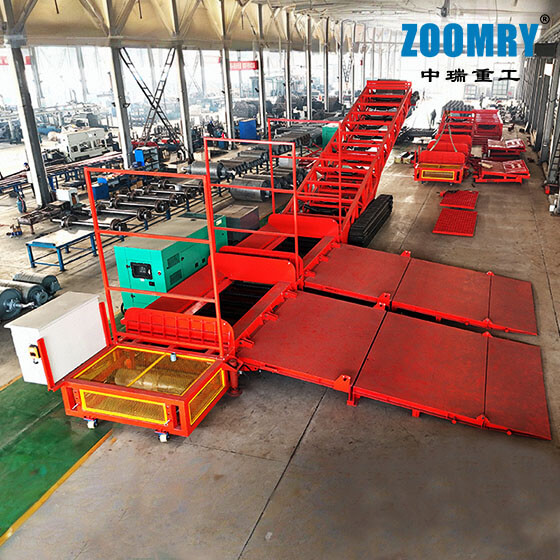
Drive-over receiving station for fast truck turnaround
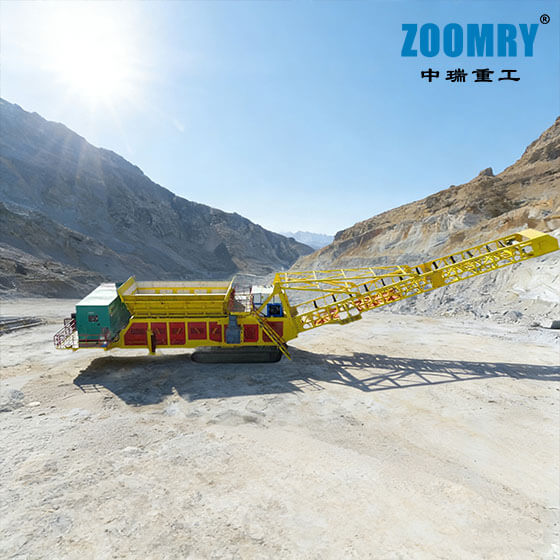
Metered material feeding for conveyors and stackers
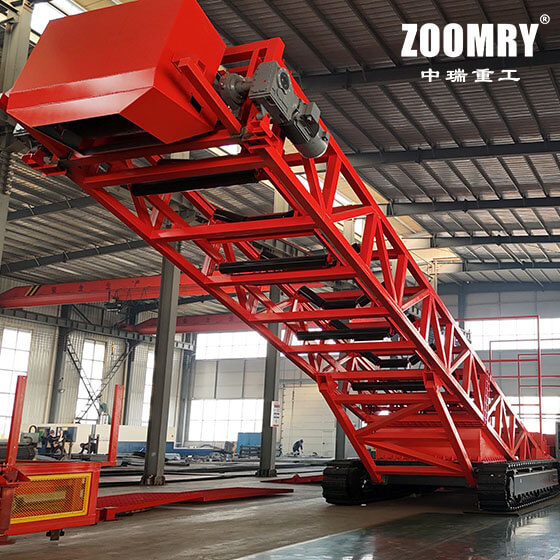
Crawler mobility for quayside and soft ground receiving
Industry Applications
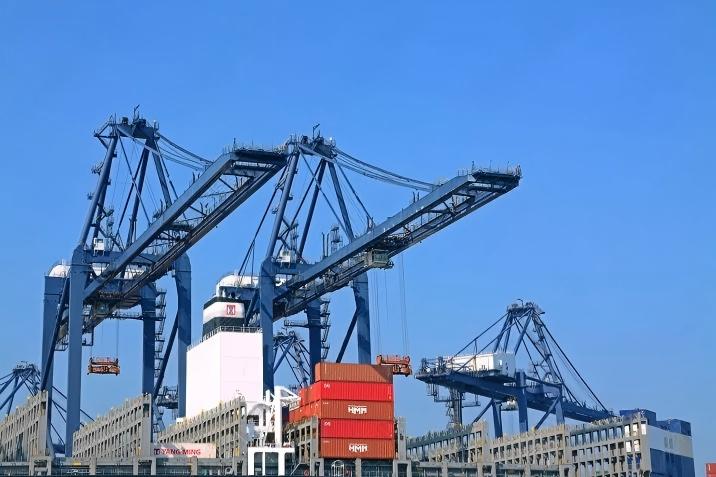
Truck-to-ship receiving and loading solutions
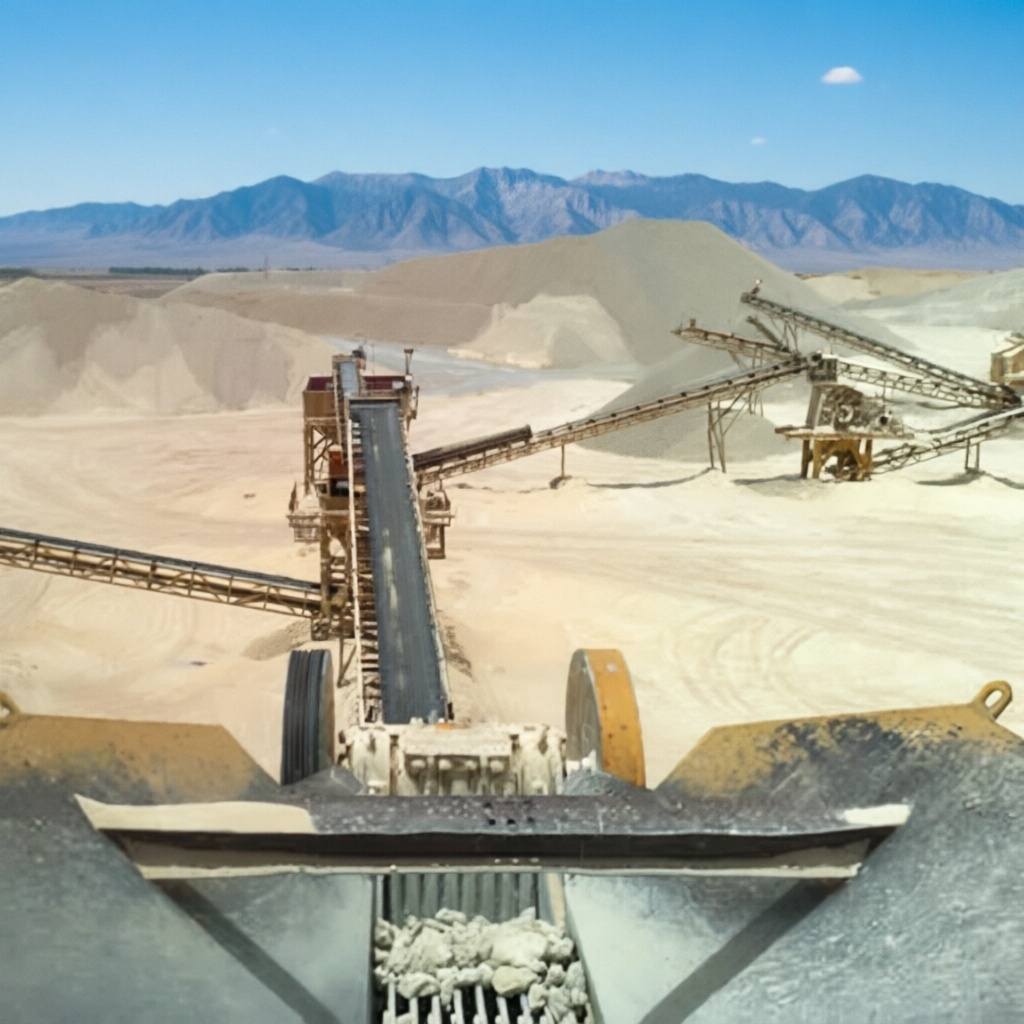
Truck receiving and conveyor feeding for quarry operations
Choosing Between a Truck Unloader and a Hopper Feeder?
Share your receiving method, material type, and downstream process. ZOOMRY can help determine which equipment configuration fits your bulk handling operation.
Contact Us →