 ZOOMRY

The difference between a radial stacker and a fixed stacker lies in how the discharge point moves relative to the feed point. A radial stacker rotates around a fixed tail pivot, sweeping the boom in an arc to build fan-shaped stockpiles without relocating the machine. A fixed stacker discharges material from a stationary boom position, building a single conical or elongated pile in one location. Both machines receive material from a feed conveyor and stack it for storage, but the radial configuration covers significantly more ground from one feed position.
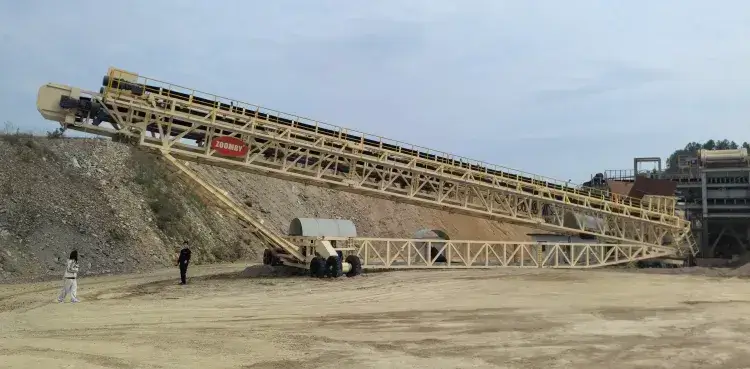
Core Functional Difference
Both radial stackers and fixed stackers perform the same basic function: receiving bulk material from a feed conveyor and discharging it onto a stockpile. The difference lies in what happens after the material reaches the boom.
A radial stacker is mounted on a pivot bearing at the tail end. The entire boom — including the discharge end — rotates horizontally around this pivot point, typically through an arc of up to 360°. This allows the operator to build a fan-shaped stockpile covering a wide area without moving the feed conveyor or the machine itself. The boom can also luff up and down to adjust discharge height as the stockpile grows.
A fixed stacker discharges material from a set boom position. The boom may luff to adjust discharge height, but it does not rotate horizontally. Material accumulates in a single conical pile or a narrow linear window beneath the discharge point. To build stockpiles at a different location, either the machine must be relocated or additional conveying equipment is required.
Radial Stacker Advantages
The radial slewing capability of a wheel radial stacker delivers several operational advantages in stockyard management:
- Wider stockpile coverage: A radial stacker builds fan-shaped stockpiles covering a large arc from a single feed position, maximizing storage capacity without moving the machine.
- Reduced relocation frequency: Because the boom sweeps across a wide area, the machine stays in one position longer before needing to move.
- Layered stacking control: The operator can direct the discharge point across different sections of the arc, building stockpiles in controlled layers that reduce material segregation.
- Multiple stockpile zones from one feed: One radial stacker can serve several adjacent stockpile areas by rotating between them, reducing the number of machines required.
- Higher effective storage density: Fan-shaped piles use the available yard space more efficiently than scattered conical piles.
Fixed Stacker Advantages
A fixed radial telescopic stacking conveyor and other fixed stacker configurations offer advantages in simpler, more predictable applications:
- Lower capital cost: A fixed stacker without slewing mechanisms has fewer moving parts and a simpler structural design, reducing upfront investment.
- Simpler maintenance: Fewer bearings, drives, and hydraulic components mean less inspection and lower maintenance workload over time.
- Simpler foundations: Fixed units require less complex civil works compared with radial pivot installations that must support rotational forces.
- Predictable stockpile profile: Material always discharges at the same location, producing a consistent pile shape that may be easier to manage with fixed reclaiming equipment.
- Sufficient for single-purpose operations: When the stockpile layout never changes, a fixed stacker provides the required function without unnecessary complexity.
Key Differences at a Glance
| Comparison Factor | Radial Stacker | Fixed Stacker |
|---|---|---|
| Discharge movement | Rotates horizontally around tail pivot | Stationary discharge position |
| Stockpile shape | Fan-shaped or circular arc | Single conical pile or narrow linear pile |
| Coverage area | Large arc from one feed position | Limited to one discharge zone |
| Relocation requirement | Infrequent — boom covers wide area | More frequent — must move to change stockpile location |
| Capital cost | Higher — pivot bearing, slewing drive, stronger structure | Lower — simpler structure and foundation |
| Maintenance | More components — slewing bearing, pivot, drives | Fewer components — simpler inspection |
| Best suited for | Large stockyards, multiple piles, frequent material changes | Single-purpose stacking, budget-sensitive projects, fixed layouts |
When a Radial Stacker Makes Sense
Radial stackers are selected when stockyard flexibility and storage efficiency are primary requirements:
- Large stockyard areas: When material must be spread across a wide yard, the sweeping boom covers more ground without moving the feed system.
- Multiple material types: Operators can build separate piles for different materials by rotating the boom between arc segments.
- Continuous production feeding: In quarry and mining operations where crushers and screens run continuously, a radial stacker keeps stacking while the operator directs the discharge across fresh areas.
- Reduced loader dependency: Wider automated stacking coverage means less wheel loader work to reshape or relocate piles.
When a Fixed Stacker Makes Sense
Fixed stackers are selected when the stockpile layout is stable and budget simplicity is valued:
- Permanent stockyard installations: When the feed source and stockpile location will not change for the life of the operation.
- Single-material operations: When the yard handles one commodity and one pile is sufficient.
- Budget-constrained projects: When minimizing upfront cost and maintenance complexity outweighs the need for flexible coverage.
- Integration with downstream reclaiming: When a fixed reclaimer or tunnel reclaim system is positioned to work with a predictable stockpile profile.
Mobile Options and Intermediate Configurations
In practice, many stockyard operations use configurations that combine mobility with radial capability. A mobile telescopic stacker adds wheeled or tracked mobility to the radial slewing function, allowing the machine to relocate between stockpile zones and then build fan-shaped piles at each location. This provides the flexibility of a mobile unit with the coverage efficiency of a radial machine.
Similarly, a tracked radial stacker can operate on soft ground or unpaved yards where wheeled units may face traction or bearing limitations, while still delivering radial stacking coverage.
Key Selection Factors
- Stockpile layout: Fan-shaped coverage requirements favor radial machines; single-pile operations favor fixed units.
- Available yard space: Radial stackers use space more efficiently, building larger total storage from one feed position.
- Material types and segregation control: Layered stacking with radial movement helps maintain material quality.
- Budget and maintenance capability: Fixed units are simpler and cheaper to maintain over time.
- Relocation frequency: If stockpile locations change regularly, a mobile radial configuration may be more practical than either a fixed radial or a fixed stacker.
Frequently Asked Questions
Can a fixed stacker build a radial stockpile?
No. A fixed stacker discharges material from a stationary position, producing a conical or narrow linear pile. To achieve radial coverage, the machine requires a slewing mechanism that rotates the boom around a pivot point, which is the defining feature of a radial stacker.
How much area can a radial stacker cover?
The coverage area depends on the boom length and the slewing arc. Many radial stackers can slew through 360°, allowing them to build stockpiles in a complete circle around the pivot point. The actual usable area is determined by boom length, stockpile height, and material angle of repose.
Is a radial stacker more expensive than a fixed stacker?
Yes, in most cases. The radial pivot bearing, slewing drive, and reinforced structure add to the upfront cost. However, a radial stacker can replace multiple fixed stackers in a large stockyard, potentially reducing total equipment investment.
Can a radial stacker be moved to a different stockpile area?
It depends on the configuration. Fixed radial stackers are anchored at a pivot point and are not intended to be relocated. Mobile radial stackers — mounted on wheels or tracks — can be moved between stockpile zones, then operated in radial mode at each new location.
Related Products
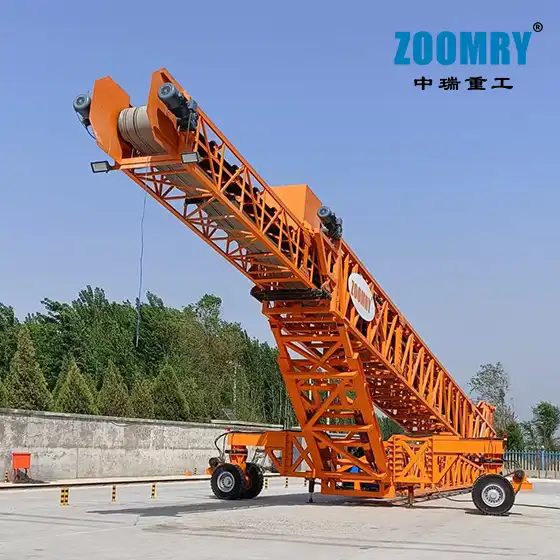
Wheeled radial stacking for flexible stockpile building
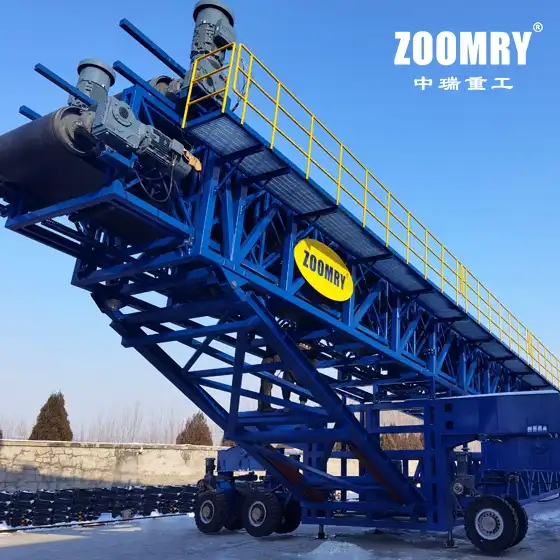
Permanent radial stacking from a central pivot
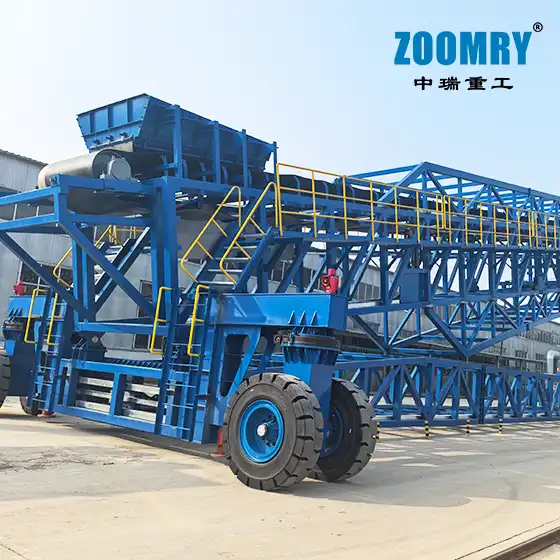
Self-propelled stacking with radial slewing and telescopic boom
Industry Applications
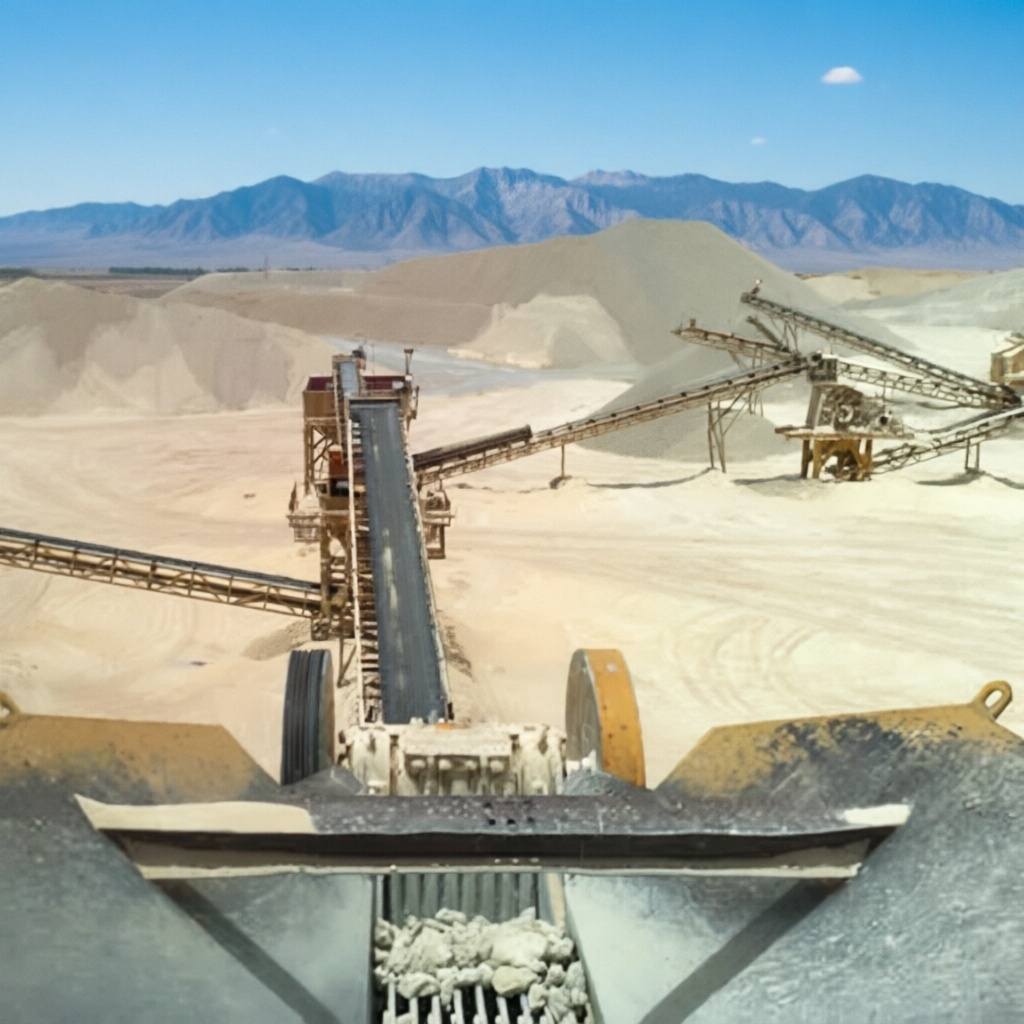
Radial and fixed stacking for quarry stockyard management
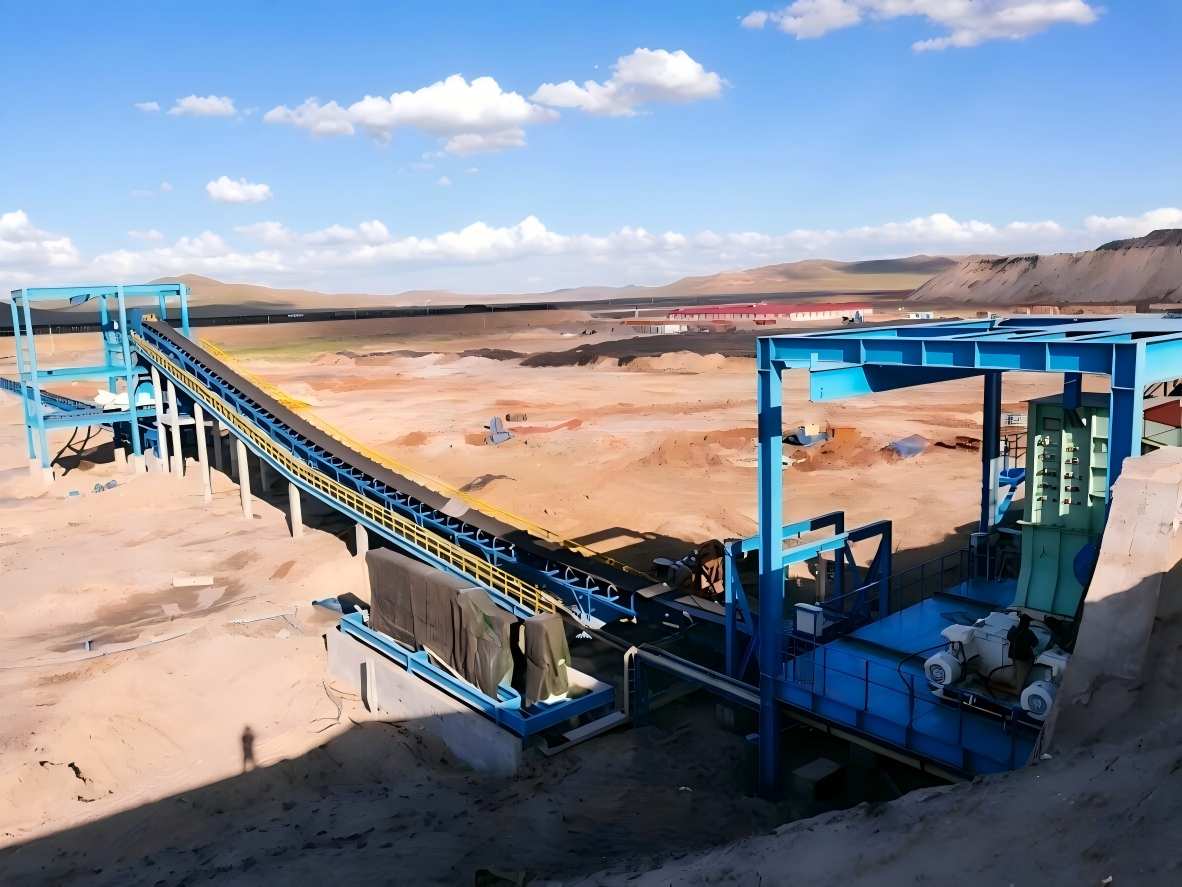
Stockpile building solutions for surface mining operations
Choosing Between a Radial Stacker and a Fixed Stacker?
Share your stockpile layout, material type, and capacity requirements. ZOOMRY can help evaluate which stacking configuration fits your operation.
Contact Us →