 ZOOMRY

1. Product Overview
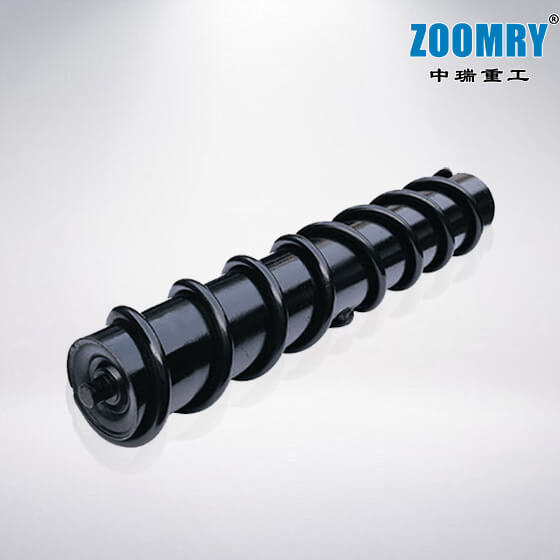
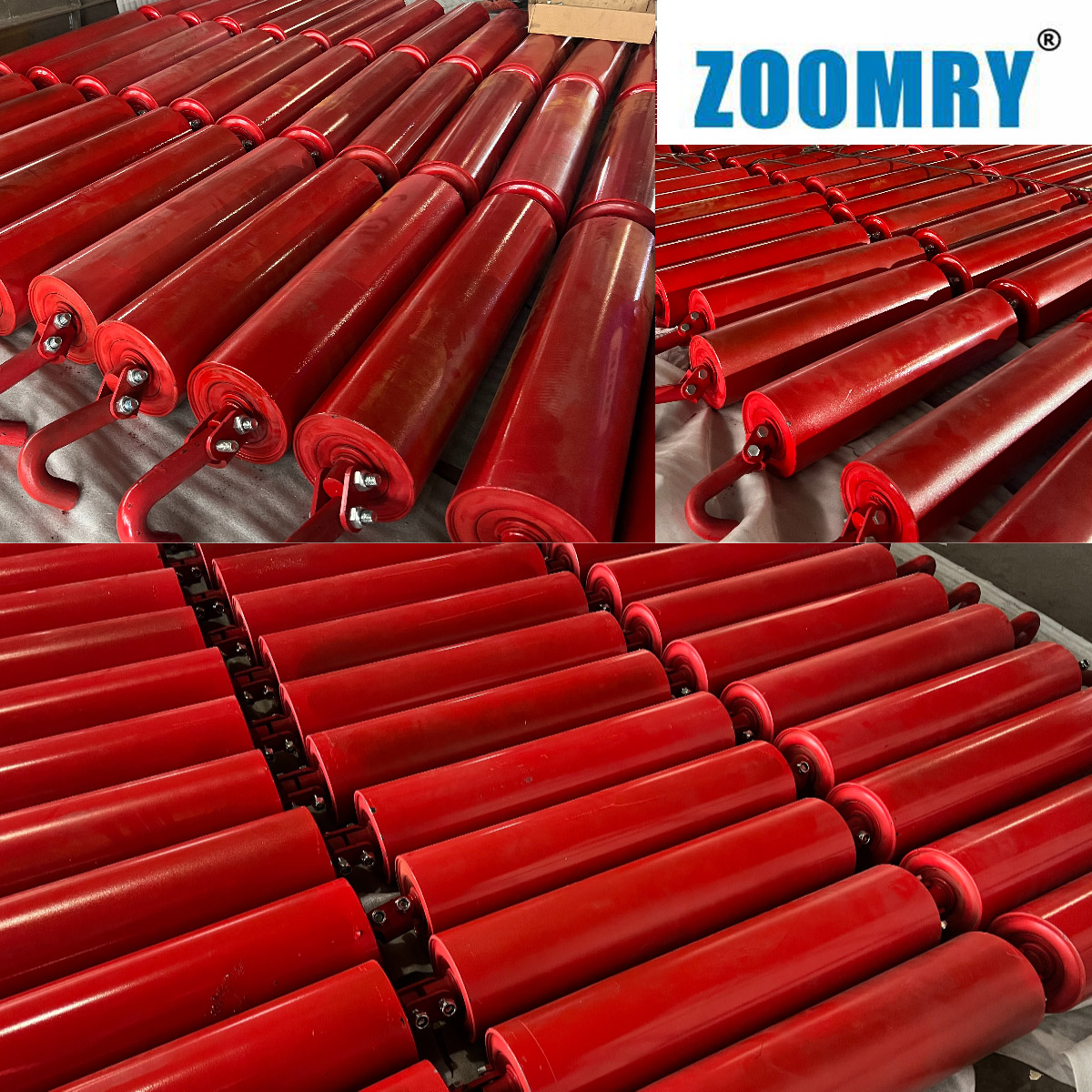
ZOOMRY garland rollers are suspended multi-roll idler assemblies designed for conveyors operating in difficult conditions — high working loads, large lump size material, and impact-prone loading zones. Unlike rigid frame troughing idlers, the hinged garland design allows each roll segment to flex independently, helping the belt absorb impacts without transmitting excessive shock to the conveyor structure. Suitable for mining and aggregate applications. Standard examples cover belt widths from 600mm to 1,200mm; custom configurations are available on request.
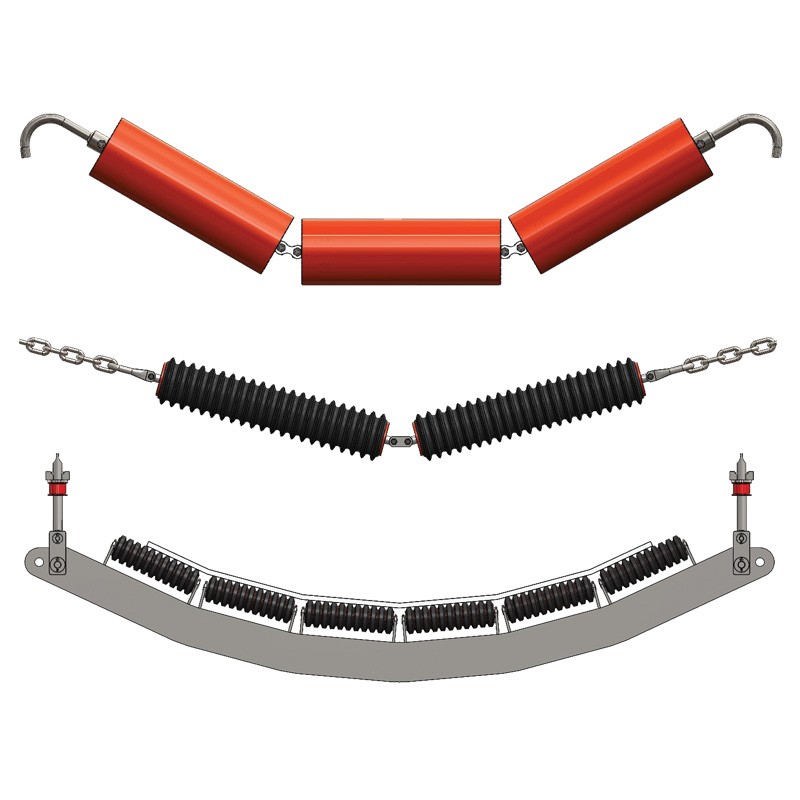
Garland rollers are typically supplied in 3-roll or 5-roll configurations with connecting fasteners, suspension chains, hooks, and thimbles. Roller shells may be supplied with rubber or polyurethane covering for impact absorption; steel shells may be galvanized or powder-coated for corrosion protection. The specific combination depends on material abrasiveness and environmental conditions. Custom configurations are produced on request for coal and power industry applications.
2. How Garland Roller Suspension Works
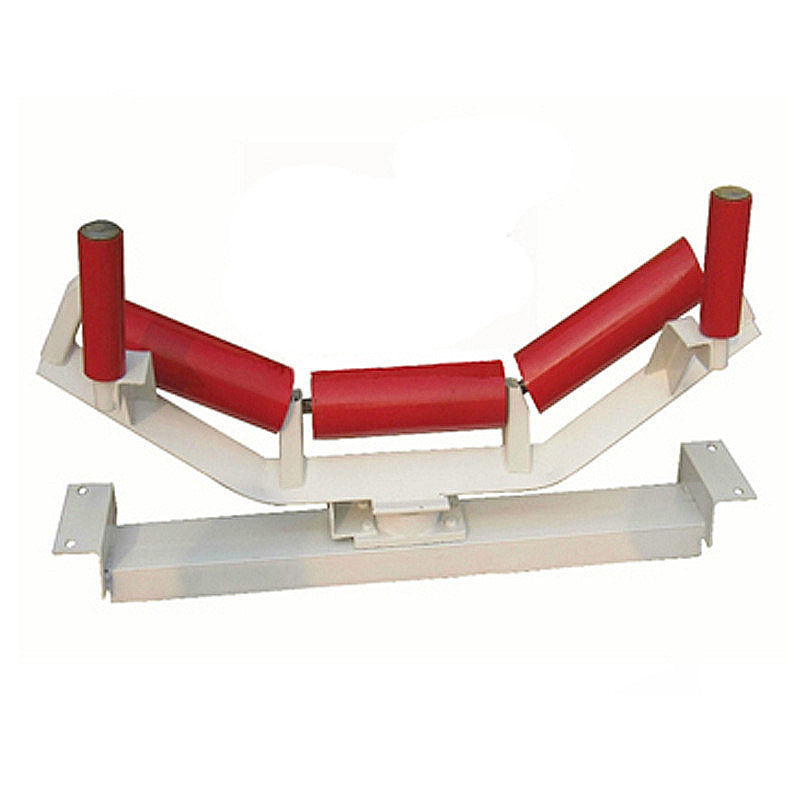
A conventional rigid frame troughing idler fixes the roller angles and positions in a static structure. When large lump material impacts the belt at loading zones, the impact force is transmitted through the rigid frame to the conveyor stringers — accelerating frame fatigue and bearing wear over time.
The garland roller addresses this with a suspended design: multiple roll segments are connected by hinged fasteners and hung from the conveyor frame by chains or slings. When material impacts the belt, the entire assembly can swing and flex — absorbing impact energy through movement rather than transmitting it rigidly. This flexibility also allows the belt profile to adapt to varying load conditions in cement and aggregate crusher discharge areas where impact and lump size are most severe.
3. Key Features
Suspended Hinged Design — Multi-roll segments connected by hinged fasteners allow independent flex under impact, helping the belt absorb shock without transmitting excessive force to the conveyor frame in mining applications.
3-Roll and 5-Roll Configurations — Available in multiple segment counts to suit belt width and trough profile requirements. Chain length, hook type, and thimble configuration are selected according to the mounting arrangement.
Multiple Surface Options — Rubber or polyurethane roller covering for impact absorption; galvanized or powder-coated steel shells for corrosion protection — selected according to material and environmental conditions.
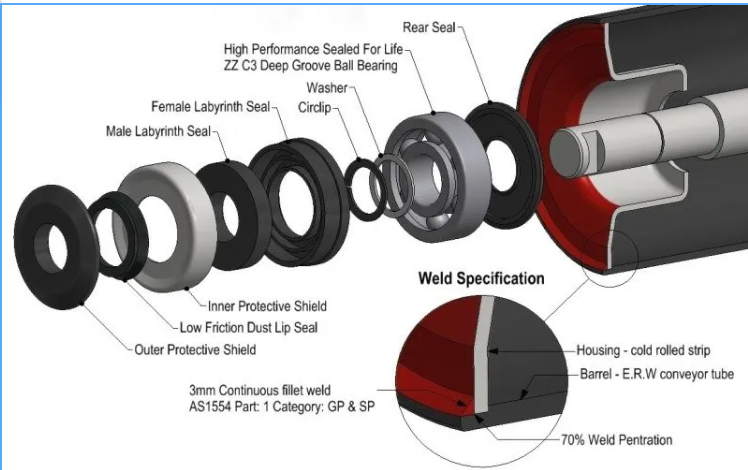
Sealed Bearing Design — Sealed ball bearings with labyrinth protection keep dust and moisture out, supporting reduced routine maintenance requirements in harsh operating environments.
Custom Configurations — Roller diameter, segment count, chain length, surface covering, and coating can be tailored to specific conveyor drawings and operating duty on request.
4. Garland Roller vs Rigid Frame Troughing Idler
| Feature | Garland Roller | Rigid Frame Troughing Idler |
|---|---|---|
| Frame Structure | Suspended hinged segments | Fixed rigid frame |
| Impact Response | Flexes and swings to absorb impact | Transmits impact to conveyor frame |
| Belt Contact | Adapts to varying load profile | Fixed roller angle and position |
| Best For | Large lump size, high impact loading zones | Standard carrying sections with uniform loading |
5. Production Specifications
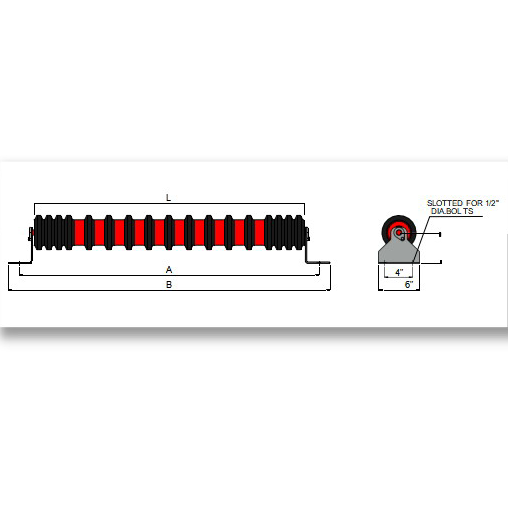
ZOOMRY garland rollers are produced in standard belt width configurations from 600mm to 1,200mm, with 102mm and 127mm roller diameter options. The following table shows standard production dimensions — each row represents a typical configuration; final segment count, chain length, and mounting details must be confirmed against the conveyor drawing:
| Belt Width (mm) | Belt Width (in) | Roller Length (mm) | Roller Dimensions (mm) | Weight per Section (kg) | ||||
|---|---|---|---|---|---|---|---|---|
| Width | Clearance | Height | 102 Dia. | 127 Dia. | — | |||
| 600 | 24 | 3048 | 1007 | 826 | 648 | — | 540 | 493 |
| 650 | 26 | 3048 | 1057 | 876 | 648 | — | 533 | 486 |
| 750 | 30 | 3048 | 1159 | 978 | 740 | — | 606 | 559 |
| 800 | 32 | 3048 | 1210 | 1030 | 740 | — | 599 | 552 |
| 900 | 36 | 3048 | 1311 | 1130 | 740 | — | 583 | 535 |
| 1000 | 40 | 3048 | 1416 | 1235 | 740 | — | 569 | 521 |
| 1050 | 42 | 2743 | 1464 | 1283 | 778 | — | 597 | 548 |
| 1200 | 48 | 2743 | 1616 | 1435 | 838 | — | 646 | 598 |
Standard production dimensions for ZOOMRY garland rollers. Each row represents a typical reference configuration; the 3-roll or 5-roll arrangement, exact roller dimensions, segment count, chain length, and mounting details must be confirmed against the conveyor drawing and operating duty.
What Information Do We Need for Garland Roller Selection?
- Belt width, conveyor capacity, and material lump size
- Drop height and impact severity at the loading zone
- Roller segment count required (3-roll or 5-roll) and trough profile
- Surface covering or coating — rubber, polyurethane, galvanized, or powder coat
- Existing frame dimensions and suspension mounting details for retrofit applications
Related Solutions
Need Garland Rollers for Your High-Impact Loading Zone?
Tell us your belt width, material lump size, and drop height — our engineers will confirm the optimal garland roll configuration and suspension arrangement.
Request Garland Roller Recommendation →