 ZOOMRY

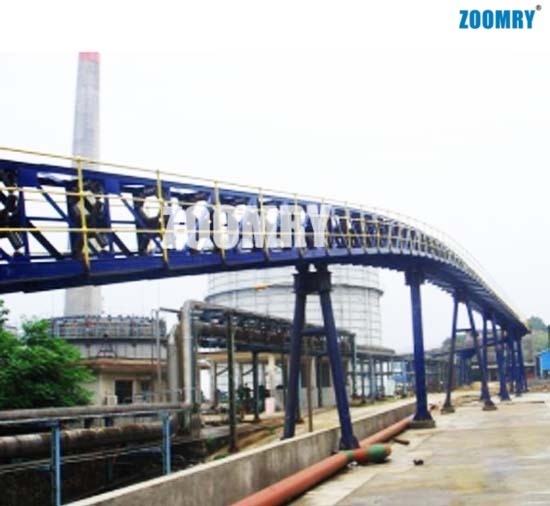
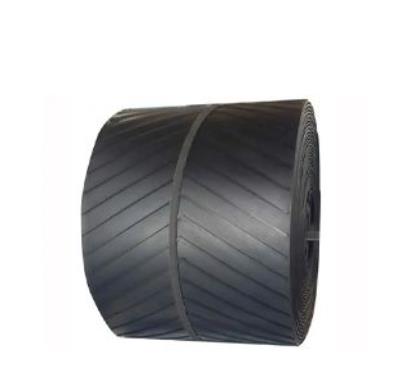
A tubular conveyor — also referred to as a Pipe conveyor or pipe belt conveyor — is a type of belt conveyor in which the belt is formed into a closed circular pipe shape by a series of hexagonal idler frames. The material is carried entirely within the enclosed pipe, while the return run travels in a flat configuration.
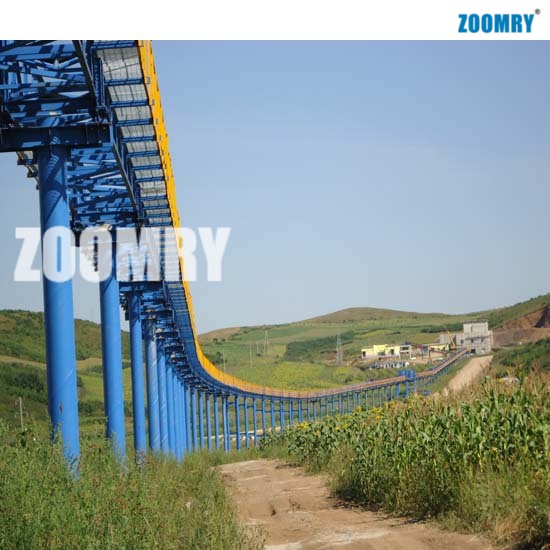
This design allows the system to negotiate both horizontal and vertical curves with relatively small radii, significantly reducing the need for multiple transfer points compared to traditional trough conveyors. The enclosed configuration also prevents material spillage and dust emissions, making it suitable for applications where environmental control is a consideration.
How a Tubular Conveyor Works
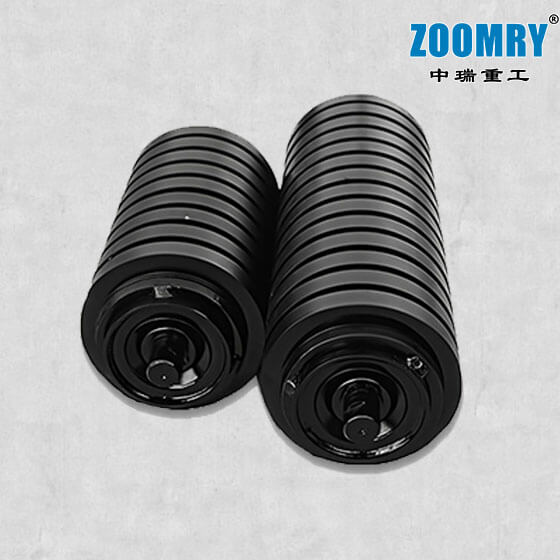
The belt is troughed at the loading point to receive material, then gradually folded into a pipe shape through a series of transition idler frames. Once fully formed, the belt maintains its circular cross-section along the carrying run. At the discharge end, the belt opens back to a flat configuration to release the material, then returns to the tail end in a flat or slightly troughed state.
The overlapping belt edges are pressed together by the idler frames, creating a sealed tube that contains the material throughout the transport path. This sealing action is what distinguishes the tubular conveyor from open trough designs.
Key Design Features
Enclosed material transport
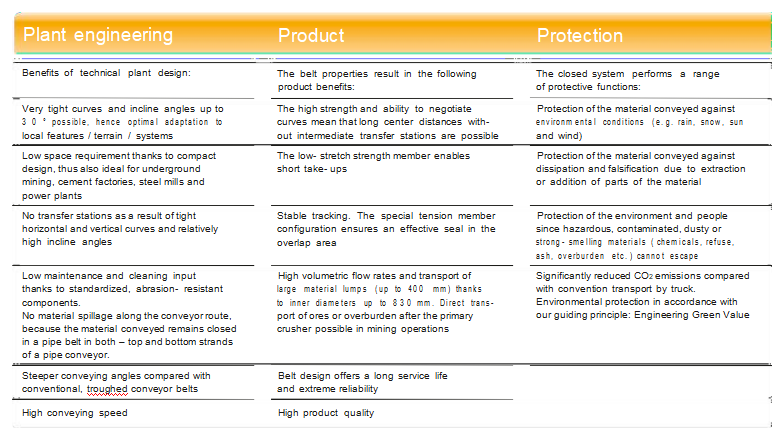
The pipe-shaped belt fully encloses the material along the carrying run, preventing spillage and reducing dust emissions. This feature is particularly relevant for installations near residential areas, waterways, or environmentally sensitive zones.
Curve navigation
The system can follow terrain with horizontal curves as tight as 300 times the pipe diameter. This capability allows the conveyor to bypass obstacles or follow property boundaries without requiring intermediate transfer towers.
Compact footprint
The triangular arrangement of idler frames and the narrow belt width (relative to capacity) result in a smaller cross-sectional profile compared to comparable trough conveyors, which can be advantageous in confined spaces.
Weather protection
Enclosed material is shielded from rain, wind, and extreme temperatures, reducing moisture absorption and material degradation during transport.
Technical Specifications
| Type | Nominal pipe diameter (mm) | Pipe ID (mm) | Belt Width (mm) | CSA (m²) | Granularity Max (mm) |
| JKGD01 | 100 | 100.2 | 430 | 0.0059 | 20~30 |
| JKGD02 | 150 | 150.7 | 600 | 0.0134 | 30-50 |
| JKGD03 | 200 | 199.1 | 780(800) | 0.0234 | 50~70 |
| JKGD04 | 250 | 263.5 | 1000 | 0.0409 | 70~90 |
| JKGD05 | 300 | 285.2 | 1100(1200) | 0.0479 | 90~100 |
| JKGD06 | 350 | 334.3 | 1300(1400) | 0.0658 | 100-120 |
| JKGD07 | 400 | 426.5 | 1600 | 0.1071 | 120~150 |
| JKGD08 | 500 | 509.5 | 1900(2000) | 0.1529 | 150-200 |
| JKGD09 | 600 | 603.5 | 2250 | 0.2145 | 200-250 |
| JKGD10 | 700 | 690.6 | 2550 | 0.2809 | 250-300 |
| JKGD11 | 850 | 828.1 | 3100 | 0.4041 | 300-400 |
System Configuration

Operating Characteristics
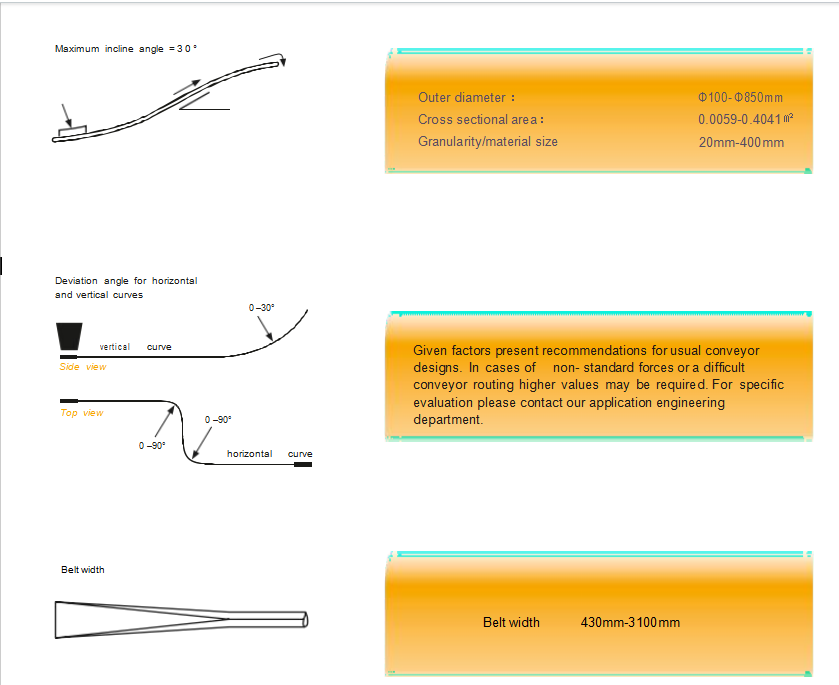
The system offers operational benefits including reduced material degradation, lower dust emissions, and the ability to handle steep inclines (up to 30° or more depending on material properties). Maintenance intervals are typically longer than open conveyors due to the protection of moving parts from dust and spillage.
Optional Safety Components
Belt Sway Switch
Detects belt deviation and triggers an alarm or system shutdown. Typically installed in pairs along the conveyor length.
Pull Cord Switch
Emergency stop device activated by pulling a wire rope. Arranged along the entire conveyor length for immediate access in case of emergency.
Zero Speed Switch
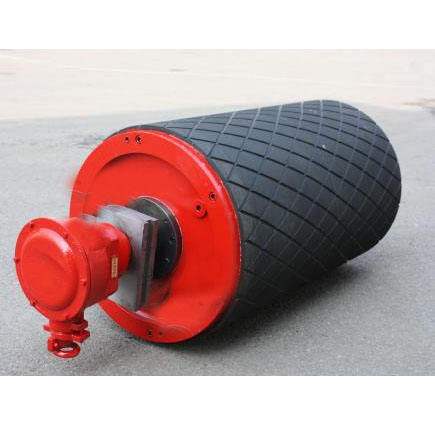
Monitors belt or drum speed to detect slippage conditions caused by overload, insufficient tension, or worn drive roller lagging.
About the Manufacturer
ZOOMRY has been engineering bulk material handling solutions since 2002, with a 40,000m² production facility and ISO 9001/14001-certified quality systems. The company's product range includes belt conveyors, long-distance curved conveyors, high-angle conveyors, stackers, ship loaders/unloaders, and related components. Export markets include Europe, the Americas, Southeast Asia, and South Africa.
Frequently Asked Questions About Tubular Conveyors
What is the difference between a tubular conveyor and a traditional belt conveyor?
The main difference is that the belt in a tubular conveyor is formed into a closed pipe shape along the carrying run, while a traditional trough conveyor remains open. This enclosure allows the tubular conveyor to navigate tighter curves, contain dust and spillage, and protect material from weather conditions.
What is the minimum bending radius for a tubular conveyor?
Horizontal curves can be achieved with a radius as small as 300 times the pipe diameter. For example, a 150mm diameter pipe can navigate a 45-meter radius curve. This capability varies with belt tension and material load.
What materials are suitable for transport in a pipe conveyor?
The system handles a broad range of bulk solids including coal, ore, limestone, clinker, cement, fly ash, grain, and chemicals. The enclosed design is particularly suitable for dusty, fine, or sticky materials. Maximum particle size is constrained by pipe diameter — refer to the specification table above.
How is the belt kept closed in a pipe conveyor?
The belt is held in its closed pipe shape by a series of hexagonal idler frames. These frames consist of six rollers arranged around the belt, applying pressure to maintain the circular cross-section. The belt edges overlap to create a sealed joint.
What maintenance does a tubular conveyor require?
Regular maintenance includes inspecting idler rollers for wear, checking belt edge overlap and sealing, monitoring dust seals at loading and discharge points, and verifying belt tension. The enclosed design generally reduces exposure to dust and spillage, which can extend component life compared to open conveyors.
Video: Tubular Conveyor System
On-Site Vulcanizing Service
For long-distance or heavy-duty tubular conveyor installations, on-site belt vulcanizing is often required to ensure a seamless, durable splice. ZOOMRY supplies vulcanizing machines and offers on-site technical support. See our Conveyor Belt vulcanizing page for a detailed step-by-step guide.
Need a Reliable Tubular Conveyor System?
Contact ZOOMRY for tailored bulk material handling solutions — pipe conveyors for coal, ore, aggregates, and more.
Contact Us Today