 ZOOMRY

The difference between a Pipe conveyor and a trough conveyor lies in how the belt is formed and how material is contained during transport. A trough conveyor carries material on an open belt shaped into a U or V profile by three-roll idler sets, while a pipe conveyor rolls the belt into a closed tubular shape using six-roll idler panels, fully enclosing the material inside the belt. This core structural difference drives their respective advantages in dust containment, curve capability, incline angle, and cost.
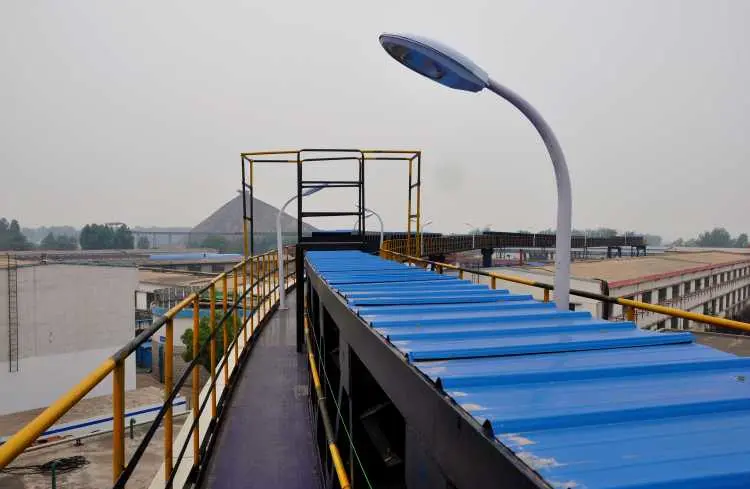
Core Structural Difference
In a trough conveyor, the belt passes over three-roll idler sets that form it into a shallow U shape. The material sits openly on the belt surface, exposed to the surrounding environment along the full conveying length. Standard trough angles range from 20° to 45°, and the material is contained only by the belt's side profile and the angle of repose of the material being carried.
In a pipe conveyor, the belt passes through a series of six-roll idler panels arranged in a hexagonal pattern. After loading at the tail end, the belt is progressively folded from a flat profile into a closed tube. The material is fully enclosed inside the tubular belt from the loading point to the discharge point, where the belt opens again to release the material.
Key Differences at a Glance
| Comparison Factor | Pipe Conveyor | Trough Conveyor |
|---|---|---|
| Belt profile | Closed tubular shape | Open U or V shape |
| Dust and spillage | Material fully enclosed; minimal dust and spillage | Material exposed; dust control requires covers or enclosures |
| Curve capability | Tight horizontal and vertical curves in 3D | Limited to gentle curves; sharp turns require transfer points |
| Incline angle | Up to 30° or more depending on material and belt design | Typically up to 18–20° for standard belt profiles |
| Material protection | Protected from wind, rain, and contamination | Exposed to weather; Rain Covers or gallery enclosures needed |
| Capital cost | Higher — more idler panels, belt, and structural supports | Lower — simpler idler arrangement and belt construction |
| Maintenance | More idler rollers to inspect and replace | Fewer rollers per station; simpler access |
| Best suited for | Environmentally sensitive areas, complex terrain, steep routes | Straight high-volume routes, open sites, budget-sensitive projects |
When a Pipe Conveyor Wins
Pipe conveyors are specified when containment, terrain adaptability, or environmental compliance are primary project requirements.
- Environmentally sensitive routes: When a conveyor passes near communities, farmland, or protected areas, the enclosed tubular belt helps contain dust and prevents material loss from wind.
- Complex terrain: A pipe conveyor navigates tight horizontal and vertical curves without transfer points, reducing the number of towers and transfer stations along the route.
- Steep inclines: The tubular belt profile increases material-to-belt contact pressure, allowing steeper incline angles than open trough conveyors for many materials.
- Material protection: Materials that are sensitive to moisture, wind loss, or contamination — such as cement, fly ash, and chemical powders — benefit from full enclosure during transport.
- Dust compliance: In regions with strict particulate emission limits, the enclosed profile helps terminals and plants meet environmental requirements without additional gallery enclosures.
When a Trough Conveyor Wins
Trough conveyors remain the workhorse of bulk material handling for straight, high-capacity routes where containment is not a primary constraint.
- High-volume straight routes: For long, straight runs — such as mine-to-plant or quarry-to-port corridors — a trough belt conveyor offers simpler construction and lower capital cost per meter.
- Open industrial sites: Where dust control is managed through water spray systems or partial covers, an open trough conveyor avoids the additional idler and belt costs of a pipe system.
- Large lump materials: Materials with large particle sizes may exceed the pipe diameter capacity of a tubular belt, making an open trough profile more practical.
- Budget-sensitive projects: When capital cost is the deciding factor and environmental constraints are moderate, trough conveyors provide the most economical conveying solution.
Cost and Maintenance Comparison
Pipe conveyors carry a higher upfront investment than trough conveyors due to the additional idler rollers per station, the specialized belt construction, and the increased structural supports required for the tubular profile. However, this cost difference may be offset by savings in other areas:
- Reduced transfer points: The 3D curve capability of pipe conveyors can eliminate multiple transfer towers, reducing structural steel, chutes, and dust collection systems.
- Lower dust control infrastructure: Enclosed transport reduces or eliminates the need for belt covers, gallery enclosures, and spray systems along the route.
- Simpler permitting: In environmentally constrained regions, the enclosed profile may simplify environmental approval compared with an open conveyor requiring additional mitigation measures.
Maintenance requirements also differ. Pipe conveyors have more idler rollers per station — typically six per panel — which increases inspection and replacement workload. Trough conveyors have fewer rollers per station but may require more frequent cleanup of spillage if the material is prone to dust or wind loss.
Application Examples
The choice between pipe and trough conveying is usually driven by project-specific route conditions and environmental requirements rather than material type alone.
Pipe conveyor systems are commonly selected for:
- Cement plant raw meal and finished product transport between process buildings
- Power plant fuel handling where coal dust control is a compliance requirement
- Chemical and fertilizer plants handling moisture-sensitive or dusty powders
- Port terminals moving dusty bulk materials through densely populated areas
Trough conveyor systems are commonly selected for:
- Mine overland conveyors moving high volumes of ore over long straight distances
- Quarry-to-plant aggregate transport on open industrial land
- Stockyard and ship loading feed conveyors with moderate dust control needs
As a bulk material handling equipment manufacturer, ZOOMRY supplies both pipe conveyor and trough conveyor configurations, matched to the specific route, material, and environmental requirements of each project.
Key Selection Factors
- Route geometry: Tight curves and complex terrain favor pipe conveyors. Long straight routes favor trough conveyors.
- Environmental constraints: Dust, noise, and visual impact requirements may make pipe conveying the preferred option.
- Material characteristics: Particle size, moisture content, and abrasiveness affect belt selection for both conveyor types.
- Capacity requirement: Both conveyor types handle comparable capacities, but pipe diameter limits maximum lump size.
- Budget and schedule: Trough conveyors are generally simpler to design, fabricate, and install.
Frequently Asked Questions
Can a pipe conveyor handle the same capacity as a trough conveyor?
Pipe conveyors and trough conveyors can be configured for comparable capacities, but the maximum lump size for a pipe conveyor is limited by the pipe diameter. A pipe conveyor with a smaller tube diameter may require material crushing before transport, while a trough conveyor with the same belt width can typically handle larger lumps.
Is a pipe conveyor more expensive than a trough conveyor?
Yes, in most cases the upfront capital cost of a pipe conveyor is higher due to the additional idler rollers, specialized belt, and structural supports. However, total project cost may be lower when savings from reduced transfer points, eliminated gallery enclosures, and simplified dust control systems are included.
Which conveyor type is better for coal handling?
For coal handling, the choice depends on the route and environmental requirements. Pipe conveyors are preferred for coal transport through populated or environmentally sensitive areas where dust containment is mandatory. Trough conveyors are commonly used for open industrial sites where dust control can be managed with covers or spray systems.
Can a pipe conveyor turn corners without transfer points?
Yes. Pipe conveyors navigate horizontal and vertical curves in three dimensions without transfer points, which is one of their key advantages over trough conveyors. This capability reduces the number of transfer towers and associated material degradation points along the route.
Related Products
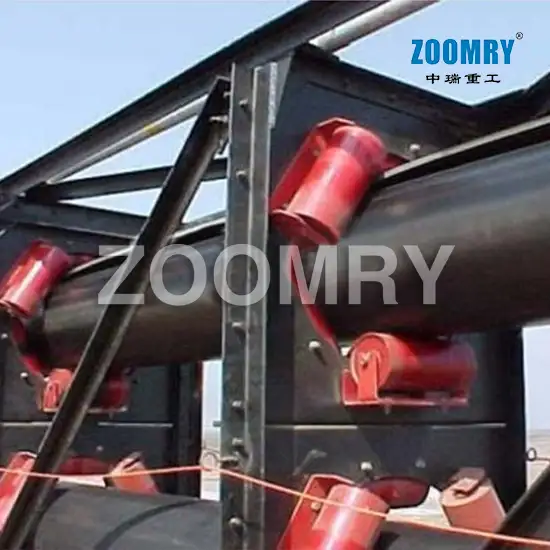
Enclosed tubular conveying for dust-sensitive routes
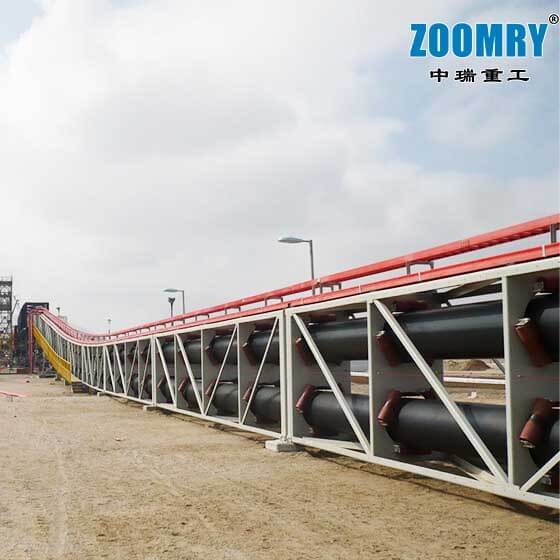
Tubular belt design for steep inclines and tight curves
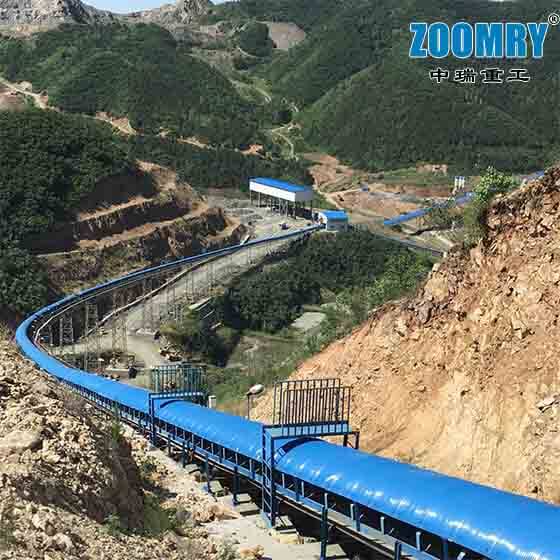
Open-trough conveying with terrain-following curves
Industry Applications
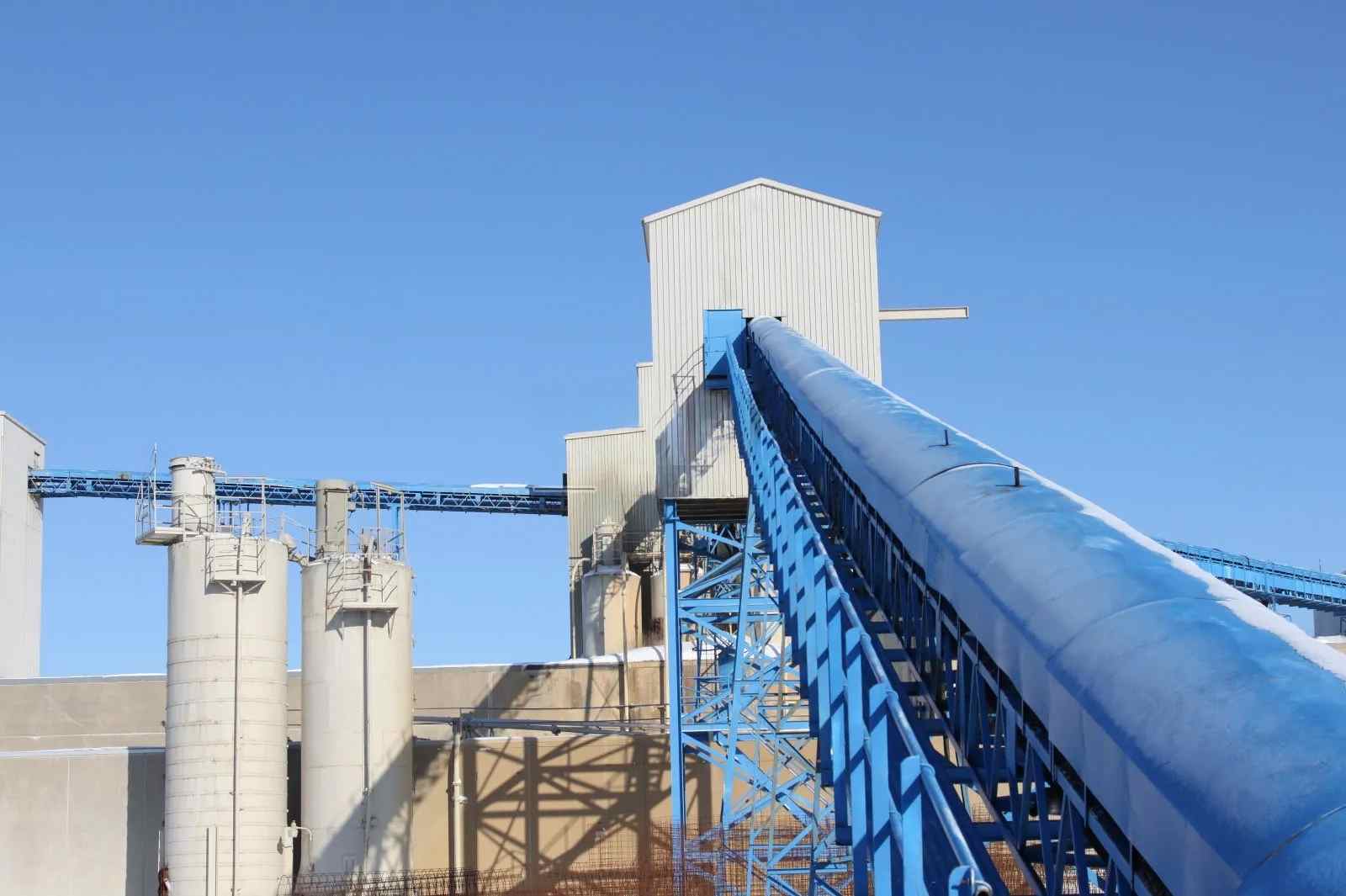
Enclosed conveying for dust-free cement plant transport
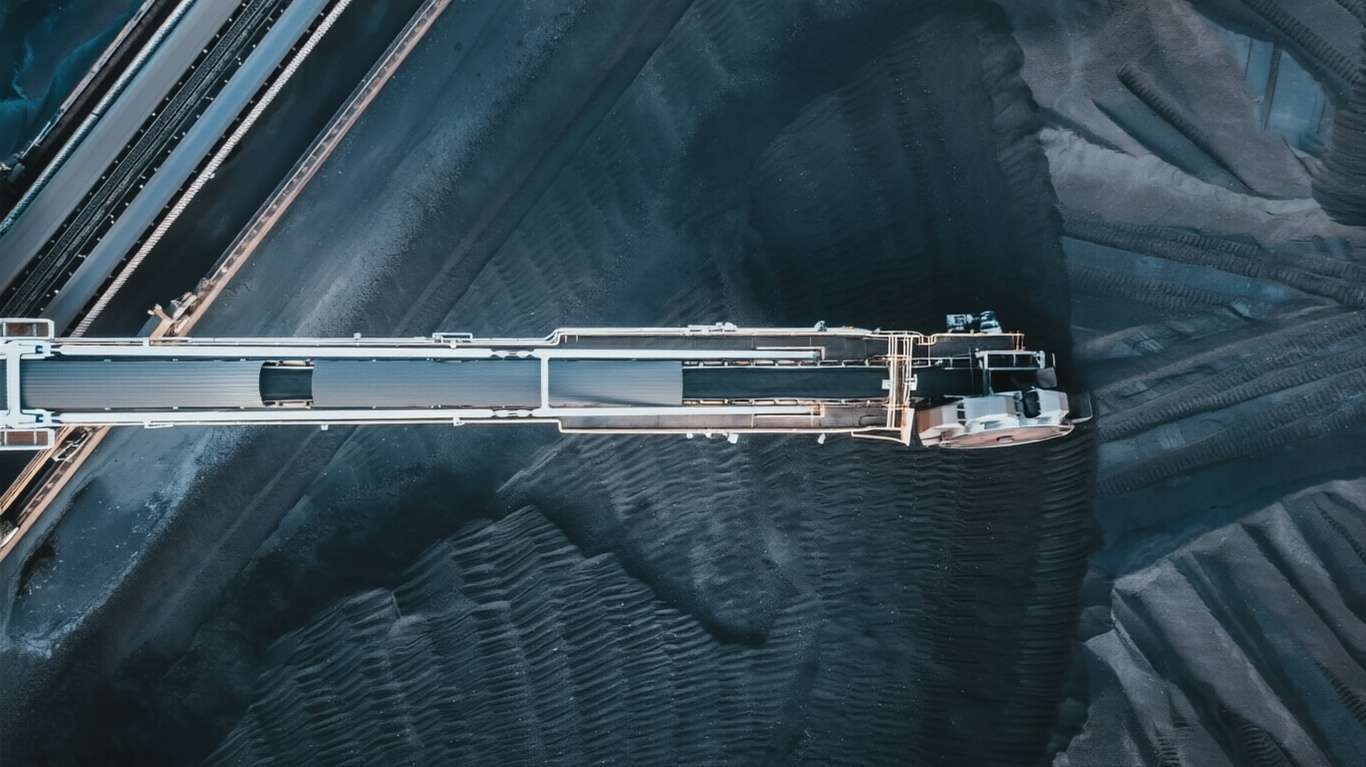
Pipe and trough conveying for coal supply chains
Choosing Between a Pipe Conveyor and a Trough Conveyor?
Share your route geometry, material type, capacity, and environmental requirements. ZOOMRY can help evaluate which conveying system fits your project.
Contact Us →