 ZOOMRY

The difference between a tracked stacker and a wheeled stacker lies in the undercarriage system that provides mobility. A tracked stacker uses crawler tracks similar to an excavator, distributing the machine's weight across a large ground contact area for operation on soft, uneven, or unpaved surfaces. A wheeled stacker uses rubber tires on axles, providing faster travel on prepared surfaces and easier towing between work areas. For stockpile operations, the choice between them is driven primarily by ground conditions, relocation frequency, and site preparation requirements.
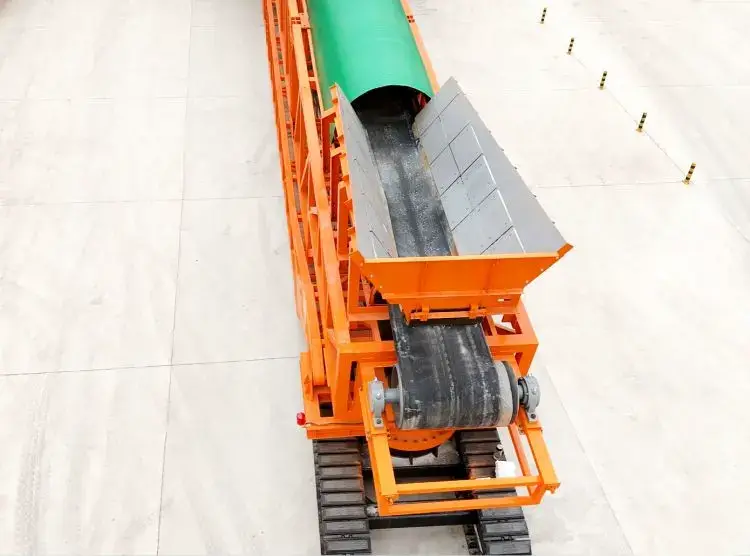
Core Structural Difference
A tracked radial stacker is mounted on a crawler undercarriage with continuous steel or rubber tracks. The tracks spread the machine's weight over a large area, resulting in low ground pressure. This allows the stacker to operate directly on soft ground, unpaved stockyards, and uneven terrain without site preparation. Tracked stackers use hydraulic drives for travel and can pivot in place, providing precise positioning without the need for turning space.
A wheel radial stacker is mounted on rubber-tired axles, typically with a tow bar or fifth-wheel connection for relocation by a haul truck. Wheels provide faster travel on prepared surfaces and lower rolling resistance, making wheeled units easier to move between stockpile zones over longer distances. However, wheels concentrate the machine's weight on smaller contact patches, requiring firmer ground conditions to support the load without sinking.
Key Differences at a Glance
| Comparison Factor | Tracked Stacker | Wheeled Stacker |
|---|---|---|
| Ground pressure | Low — weight distributed over track area | Higher — weight concentrated on tire contact patches |
| Ground conditions | Soft, uneven, unpaved surfaces | Prepared, firm, or paved surfaces |
| Travel speed | Slow — hydraulic track drive | Faster — towable behind haul truck |
| Positioning | In-situ pivot steering, precise placement | Requires turning space; towed into position |
| Mobility between sites | Self-propelled, but slow for long moves | Easy towing between stockpile zones |
| Site preparation | Minimal — operates on natural ground | May require grading or compaction |
| Typical capacity | 100–1,000 t/h | 500–3,500 m³/h |
When a Tracked Stacker Makes Sense
Tracked stackers are selected when ground conditions are the primary constraint on equipment mobility.
- Heap leaching pads: Leach pads have soft, uncompacted ground where wheeled equipment would sink. Tracked stackers spread their weight and operate directly on the pad surface.
- Unpaved mining stockyards: Mine sites without prepared haul roads benefit from the low ground pressure of tracked units.
- Uneven terrain: Crawler tracks handle ground irregularities that would cause wheeled units to lose traction or stability.
- Frequent in-situ repositioning: When the stacker needs to pivot and adjust its position within a stockpile area, tracked steering provides precise control without towing equipment.
When a Wheeled Stacker Makes Sense
Wheeled stackers are selected when ground conditions are prepared and relocation speed matters more than low ground pressure.
- Quarry and aggregate yards: Prepared surfaces with compacted ground or pavement support wheeled operation.
- Multiple stockpile zones: When the stacker moves frequently between different stockpile areas across a large site, wheeled units tow faster.
- Port and terminal stockyards: Paved or compacted port surfaces suit wheeled stackers, and the higher capacity range matches terminal throughput.
- Contract crushing and screening: Mobile operations that relocate regularly between job sites favor the transportability of wheeled units.
Capacity Considerations
Wheeled stackers are available in a wider range of capacities, from compact units around 200 t/h up to large radial telescopic machines handling 3,500 m³/h. The wheeled undercarriage can be engineered to support heavier structures, making it suitable for high-capacity stockyard operations.
Tracked stackers typically occupy the lower to mid capacity range, from 100 to 1,000 t/h, reflecting their primary use in heap leaching, soft-ground mining, and temporary stockpile applications where extreme capacity is less critical than ground adaptability.
Key Selection Factors
- Ground bearing capacity: Soft ground requires tracked low ground pressure. Firm prepared surfaces support wheeled units.
- Site preparation budget: Wheeled stackers may require grading, compaction, or paving. Tracked stackers operate on natural ground.
- Relocation frequency and distance: Frequent long moves favor wheeled towability. Short in-place adjustments favor tracked pivoting.
- Capacity requirement: High-capacity stockyard operations favor wheeled configurations.
- Application type: Heap leaching and soft-ground mining favor tracked units. Quarry and port stockyards favor wheeled units.
Frequently Asked Questions
Can a tracked stacker travel on paved surfaces?
Tracked stackers can travel on paved surfaces, but the steel or rubber tracks may cause surface wear over repeated movements. For stockyards with paved surfaces, a wheeled stacker is generally more appropriate. If tracked mobility is required on pavement, rubber track options can help reduce surface damage.
How fast can a tracked stacker move?
Tracked stackers move at slow crawling speeds, typically a few meters per minute under hydraulic track drive. They are designed for precise positioning within a stockpile area rather than rapid relocation between sites. For longer moves, a low-loader transport is recommended.
Can a wheeled stacker operate on soft ground?
Wheeled stackers require firm ground conditions to support their weight without sinking. On soft ground, the tires may lose traction or create ruts that affect stability. In these conditions, a tracked stacker is the appropriate choice due to its low ground pressure.
Which stacker type is better for heap leaching?
Tracked stackers are the standard choice for heap leaching operations. The soft, uncompacted leach pad surface cannot support wheeled equipment, and the tracked undercarriage spreads the stacker's weight to prevent sinking. The precise in-situ steering also helps place material accurately on the pad.
Related Products
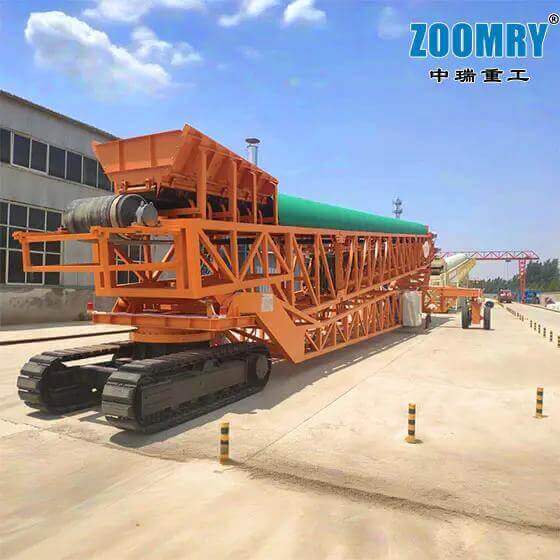
Crawler mobility for soft ground and heap leaching
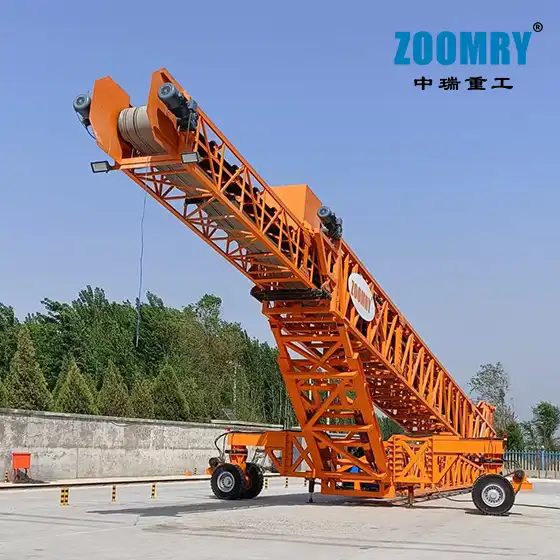
Wheeled radial stacking for prepared stockyard surfaces
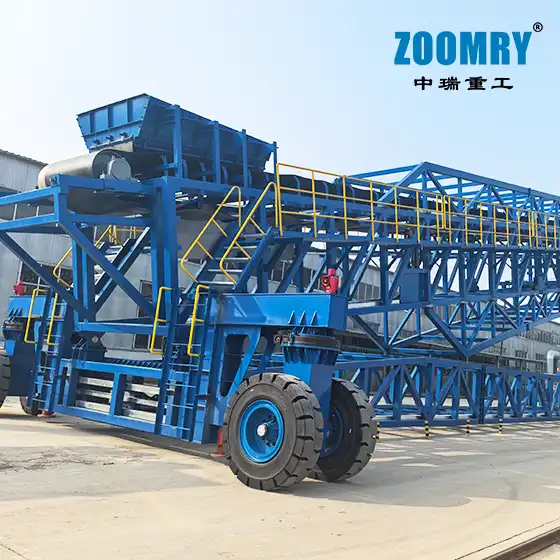
Self-propelled wheeled stacking with telescopic boom
Industry Applications
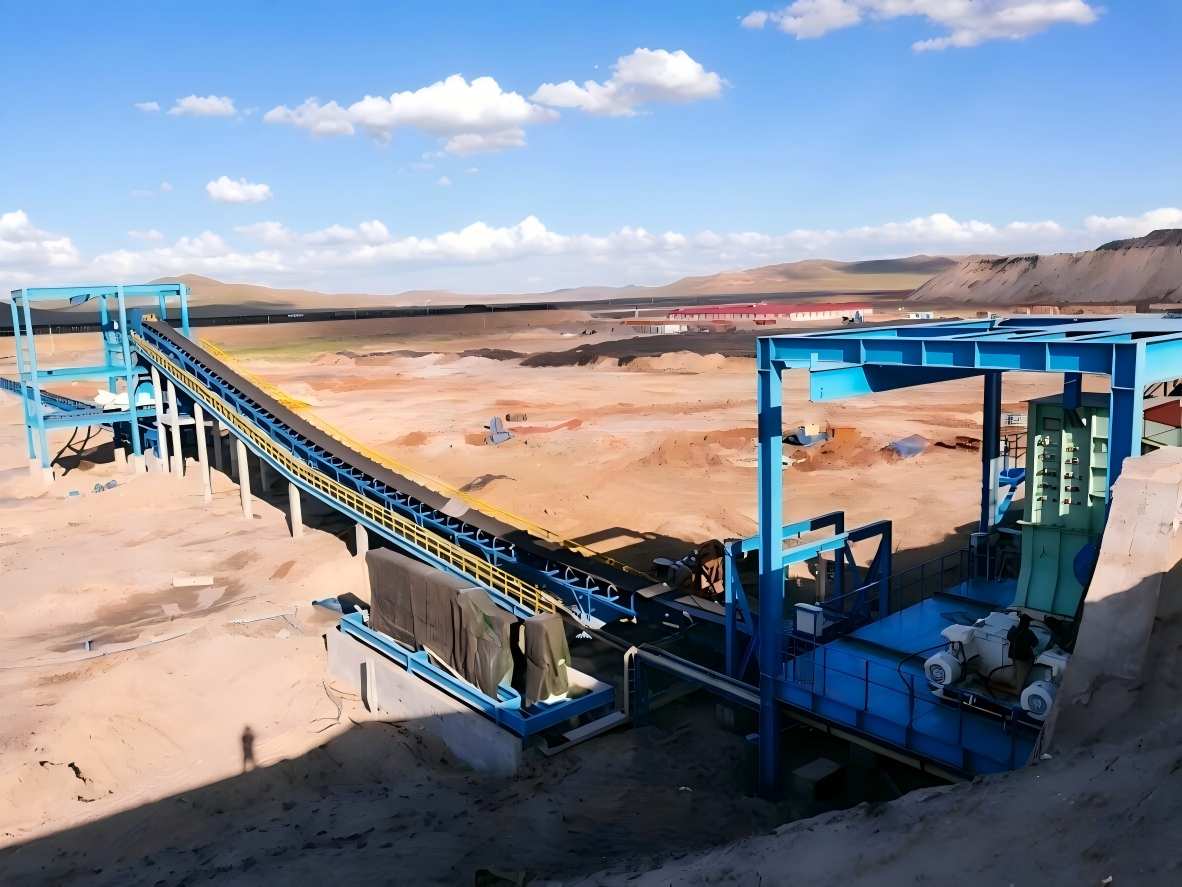
Stacking solutions for surface and underground mining
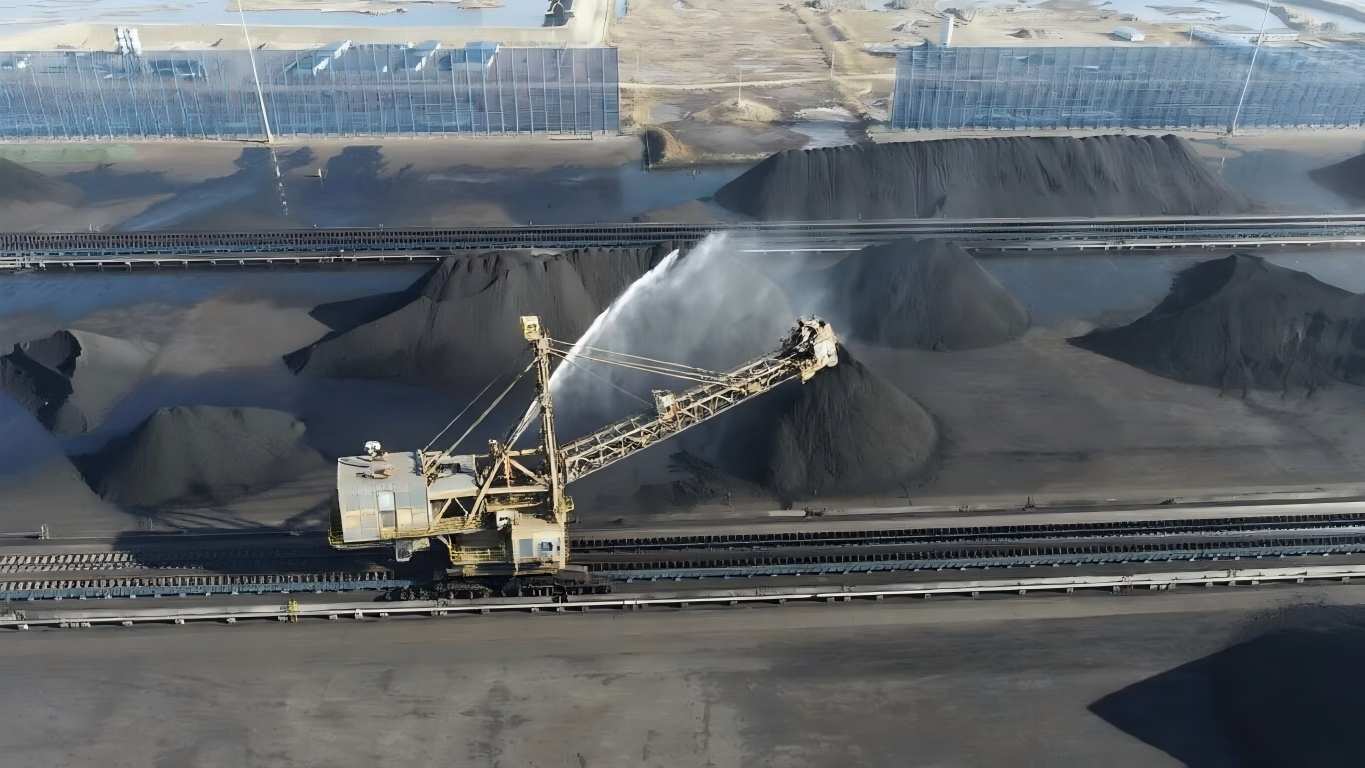
Tracked stacking for soft-ground leach pad operations
Choosing Between a Tracked Stacker and a Wheeled Stacker?
Share your ground conditions, capacity requirement, and site layout. ZOOMRY can help determine which stacker undercarriage fits your operation.
Contact Us →