 ZOOMRY

Grasshopper Conveyor Overview
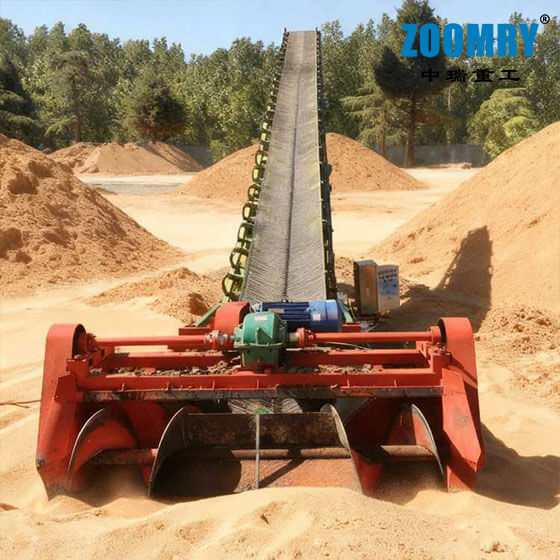
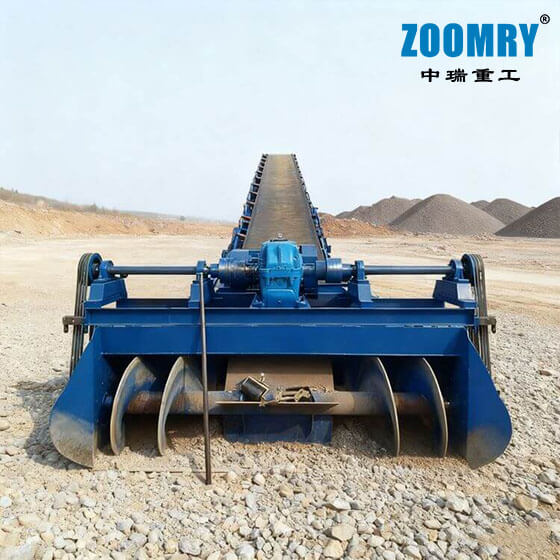
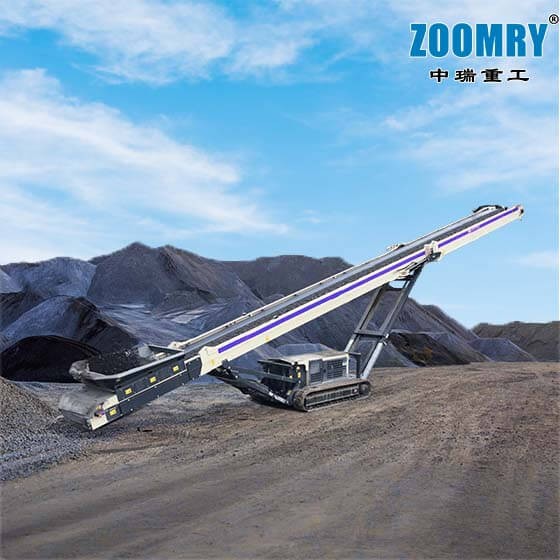
ZOOMRY grasshopper conveyors are portable transfer conveyors built around field-bolted prefabricated truss sections. One end is elevated by support struts mounted on a tire-equipped axle, allowing the unit to be repositioned around site pads with a large fork truck or front-end loader. These portable transfer conveyors serve as mobile links between crushing, screening, stockpiling, and loading stages in aggregate plants, sand and gravel quarries, mining pits, and fly-ash remediation projects.
Four standard models — ZR65D, ZR80D, ZR100D, and ZR120D — cover capacities from 200 to 550 t/h with 20 or 25 m conveyor lengths. Multiple units can be arranged in series for project-specific transfer distances, providing a flexible alternative to fixed conveyors or short-haul truck movements between process stages.
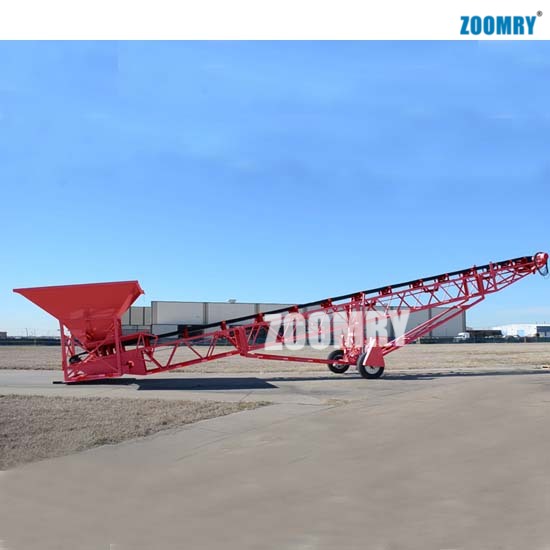
ZOOMRY Grasshopper Conveyor — Portable Transfer Conveyor for Site Material Handling
How Grasshopper Conveyors Work
A grasshopper conveyor functions as a relocatable intermediate transfer link within a multi-stage bulk handling circuit. Material enters the tail end from an upstream crusher, screen, hopper feeder, or another conveyor, travels along the inclined truss section, and discharges at the elevated head end onto a stockpile or into downstream equipment.
The modular truss design allows each unit to be transported in sections and bolted together on site. The tire-mounted axle assembly supports one end while the other rests on the ground or a receiving point, creating the inclined conveying path. Because the conveyor is not permanently fixed to foundations, it can be shifted between work areas with standard site equipment — supporting progressive stockpile building, pit-to-plant connections, and temporary transfer routes that adapt as mining or quarry faces advance.
Key Features
- Field-Bolted Modular Truss: Prefabricated truss sections bolt together on site, supporting transport flexibility and simplified relocation between work areas.
- Tire-Mounted Axle Assembly: Support struts mounted on a wheeled axle allow the discharge end to be elevated and the conveyor repositioned with a fork truck or front-end loader.
- Series-Connection Capability: Multiple units can be arranged in series for project-specific transfer distances, creating longer temporary or semi-fixed conveying routes.
- Adjustable Discharge Height: Stack heights of 6.5 m or 8.0 m accommodate discharge into trucks, hoppers, or downstream conveyors.
- Independent Drive System: Each conveyor is powered by its own belt drive motor (18.5–37 kW) with optional interlocking available where a coordinated multi-unit control scheme is specified.
Technical Specifications
| Model | Capacity (t/h) | Length (m) | belt conveyor Power (kW) | Travel / Repositioning Motor Power (kW) | Max Inclination (°) | Stack Height (m) | Belt Speed (m/s) |
|---|---|---|---|---|---|---|---|
| ZR65D | 200 | 20 / 25 | 18.5 | 11 | 18 | 6.5 / 8.0 | 2.0 |
| ZR80D | 300 | 20 / 25 | 22 | 11 | 18 | 6.5 / 8.0 | 2.0 |
| ZR100D | 400 | 20 / 25 | 30 | 15 | 18 | 6.5 / 8.0 | 2.5 |
| ZR120D | 550 | 20 / 25 | 37 | 15 | 18 | 6.5 / 8.0 | 2.5 |
Capacity, belt speed, and maximum inclination depend on material bulk density, particle size, moisture content, and belt design. Travel motor power supports repositioning functions only; the conveyor is not self-propelled and is relocated using suitable site equipment. Final configuration should be confirmed against the specific transfer route and site conditions.
Why Use Grasshopper Conveyors Instead of Short-Haul Trucks?
- Reduced Short-Haul Vehicle Dependency: Conveyor-based transfer can reduce the number of loader and truck movements required between process stages, helping lower operating costs and site congestion.
- Adaptable Transfer Routes: Unlike fixed conveyor galleries, grasshopper units can be repositioned as quarry faces advance, stockpile locations change, or processing circuits are reconfigured.
- No Permanent Foundation Required: Modular truss sections create temporary or semi-fixed conveying routes without the civil works and lead time associated with permanent conveyor structures.
Typical Applications
- Crushing-to-Stockpile Transfer: Mobile links between primary and secondary processing plants in quarry and mining pits.
- Port & Terminal Connections: Mobile links from truck unloaders or hopper feeders to mobile ship loaders.
- Warehouse-to-Quay Transfer: Temporary conveyor routes connecting storage areas to ship loading or unloading points.
- Heap Leach Ore Handling: Grasshopper conveyors arranged for ore transportation in heap leach plants.
What Information Do We Need for Grasshopper Conveyor Selection?
To recommend the right grasshopper conveyor model, please share the following project parameters:
- Material characteristics: Bulk density (t/m³), particle size distribution, moisture content, and material type (aggregate, ore, sand, fly ash, etc.).
- Required throughput: Target capacity in t/h, including any peak loading conditions.
- Transfer distance and lift: Horizontal distance between feed and discharge points, plus required discharge height or stack height.
- Site conditions: Ground bearing capacity, available space for repositioning, and frequency of conveyor relocation.
- Existing equipment and control requirements: Upstream feed source, downstream receiving equipment, whether multi-unit series connection is needed, and whether interlocked control is required.
Video
Related Equipment

Mobile transfer solution with front-wheel steering and 5-minute workstation relocation.
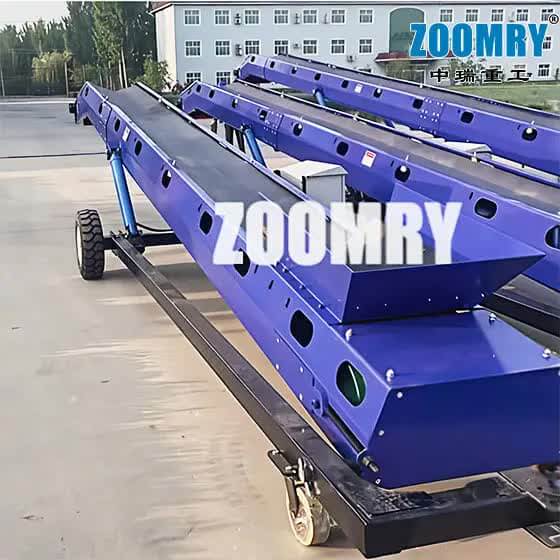
Radial stacking capability for stockyard material distribution up to 8 m height.
Industry Solutions
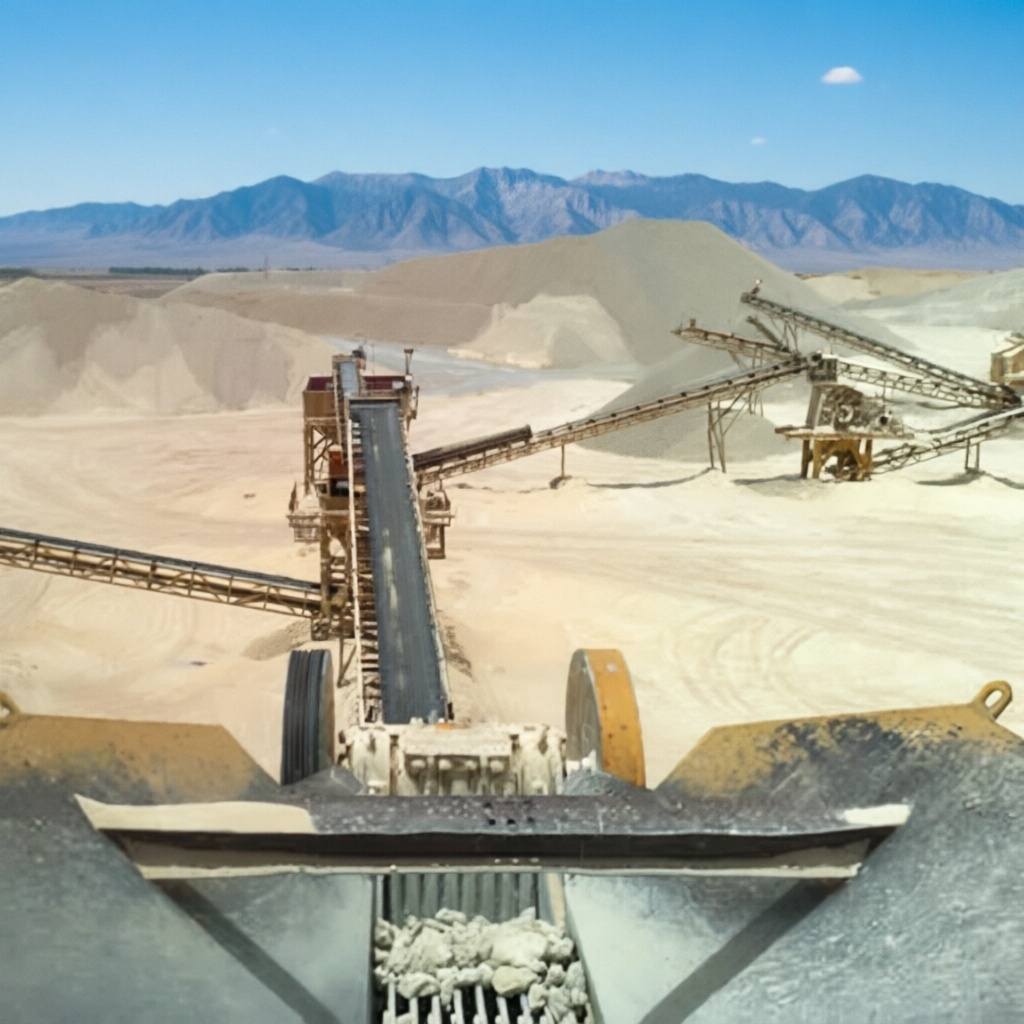
Grasshopper conveyors for crusher-to-stockpile transfer in aggregate operations.
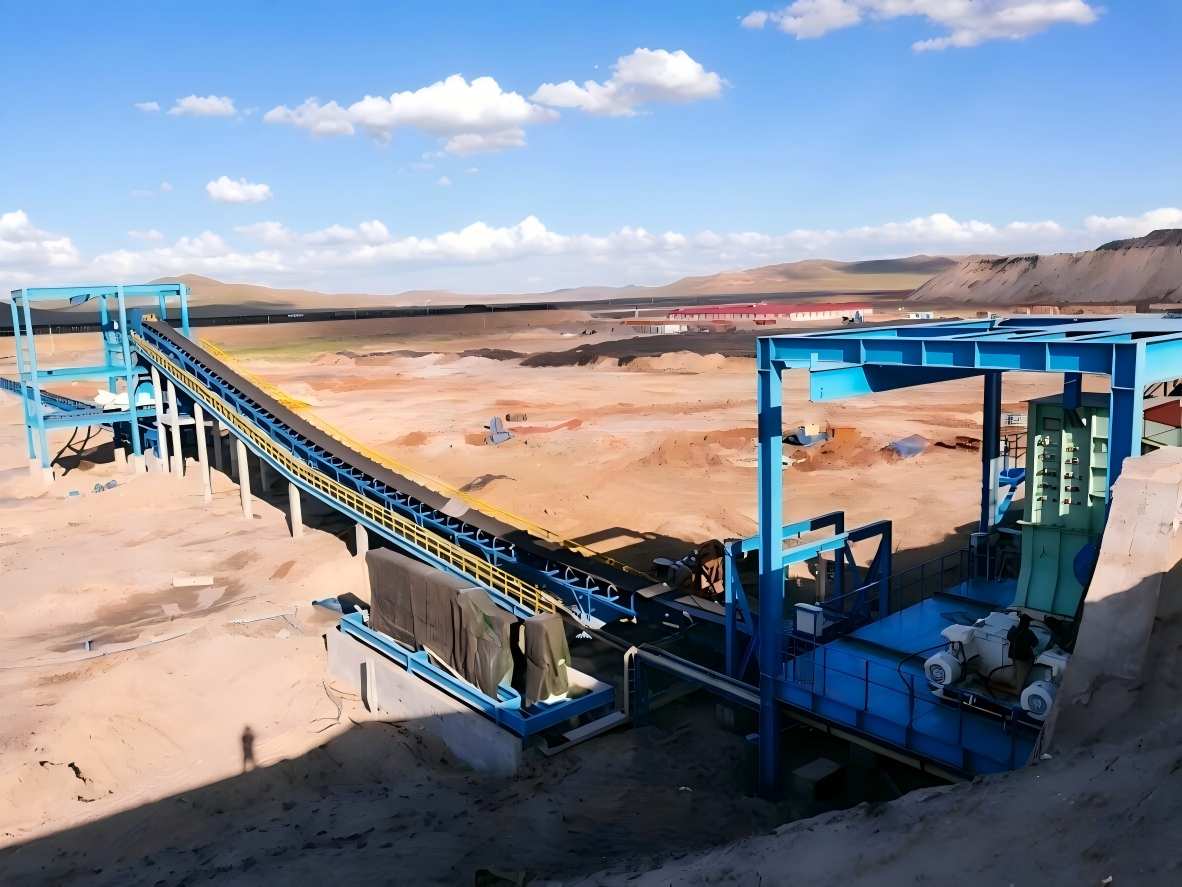
Portable transfer conveyors for pit-to-plant and heap leach ore handling.
Need a Grasshopper Conveyor for Your Transfer Application?
Tell us your material type, throughput, transfer distance, and site conditions — our engineers will recommend the right ZR model and conveyor configuration.
Request Grasshopper Conveyor Quote →