 ZOOMRY

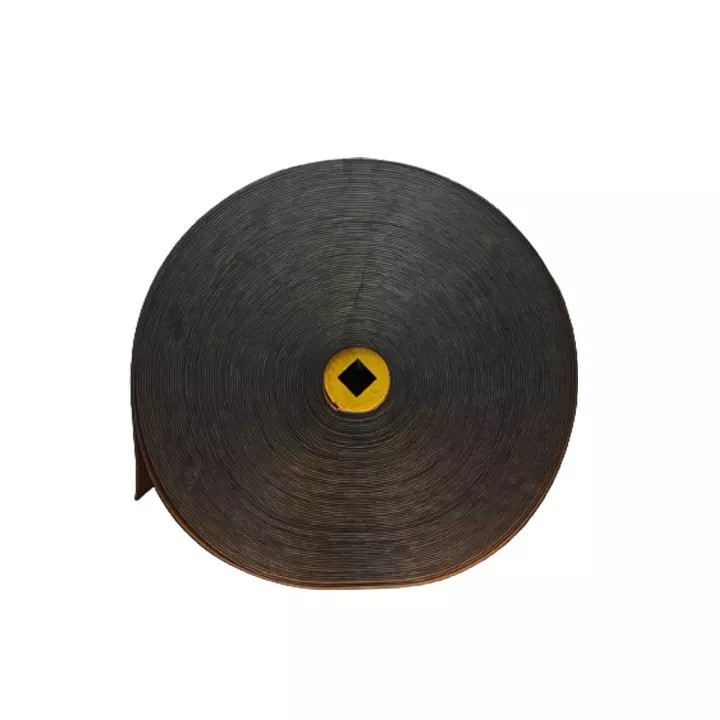
ZOOMRY heat resistant Conveyor Belts are specifically designed for transporting high-temperature materials such as cement clinker, sintered ore, hot coke, foundry castings, and phosphate fertilizer. Constructed with multi-ply rubber, polyester cotton canvas carcass, and specially formulated heat-resistant rubber compounds, these belts maintain structural integrity and flex resistance at continuous material temperatures up to 200°C — with intermittent peaks up to 220°C. Unlike standard conveyor belts that harden, crack, and carbonize under prolonged thermal exposure, ZOOMRY heat resistant belts resist thermal degradation and cover cracking throughout their service life. Available in HR (T1), SHR (T2), and UHR (T3) grades, these belts are the preferred choice for cement plants, steel mills, foundries, and sinter handling operations worldwide.
Why Does Heat Resistance Matter for Conveyor Belts?
Standard conveyor belts exposed to continuous high temperatures undergo a cascade of failure mechanisms: the rubber cover hardens and loses flexibility, surface cracking develops along trough lines, the carcass layers separate due to thermal breakdown of bonding compounds, and ultimately the belt fails prematurely — often within months of installation. A heat resistant conveyor belt breaks this cycle through its specially formulated cover compounds and carcass construction.
The key is in the rubber compound formulation. ZOOMRY's heat resistant belts use EPDM (ethylene propylene diene monomer) and SBR (styrene-butadiene) based compounds that resist thermal oxidation, maintain elasticity at elevated temperatures, and prevent the progressive hardening that leads to cracking. Combined with a multi-ply polyester cotton canvas carcass that provides dimensional stability under thermal cycling, the result is a belt that delivers reliable performance in applications where standard belts fail rapidly.
Heat Resistant Belt Specifications
| Grade | Max. Temp. on Belt Surface (°C) | Max. Temp. of Material Handled (°C) | Typical Applications |
|---|---|---|---|
| HR (T1) | 125 | 180 | Paper, foundries, hot pellets, hot chemicals & fertilizer plants |
| SHR (T2) | 150 | 200 | Sintered ore, hot cement, hot powder, coke, hot chemicals & fertilizers |
| UHR (T3) | 180 | 220 | Red hot materials: cement, clinker, sintered ore, phosphate |
How to Choose the Right Heat Resistant Belt Grade?
Selecting the correct heat resistant belt grade depends on the material temperature at the loading point — not the ambient temperature or the average temperature along the conveyor. Here's a quick guide:
- HR (T1) Grade: For moderately hot materials up to 180°C such as hot fertilizers, foundry sand, and paper mill byproducts. The most economical heat resistant option for applications where material temperatures are elevated but not extreme.
- SHR (T2) Grade: For hot materials up to 200°C — the workhorse of cement plants handling hot clinker and steel mills transporting sinter. Balances temperature resistance with cost-effectiveness for the majority of high-temperature applications.
- UHR (T3) Grade: For the most extreme applications up to 220°C — red hot clinker direct from the cooler, sintered ore from the furnace, and phosphate processing. Premium EPDM-based compounds provide maximum thermal protection.
When specifying a heat resistant belt, always provide the maximum material temperature at the loading point, the belt speed (which determines cooling time between loading and discharge), and the material particle size (which affects both heat transfer and abrasion). ZOOMRY's engineering team can recommend the optimal grade and cover thickness based on these parameters.
Advantages
- First-rate tensile strength: Multi-ply construction maintains high tensile ratings even under prolonged thermal exposure — unlike standard belts that lose strength as rubber compounds degrade.
- Dependable construction: Polyester cotton canvas carcass provides dimensional stability and resists thermal shrinkage better than all-synthetic carcass designs.
- Resistance against abrasion: Heat resistant cover compounds are formulated to maintain wear resistance at temperature — not just survive heat but continue protecting the carcass from abrasive materials.
- Excellent cover rubber compound: Specially formulated EPDM and SBR compounds resist both heat and abrasion simultaneously — a critical combination for hot, abrasive materials like clinker and sinter.
- Ideal for preventing heat-induced cracking: Anti-thermal-oxidation compounds prevent the progressive hardening and surface cracking that causes premature belt failure on standard belts.
- Rubber carcass and cover with high temperature resistance: Both the internal bonding compounds and the external covers are formulated for thermal stability — protecting the entire belt cross-section.
- Anti-corrosive: Resistant to chemical attack from hot fertilizers, phosphates, and industrial byproducts commonly handled in high-temperature applications.
Related Industry Solutions
Need a Custom Heat Resistant Conveyor Belt?
Contact ZOOMRY for heat resistant belts in HR, SHR, and UHR grades — engineered to match your specific material temperature, belt speed, and cover thickness requirements.
Contact Us Today