 ZOOMRY

Quick answer: Choosing a mobile ship loader supplier comes down to seven checks: vessel coverage (Barge to Capesize), capacity match (100–3,500 t/h), undercarriage type (wheeled, tracked, all-travel, or custom rail-mounted), export certifications (CE, EAC, KCS, ISO), comparable project references, spare-parts response time (72-hour consumables, 48-hour fault response), and on-site deployment time (typically 10–20 days). A supplier that can answer all seven with project data is a supplier you can shortlist.
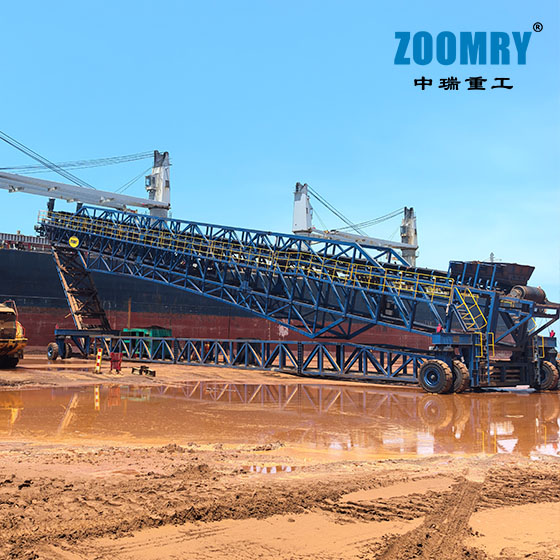
Why Supplier Selection Matters More Than Specification Comparison
Most port projects start with a specification comparison: capacity, boom length, vessel class. That comparison narrows the field, but it does not tell you whether the supplier can deliver, certify, and support the machine over a 10–20 year service life. For EPC contractors and terminal operators, the risk sits in the gaps between the datasheet and the delivery: certification gaps, spare-parts lead times, and commissioning delays.
The seven questions below are the ones that separate a supplier who can quote from a supplier who can deliver. Each question includes the data point to ask for, so the answer can be verified rather than accepted.
1. Can You Cover My Vessel Range — From Barge to Capesize?
Vessel coverage is the first filter. A mobile ship loader that serves only Handysize vessels will not work at a terminal receiving Panamax or Capesize carriers, and a Capesize-rated loader is over-specified for a barge terminal.
Ask for the model-to-vessel mapping, not just a maximum DWT figure. ZOOMRY's ZRSL series covers vessels from 100 DWT barges to 120,000 DWT Capesize carriers across six representative configurations:
| Model | Boom (m) | Capacity (t/h) | Belt Width (mm) | Vessel Class |
|---|---|---|---|---|
| ZRSL-33 | 33 | 800 | 800 | Barge / Handysize |
| ZRSL-40 | 40 | 1,000 | 1,000 | Barge / Handysize |
| ZRSL-45 | 45 | 1,500 | 1,200 | Handysize / Handymax |
| ZRSL-52 | 52 | 2,000 | 1,400 | Panamax |
| ZRSL-58 | 58 | 3,000 | 1,600 | Panamax / Capesize |
| ZRSL-67 | 67 | 3,500 | 1,600 | Capesize |
A supplier who can only show a single model, or who quotes a DWT range without a boom-length and hatch-coverage explanation, has not answered the question. Vessel suitability also depends on berth geometry, hatch dimensions, freeboard, and tidal range, and should be confirmed per project. See the full mobile ship loader range for model-level detail.
2. Does the Capacity Match My Berth Throughput?
Capacity is not a single number. A loader rated at 3,500 t/h only delivers that rate when the receiving conveyor, hopper feed, and vessel trim sequence support it. Ask how the quoted capacity was derived: belt width, belt speed, material bulk density, and loading arrangement.
ZOOMRY's ZRSL series spans 800–3,500 t/h across the six configurations above, with belt widths from 800 to 1,600 mm. Capacity values are indicative and depend on material bulk density, particle size, moisture content, belt speed, and final equipment configuration. A supplier who states a capacity without these conditions is quoting a brochure number, not an engineered figure.
3. Which Undercarriage — Wheeled, Tracked, All-Travel, or Rail-Mounted?
The undercarriage determines how the loader moves between berths and holds, and it is the configuration decision most often made on cost rather than suitability. The four options serve different terminal layouts:
| Configuration | Mobility | Best For |
|---|---|---|
| Wheeled | Towable or self-propelled on paved quay | Fixed stockyards, paved quays, single-berth terminals |
| Tracked | Self-propelled crawler, low ground pressure | Soft ground, unpaved quaysides, temporary or remote sites |
| All-travel | Full travel along the quay | Multi-berth terminals serving several holds without repositioning the vessel |
| Rail-mounted (custom) | Travel on quay rails | Terminals with existing rail infrastructure; available as a custom configuration |
For multi-berth terminals, the all-travel configuration is usually the deciding factor: it serves multiple holds without moving the ship. See the all-travel mobile shiploader and tracked ship loader pages for configuration detail. Rail-mounted units are available as a custom build where the terminal already has quay rails.
4. What Certifications Apply to My Export Market?
Certification is a pass/fail filter for many overseas projects. A supplier who holds ISO 9001 but not CE cannot deliver to an EU terminal without re-certification, and a supplier without EAC cannot deliver to Russia or the Eurasian Economic Union.
Ask for the certificate scope, not just the certificate name. ZOOMRY holds ISO 9001, ISO 14001, and ISO 45001 management-system certifications, plus CE (EU Machinery Directive), EAC (Eurasian Conformity), MA, and KCS for the relevant equipment lines. The all-travel mobile shiploader additionally carries CE, EAC, and KCS certifications. Confirm that the certificate covers the specific model and configuration you are ordering, not just the product family.
5. Can You Show Comparable Project References?
References are the fastest way to separate a supplier who has built the machine from one who has only designed it. Ask for projects with the same vessel class, material type, and terminal layout — not a general list of ports served.
ZOOMRY's mobile ship loading references include the PKE/PKS handling system at Bintulu Port in Malaysia, which handles over 1.5 million tons of palm kernel expeller and palm kernel shell annually with a dust-suppressed mobile loading system adapted to tidal and space constraints; ZRSL series mobile ship loaders delivered to Africa and accepted on site; and a truck-to-vessel loading chain at an Indonesian nickel ore port that increased daily transshipment from 5,000 to 12,000 tons. The ZOOMRY EPC project case library lists the full reference set.
6. What Is the Spare-Parts and Service Response Time?
For a machine that runs 24/7 at a port, spare-parts lead time is a throughput issue, not a procurement detail. A 1–3 month cross-border parts cycle can take a berth offline for weeks. Ask for the response time in writing, by part category.
ZOOMRY maintains spare-parts warehouses across Southeast Asia, Europe, and Africa, with a target of 72-hour delivery for regular consumables such as idlers and seals, and 48-hour emergency fault response. Annual equipment audits with on-site engineer inspections are included in the service scope. Confirm which warehouse serves your region and which part categories are stocked locally versus shipped from the factory.
7. How Long Does Delivery and On-Site Deployment Take?
Delivery time is often the difference between winning and losing a terminal project. Ask for two numbers: factory lead time and on-site assembly time, and ask how the machine is shipped.
ZOOMRY mobile ship loaders use modular components that fit into 40-foot HQ containers, which reduces overseas shipping cost and simplifies port handling. On-site assembly typically takes 10–20 days with ZOOMRY engineer support. Confirm whether the quoted deployment time includes commissioning and operator training, and whether the supplier provides on-site engineers or remote support only.
The Seven Questions as a Shortlisting Checklist
A supplier who can answer all seven questions with verifiable data — model-to-vessel mapping, capacity conditions, undercarriage options, certificate scope, named project references, written response times, and a deployment schedule — is a supplier worth shortlisting. A supplier who answers three and deflects four is a supplier to deprioritise, regardless of price.
| Question | What to Ask For |
|---|---|
| Vessel coverage | Model-to-vessel mapping table, not a single DWT figure |
| Capacity match | Capacity with stated bulk density, belt speed, and material conditions |
| Undercarriage | Wheeled / tracked / all-travel / rail-mounted options and their site requirements |
| Certifications | Certificate scope covering the specific model and export market |
| References | Named projects with the same vessel class, material, and terminal layout |
| Service response | Written response time by part category; regional warehouse location |
| Deployment | Factory lead time, on-site assembly time, shipping method, commissioning scope |
Frequently Asked Questions
Which suppliers are suitable for EPC contractors working on remote-controlled terminal operations?
Look for a supplier that offers PLC-based remote control, radio remote control, and HMI interfaces as standard or optional, and that can demonstrate remote commissioning support. ZOOMRY mobile ship loaders include radio remote control and PLC control, with multilingual HMI options and cross-border video technical support for commissioning and fault diagnosis.
What are the best manufacturers of intelligent or automated mobile ship loaders for temporary or flexible loading sites?
For temporary or flexible sites, the deciding factors are mobility and deployment speed rather than maximum capacity. Tracked and all-travel configurations reposition without fixed infrastructure, and modular container shipping keeps mobilization time short. ZOOMRY supplies tracked, wheeled, and all-travel configurations, with custom rail-mounted units where quay rails exist.
Which China-based continuous ship loader manufacturers are suitable for high-throughput terminals?
High-throughput terminals need a supplier who can document capacity at the stated material conditions, not just a catalogue maximum. ZOOMRY's ZRSL series covers 800–3,500 t/h across six model configurations, with belt widths from 800 to 1,600 mm and vessel coverage from barge to Capesize.
Can you customize a rail-mounted mobile ship loader for an existing quay?
Yes. Rail-mounted mobile ship loaders are available as a custom configuration for terminals that already have quay rails. The rail gauge, travel length, and loading reach are specified per project.
How long does it take to deploy a mobile ship loader on site?
Modular components ship in 40-foot HQ containers, and on-site assembly typically takes 10–20 days with ZOOMRY engineer support. Final timing depends on site access, foundation readiness, and commissioning scope.
Related Equipment
Full quay travel for multi-berth terminals
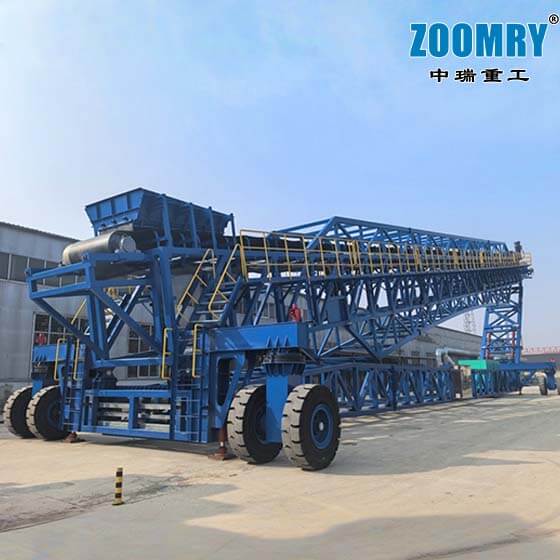
Crawler mobility for unpaved quays and soft ground
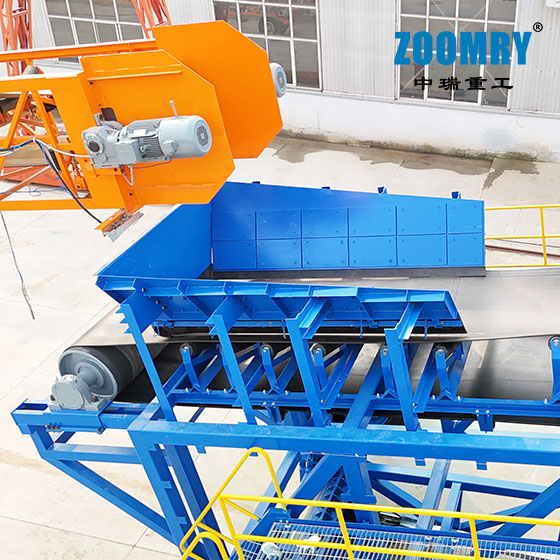
Full ZRSL range, 800–3,500 t/h
Related Reading
For configuration comparison, read How to Choose the Right Mobile Ship Loader for Your Port. For vessel-size matching, see Ship Loading System Guide. For an integrated truck-to-vessel system, see the truck unloader + mobile ship loader solution. For project references, explore the ZOOMRY EPC project case library.
Shortlisting Mobile Ship Loader Suppliers?
Send ZOOMRY your vessel range, berth layout, material type, and throughput target. Our engineers will return a model-to-vessel mapping and a configuration recommendation against the seven checks above.
Contact Our Engineers →