 ZOOMRY

In modern bulk material handling, space is often the most expensive commodity. Whether it's a congested port terminal, a narrow quarry bench, or a warehouse with limited headroom, fitting efficient conveying equipment into tight spaces is a constant challenge. This is where telescopic conveyors — also known as telescopic belt conveyors or telescoping belt conveyors — provide a solution that fixed-length systems simply cannot match. By extending and retracting their boom length on demand, these conveyors adapt to changing operational requirements without the need to relocate the entire machine.
ZOOMRY's mobile telescopic stackers and fixed radial telescopic stacking conveyors take this flexibility further — combining telescopic boom technology with 360° radial slewing to maximize stockpile coverage from a single position. This guide explains how telescopic conveyors work, where they deliver the most value, and what to look for when selecting one for your operation.
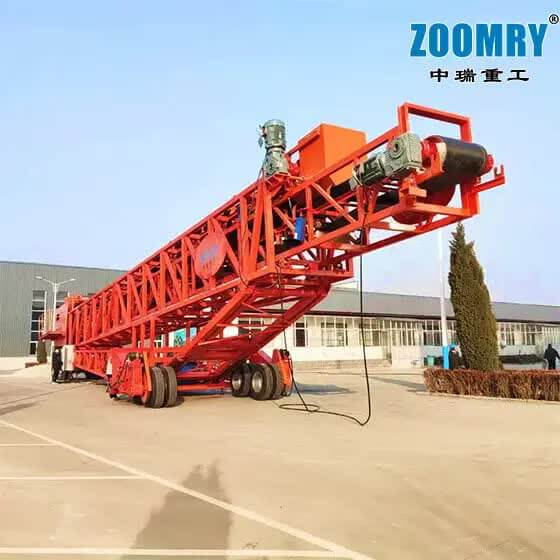
How Does a Telescopic Conveyor Work?
At its core, a telescopic conveyor uses a hydraulically powered telescoping boom that extends and retracts to change the effective conveyor length. The boom consists of nested steel sections that slide within each other, supported by heavy-duty rollers and guided by precision-machined tracks. A hydraulic winch system drives the extension and retraction, with an automatic locking mechanism that secures the boom at any position along its travel range.
The Conveyor Belt travels along the full length of the boom regardless of its extended position. As the boom extends, the belt tensioning system automatically adjusts to maintain optimal belt tension — preventing slippage at the drive pulley while avoiding over-tensioning that would accelerate bearing and belt wear. ZOOMRY's telescopic conveyors handle this through a proprietary hydraulic tensioning system that continuously monitors belt tension and adjusts in real-time.
When combined with radial slewing (360° rotation around the tail pivot point) and luffing (vertical boom angle adjustment from -10° to +18°), a single telescopic radial stacker can cover a stockpile area of up to 12,000 m² without repositioning — equivalent to the coverage of three fixed stackers.
Where Telescopic Conveyors Deliver Maximum Value
Port Terminals — Flexible Ship Loading
Port operations face constant change — different vessel sizes, varying berth positions, and tidal height fluctuations. Telescopic mobile stackers deployed at the quayside can extend their booms to reach deep into cargo holds while maintaining a safe distance from the vessel edge. When the ship departs, the boom retracts and the unit moves to the next berth — no fixed infrastructure required. For ports handling multiple cargo types, the same telescopic conveyor can handle coal in the morning and grain in the afternoon by swapping wear liners and adjusting belt speed — changeover typically takes under 30 minutes.
Mining and Quarry Operations — Maximizing Stockpile Capacity
In mining and aggregate operations, stockpile space is often constrained by property boundaries, environmental regulations, and operational logistics. A telescopic radial stacker builds higher, more compact stockpiles by precisely controlling the discharge point along its boom. Instead of creating long, low windrows that waste ground space, the telescoping action layers material evenly across the pile face — a technique called "chevron stacking" that can increase storage capacity by up to 40% within the same footprint compared to fixed-length stackers.
Cement and Industrial Plants — Tight Space Conveying
Cement plants and industrial facilities often have conveyors running through narrow corridors between buildings, under hoppers, and into silos. A retractable extendable conveyor can be positioned precisely at the discharge point and retracted when not in use — freeing up floor space for maintenance access or vehicle movement. The enclosed belt design with dust-tight covers ensures compliance with stringent industrial emission standards while the telescoping action eliminates the need for multiple fixed conveyors serving different discharge positions.
Key Specifications: What to Look For
| Parameter | ZOOMRY Standard Range | What It Means for Your Operation |
|---|---|---|
| Boom Extension Range | 15–55 meters | Adjustable stockpile radius; retracted for transport |
| Belt Width | 800–1,600 mm | Wider belt = higher capacity; match to material particle size |
| Capacity | 450–2,400 m³/h | Sufficient for 2–5 million ton/year terminals |
| Slewing Angle | 360° (radial models) | Full-circle stockpile coverage from single position |
| Luffing Angle | -10° to +18° | Controls discharge height; reduces dust and segregation |
| Stacking Height | Up to 20 meters | Maximizes storage density in limited space |
| Chassis Options | Wheeled, tracked, or fixed | Match to site terrain and mobility requirements |
Mobile vs. Fixed Telescopic Conveyors: Which Do You Need?
The choice between mobile and fixed telescopic conveyors depends primarily on how often you need to change operating positions:
- Mobile telescopic conveyors: Self-propelled units with wheeled or tracked chassis that can move between stockpiles or berths in minutes. Ideal for operations with multiple discharge points, seasonal cargo variations, or temporary sites. Diesel or electric drive options available, with optional PLC automation for autonomous operation.
- Fixed radial telescopic conveyors: Permanently anchored at the tail end with 360° radial slewing capability. Higher stability and lower maintenance than mobile units — suited for permanent stockyards, large-capacity terminals, and operations where the conveyor serves a dedicated stockpile area.
Four Advantages of Telescopic Conveyors Over Fixed Systems
- Reduced material segregation: By adjusting the discharge height as the pile grows, telescopic conveyors minimize the free-fall distance of material — reducing particle size separation that causes quality issues in aggregates and ores.
- Lower dust emissions: The adjustable discharge height, combined with optional enclosed belt covers and integrated dust suppression, keeps dust levels at the pile face below 10 mg/m³ — meeting EU environmental standards without separate dust control infrastructure.
- Faster deployment: Mobile units can be operational within hours of arriving on site — no concrete foundations, rail tracks, or structural steel erection required. This is particularly valuable for temporary operations like construction aggregates or seasonal grain handling.
- One machine, multiple jobs: A single telescopic conveyor with 50+ meter extension can serve multiple stockpiles, loading points, or cargo holds — eliminating the capital and maintenance cost of multiple fixed conveyors.
For operations that need to do more with less space, telescopic conveyors represent one of the highest-ROI equipment decisions in bulk material handling. By combining mobility, reach, and precision placement in a single machine, they eliminate the trade-offs between flexibility and capacity that have traditionally constrained stockpile operations. ZOOMRY manufactures telescopic conveyors for belt widths from 800mm to 1,600mm with capacities up to 2,400 m³/h, all backed by ISO 9001, CE, and EAC certifications. View ZOOMRY's telescopic stacker EPC project cases to see proven results from ports, mines, and industrial sites worldwide.
Related Products
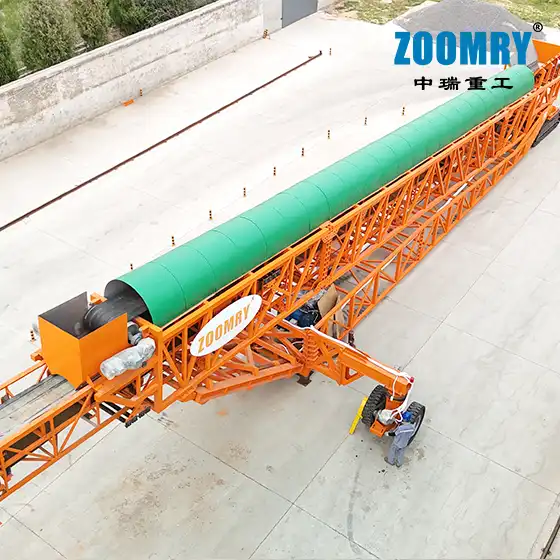
Extendable boom — 30/40/50m lengths, up to 2,400 m³/h
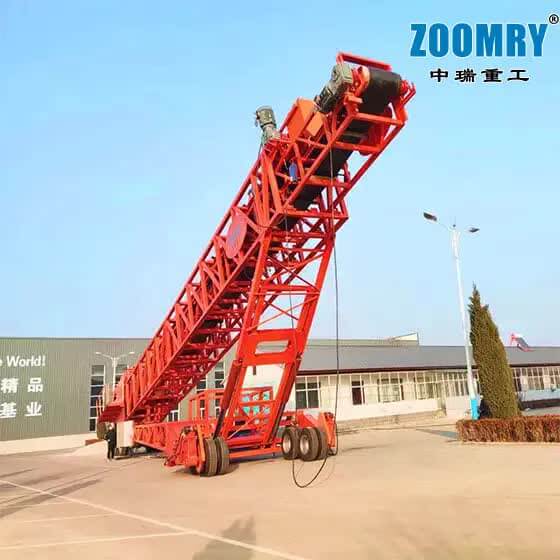
Wheel-mounted flexibility — up to 3,500 m³/h capacity
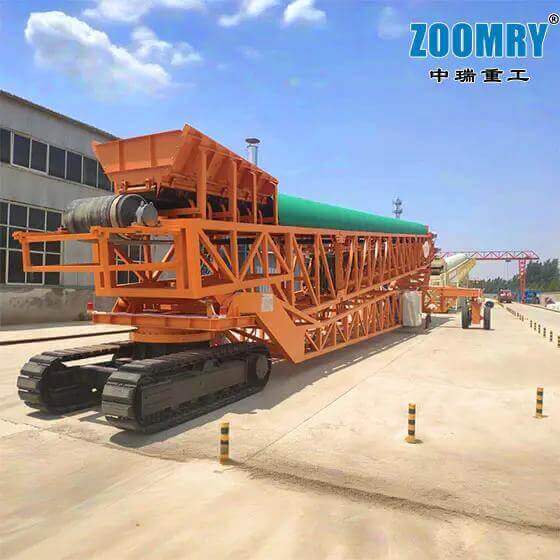
Crawler-mounted — 360° radial movement on soft ground
Industry Applications
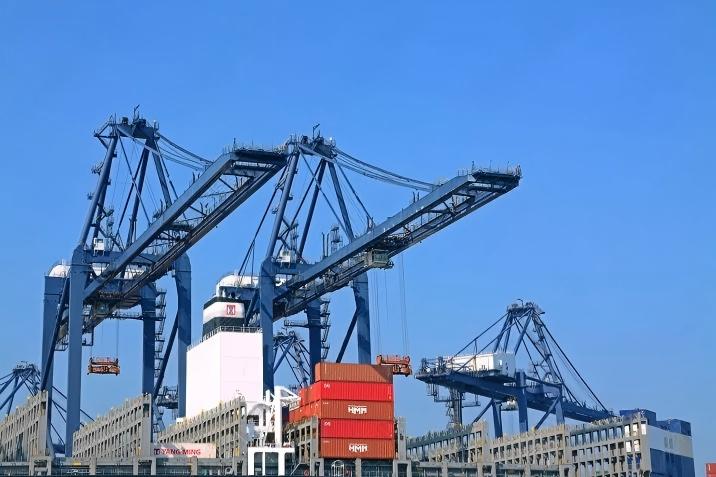
Telescopic conveyors for flexible ship and barge loading
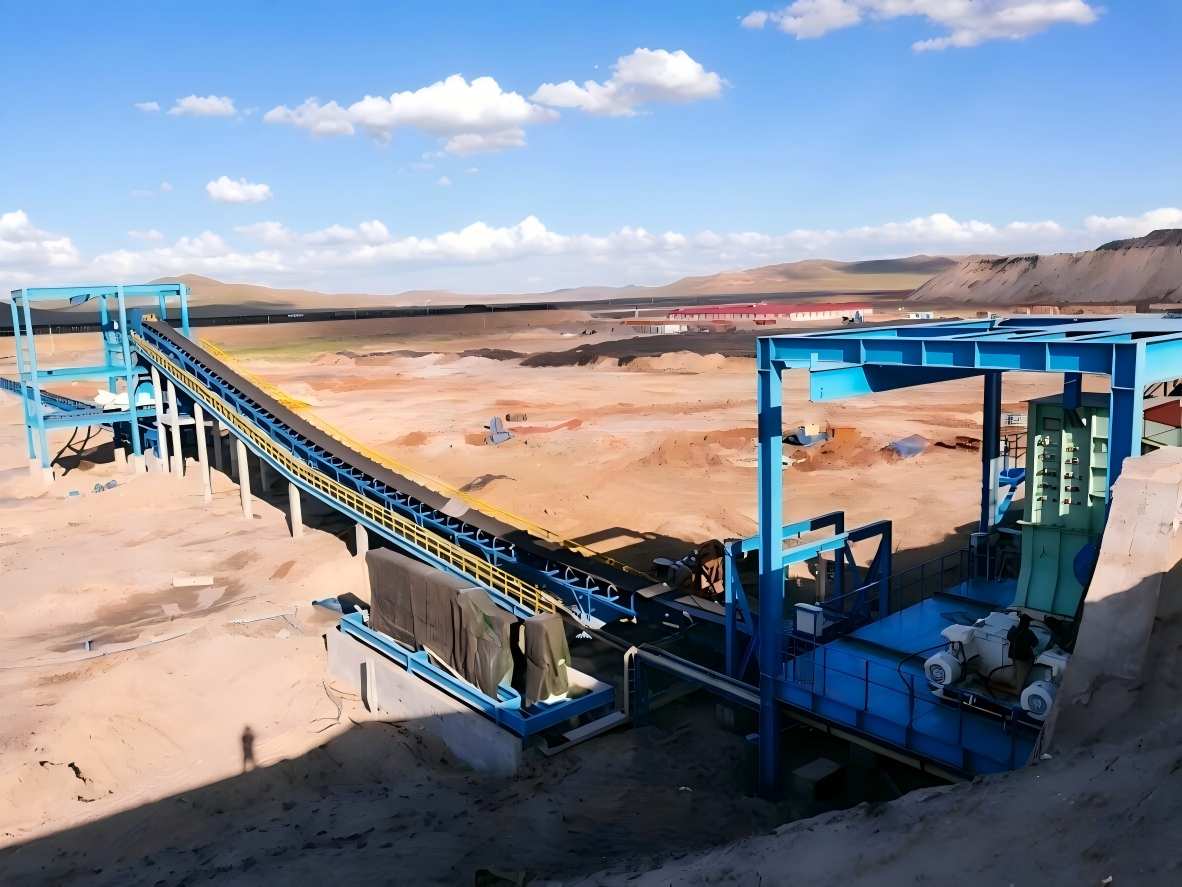
High-capacity telescopic stacking for ore and minerals
Need a Telescopic Conveyor for Your Space-Constrained Operation?
Contact ZOOMRY for telescopic conveyor specifications, mobile or fixed configuration recommendations, and expert guidance tailored to your site layout and material type.
Contact Us →