 ZOOMRY

Primary Belt Cleaners remove the bulk of carryback at the head pulley. Secondary cleaners remove the fine residue that remains. But when do you need both — and when is a V-return cleaner or full integrated system the right choice?
Belt cleaners are essential components of any belt conveyor system. Without effective cleaning, material carryback — the layer of fines that adheres to the belt surface after discharge — accumulates on return idlers, pulleys, and the ground beneath the conveyor. This leads to belt mistracking, premature idler failure, increased cleanup labor, and safety hazards. Choosing the right cleaner configuration — primary, secondary, V-return, or an integrated system — depends on your material characteristics, belt speed, and operating environment.
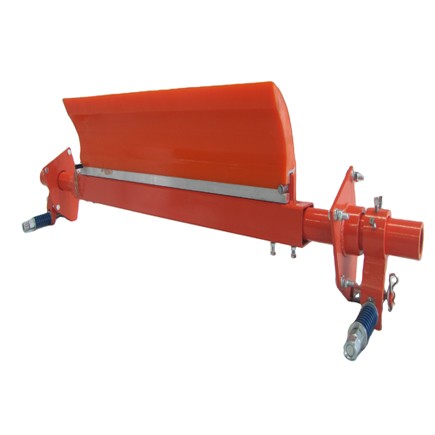
ZOOMRY Primary Belt Cleaner — Polyurethane Blade, Removes Bulk Carryback at Head Pulley
What Is a Primary Belt Cleaner?
A primary belt cleaner is installed at the head pulley — the point where the belt discharges material and begins its return journey. It uses a polyurethane blade that makes contact with the belt surface at the pulley's tangent point, mechanically scraping off the bulk of material that remains adhered after discharge. ZOOMRY primary cleaners feature wear-resistant polyurethane blades rated from -45°C to 60°C, mounted on a 35# carbon steel frame with quick blade replacement capability.
Primary cleaners are effective at removing 70-85% of carryback — the larger, heavier particles that would otherwise fall off along the return path. For many standard-duty applications with non-sticky materials, a well-maintained primary cleaner is sufficient. However, fine, sticky, or hygroscopic materials often require secondary cleaning.
What Is a Secondary Belt Cleaner?
A secondary belt cleaner is installed further along the return side of the belt — after the primary cleaner — where it removes the fine residual material that the primary blade could not capture. Secondary cleaners use a finer blade edge and lighter contact pressure, targeting the thin layer of dust and fines that remains embedded in the belt surface.
Together, a properly configured primary + secondary system can remove up to 95% of total carryback. This level of cleaning is essential for applications where material buildup on return idlers causes mistracking, or where spilled material creates a housekeeping or safety hazard beneath the conveyor.
Primary vs Secondary Belt Cleaner: A Quick Comparison
| Feature | Primary Cleaner | Secondary Cleaner |
|---|---|---|
| Installation Position | At head pulley tangent point | On return side, after primary |
| Blade Material | Heavy-duty polyurethane | Fine-edge polyurethane or carbide |
| Carryback Removal | 70-85% (bulk material) | 10-20% (fine residue) |
| Contact Pressure | Higher | Lower, precision contact |
| Blade Replacement | Quick-change, tool-free options | Segment or full blade |
| Best For | Standard-duty, non-sticky materials | Fine, sticky, or hygroscopic materials |
When Do You Need a V-Return Belt Cleaner?
A V-return belt cleaner is positioned on the non-working (return) surface of the Conveyor Belt. Unlike primary and secondary cleaners that clean the material-carrying surface, the V-return cleaner removes bulk materials that have stuck to the return side of the belt and discharges them to both sides.
V-return cleaners are essential when:
- Material spillage at the loading zone falls onto the return side of the belt
- The conveyor handles sticky materials that adhere to both belt surfaces
- Return idler contamination is causing belt mistracking or premature roller failure
- The conveyor operates in a wet environment where material sticks to the belt regardless of surface
When Should You Use an Integrated Belt Cleaning System?
For heavy-duty applications where carryback control is critical — such as mining conveyors handling sticky ores, cement plants with fine dust, or port terminals where spilled material creates environmental violations — a comprehensive system combining all cleaner types delivers maximum performance.
ZOOMRY's integrated belt cleaning system with spray bars combines primary and secondary scrapers with water spray bars in a single unit — capable of removing up to 99% of carryback. The built-in hopper and dust containment ensure that removed material is captured and contained, not spread beneath the conveyor. Suitable for belt widths 400-2,200 mm and speeds up to 3.8 m/s, this system is the definitive solution for operations where belt cleanliness directly impacts productivity, safety, and environmental compliance.
How to Choose: A Simple Decision Guide
| Your Situation | Recommended Cleaner Configuration |
|---|---|
| Standard materials, dry conditions | Primary cleaner only |
| Fine, sticky, or wet materials | Primary + Secondary cleaner |
| Material on return side of belt | Add V-return cleaner |
| High-speed belt, heavy carryback | Primary + Secondary + V-return |
| Environmental compliance required | Integrated system with spray bars |
Related Solutions
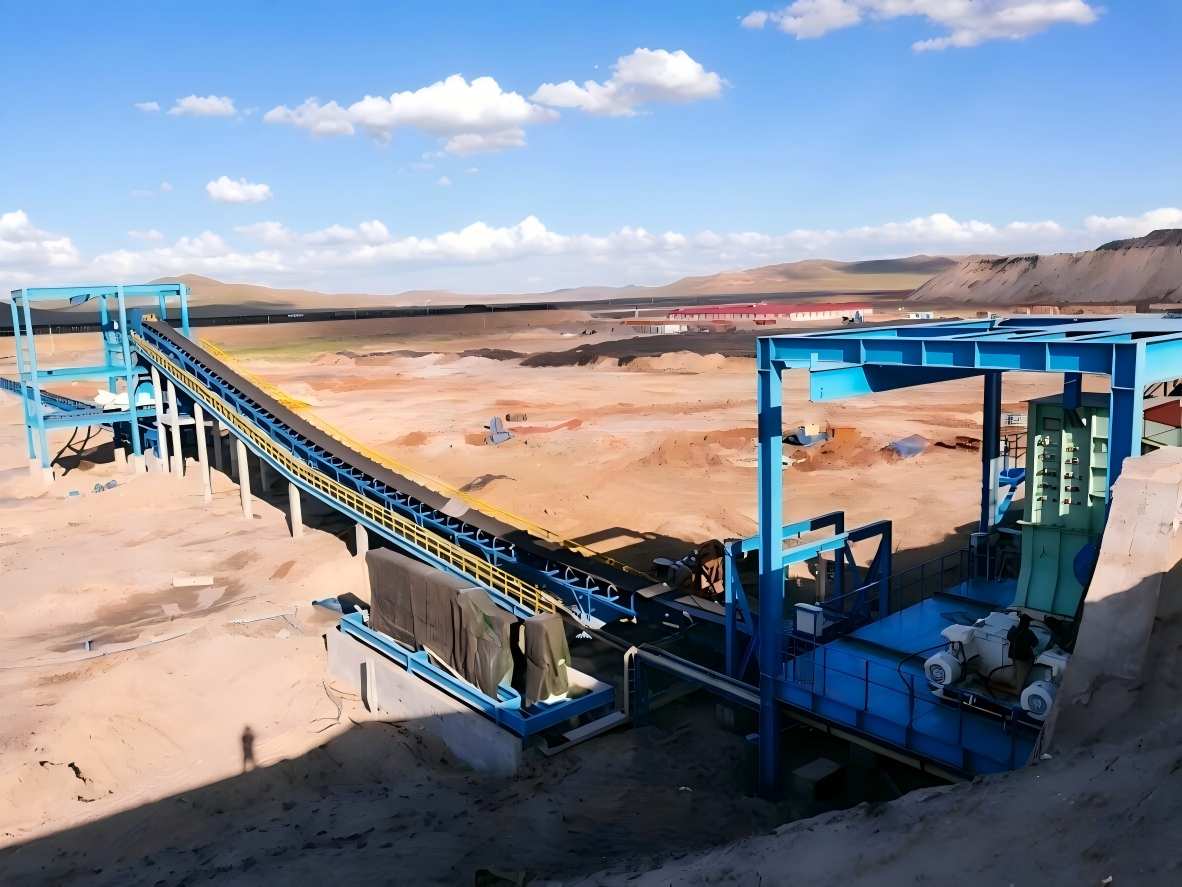
Mining Conveyor Solutions
Heavy-duty conveyor systems for surface and underground mining — long-distance curved belt conveyors, Pipe conveyors, and Bucket Wheel Stacker Reclaimers for abrasive ores and 24/7 operation.
Learn More →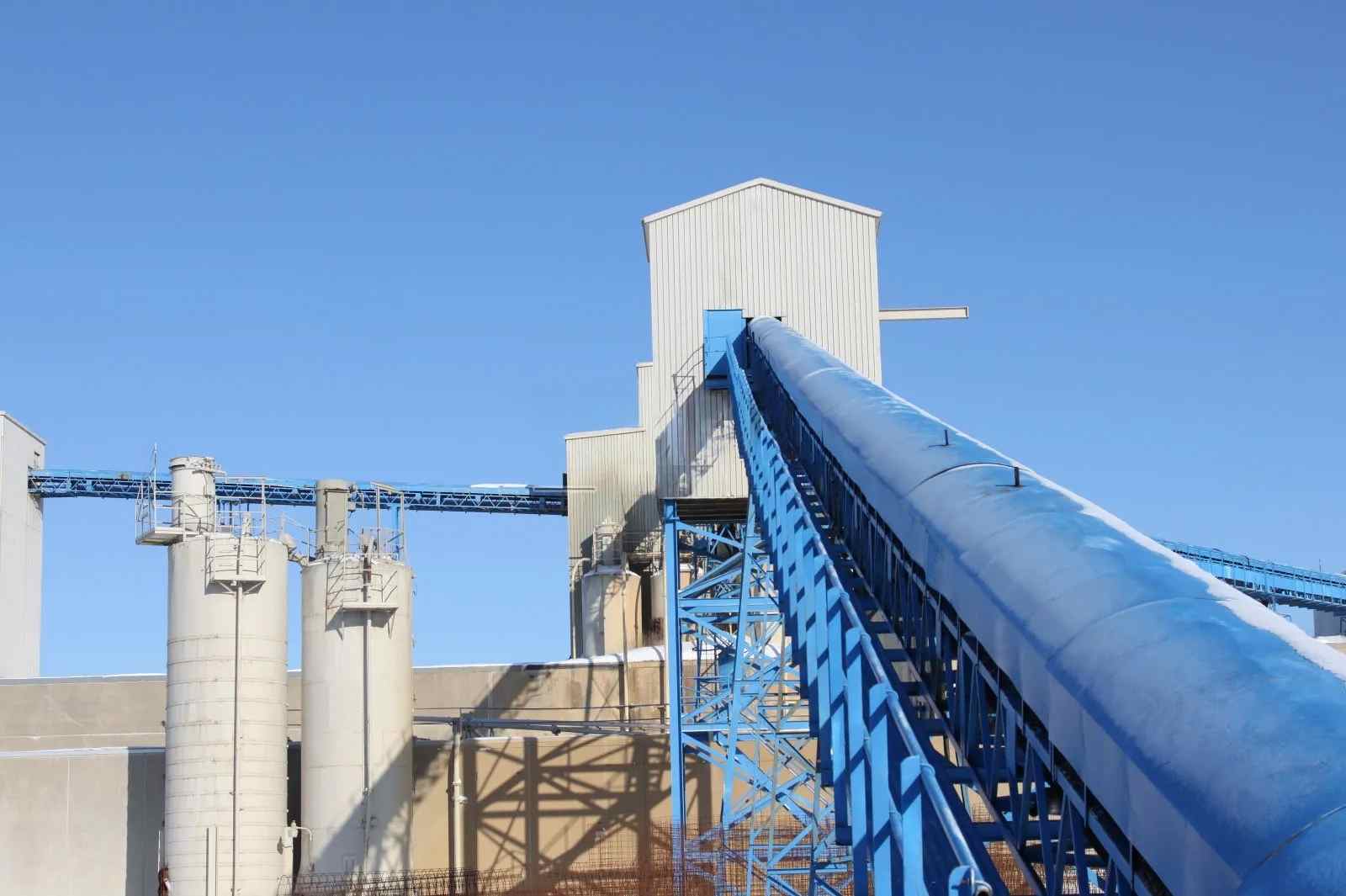
Cement & Clinker Conveyor Solutions
Complete conveyor systems for cement plants — long-distance curved belt conveyors for quarry-to-plant limestone transport, enclosed pipe conveyors for dust-free raw meal handling, and heat-resistant belts for clinker up to 200°C.
Learn More →Need Help Selecting Belt Cleaners?
Contact ZOOMRY for primary, secondary, V-return, and integrated belt cleaning systems engineered to your belt width, speed, and material type.
Contact Us Today