 ZOOMRY

Every bulk material handling project faces a fundamental choice: install a fixed belt conveyor system — often called a non-radial conveyor — for permanent, high-tonnage transport along a defined route, or deploy a radial stacker conveyor for flexible stockpile building with 360° slewing capability. Understanding what is a non-radial conveyor and where it excels helps you avoid investing in the wrong system for your site conditions.
This article defines non-radial conveyors, explains where they outperform radial stackers, and provides a clear comparison framework to help you decide between fixed and radial stacking solutions for mining, cement, power, and port applications.
What Is a Non-Radial Conveyor?
A non-radial conveyor is a fixed-direction belt conveyor system that transports bulk material along a predetermined linear or curved path — without the ability to pivot or slew around a tail section. Unlike a radial stacker conveyor that rotates 360° to build wide扇形 stockpiles, a non-radial conveyor discharges material at a single fixed point or along a fixed trajectory. These systems are the backbone of permanent material handling infrastructure in cement plants, power stations, and long-distance overland transport routes.
Common types of non-radial conveyors include:
- Fixed Trough Belt Conveyors: The standard non-radial conveyor design for high-capacity, long-distance transport — belt widths up to 2,400mm with capacities reaching 17,000 m³/h.
- Curved Belt Conveyors: Navigate horizontal curves without transfer points — single flights up to 15 km, multi-flight systems reaching 70 km.
- Pipe conveyors: Enclosed, dust-free non-radial conveyor option for sensitive or hazardous materials — handles inclines up to 30° with 3D curve capability.
- Large Inclination Conveyors: Specialized belts for steep-angle transport up to 60° — saving space in plant layouts where vertical lift is required.
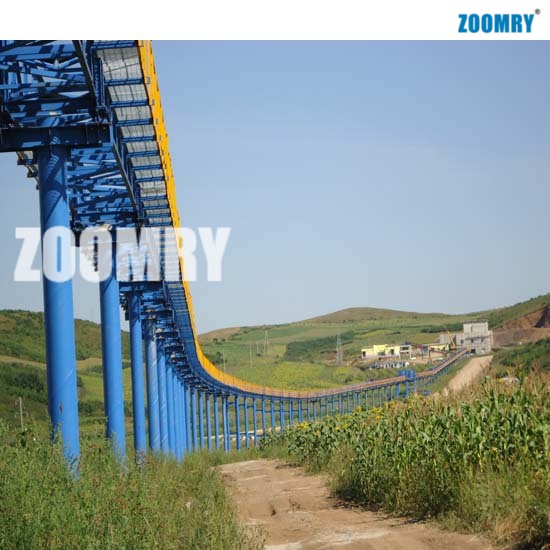
ZOOMRY Non-Radial Conveyor — Long Distance Curved Belt Conveyor for Permanent Mine-to-Plant Transport
Non-Radial vs Radial Stacker: When Does Each System Excel?
| Comparison Factor | Non-Radial Conveyor (Fixed) | Radial Stacker Conveyor (Mobile) |
|---|---|---|
| Primary Function | Transport material from Point A to Point B along a fixed route | Build and reshape stockpiles across a wide area from a single feed point |
| Installation Type | Permanent — requires concrete foundations, transfer towers, and civil works | Temporary to semi-permanent — minimal site preparation, quick deployment |
| Mobility | Fixed in place — cannot be relocated without dismantling | Self-propelled or towable — relocates between stockpile zones in minutes |
| Maximum Capacity | Up to 17,000 m³/h — designed for continuous high-tonnage operation | Up to 2,400 m³/h — optimized for stockpile building with layered stacking |
| Stockpile Capability | Single fixed discharge point — limited pile geometry | 360° radial slewing — wide扇形 stockpiles with layered stacking to minimize segregation |
| Initial Investment | Higher — includes civil works, foundations, and transfer structures | Lower — self-contained unit with minimal site preparation required |
| Operating Cost per Ton | Lower — electric drive, minimal labor, optimized for continuous operation | Moderate — diesel or electric drive, single operator, fuel costs apply |
| Best Application | Mine-to-plant transport, quarry-to-cement plant, power station coal supply | Temporary stockpile building, multi-zone yard management, mobile crushing spreads |
When Should You Choose a Non-Radial Conveyor System?
A non-radial conveyor is the right choice when your operation meets these conditions:
- Fixed Material Route: Your material needs to travel the same path for years — such as from a mine crusher to a processing plant, or from a quarry to a cement kiln feed system. A non-radial conveyor provides the structural permanence these applications demand.
- High Continuous Throughput: Operations exceeding 2,500 m³/h require the structural robustness of a fixed non-radial conveyor — radial stackers are limited to approximately 2,400 m³/h.
- Long-Distance Transport: Overland routes exceeding 1 km favor fixed non-radial conveyors with optimized idler spacing, drive systems, and tension management — radial stackers are designed for stockpile building, not kilometer-scale transport.
- Environmental Enclosure: When material must be fully enclosed along the route — such as in pipe conveyor applications — a fixed non-radial conveyor provides continuous dust and spillage control.
When Is a Radial Stacker the Better Choice Over a Non-Radial Conveyor?
Radial stackers excel in scenarios where flexibility and stockpile quality drive the decision — offering capabilities that a non-radial conveyor cannot match:
- Multi-Zone Stockpile Management: A single radial stacker can serve multiple stockpile zones by pivoting around its tail section — no additional non-radial conveyors or transfer points needed.
- Segregation Control: Layered stacking through telescopic boom extension and retraction reduces material segregation to ≤0.5% — critical for maintaining product quality in aggregate and mineral operations.
- Temporary or Progressive Operations: Mobile crushing spreads, progressive mine rehabilitation, and short-term contracts benefit from equipment that can be packed up and redeployed — unlike a permanent non-radial conveyor.
- Rapid Deployment: A tracked radial stacker can be operational within hours of arriving on site — compared to weeks or months for a non-radial conveyor installation with civil works.
Complementary Equipment for Complete Material Handling
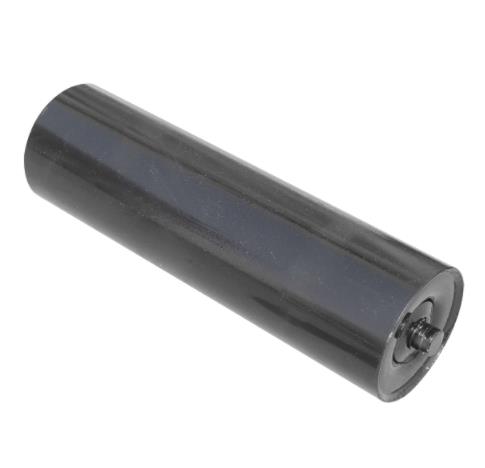
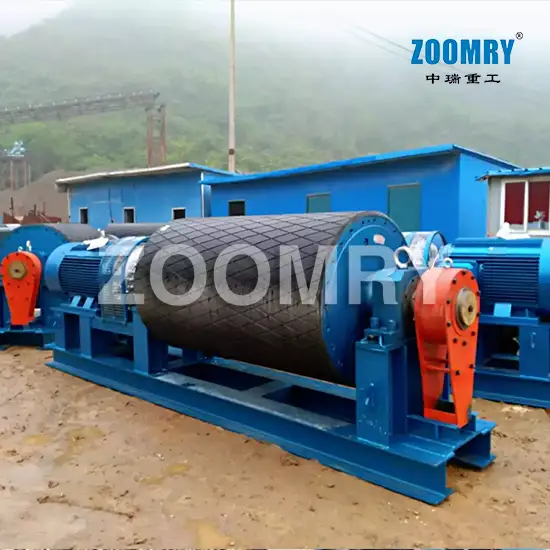
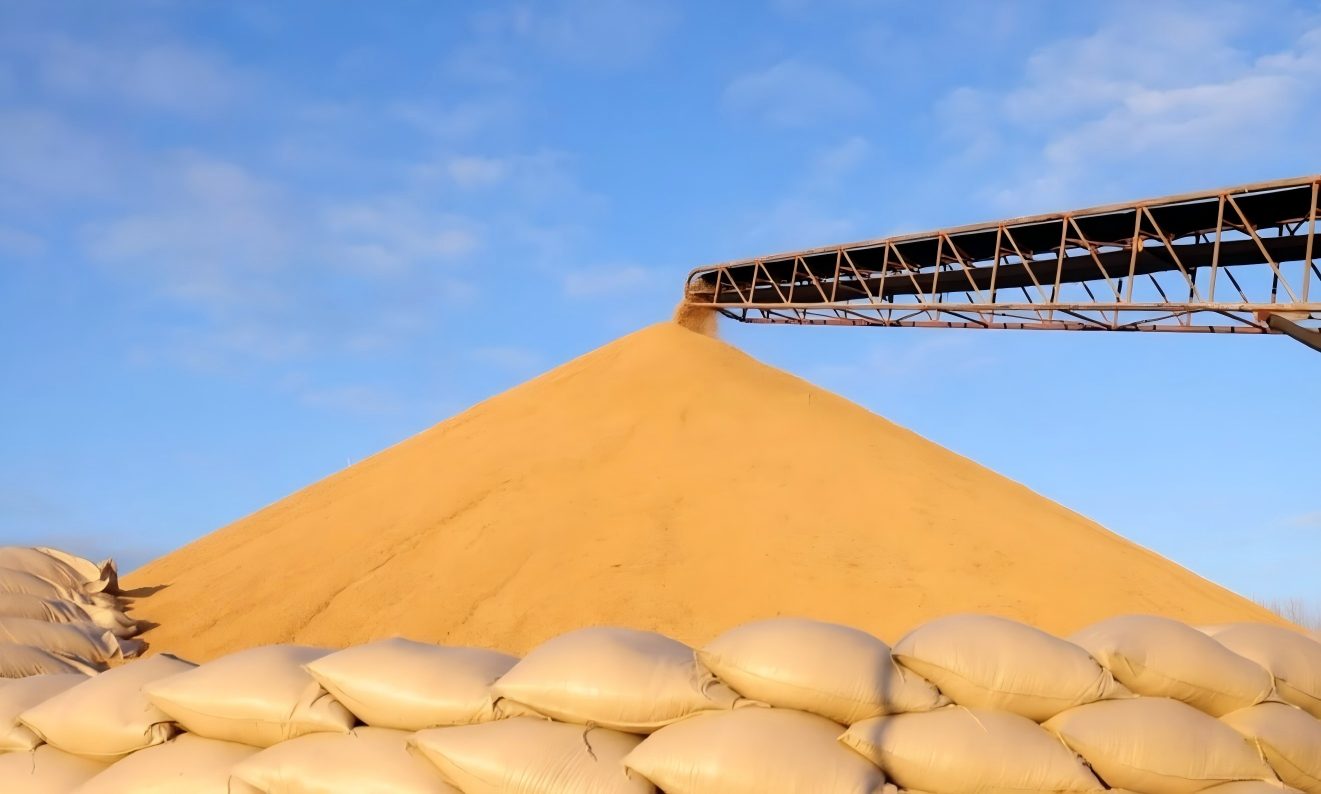
Related Industry Solutions
Not Sure Which Conveyor System Fits Your Operation?
Contact ZOOMRY for a custom recommendation — whether you need a fixed non-radial conveyor or a mobile radial stacker, our engineering team can design the right solution.
Contact Us Today