 ZOOMRY

Pipe belt conveyors are often evaluated when a bulk material handling project requires enclosed conveying, reduced spillage, route flexibility, or better control of dust exposure along the conveyor line. This article compares pipe belt conveyors with traditional open belt conveyors and selected enclosed or vertical conveying alternatives, focusing on layout, enclosure, material suitability, and project selection factors.
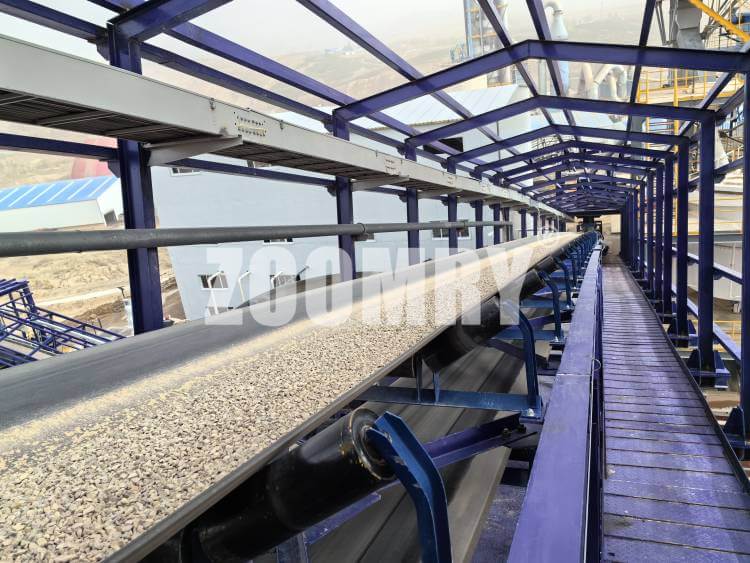
Fully Enclosed vs. Traditional Open Belt
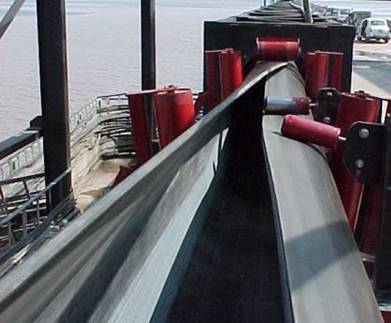
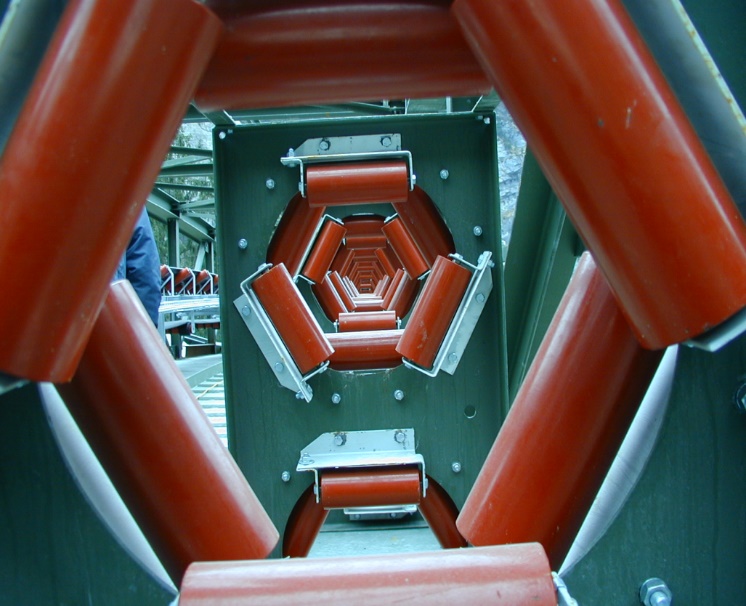
A pipe belt conveyor encapsulates material in a tubular belt cross-section formed by hexagonal idler arrangements. Traditional open belts carry material on a troughed belt exposed to the environment. Key differences:
- Sealing: The enclosed tubular structure contains material and helps control dust at transfer and discharge points. Open belts require additional covers, enclosures, or dust suppression systems depending on site requirements.
- Layout flexibility: The pipe belt can follow horizontal and vertical curves designed for the project layout, bypassing obstacles without intermediate transfer points. Open belts are generally limited to straight or gently curved routes unless transfer stations are added.
- Inclination: Pipe conveyors can be designed for steeper inclines than open troughed belts — subject to material properties and project requirements — which can reduce the overall conveyor footprint.
- Maintenance: The enclosed design reduces spillage along the route, which helps lower cleanup requirements compared with open systems handling dusty or sticky materials.
- Bi-directional capability: In certain configurations, pipe conveyors can convey materials on both the upper and lower runs — "one machine, two uses" — whereas traditional return belts typically run empty.
Industry Landscape Comparison
Vs. Enclosed Galleries
Enclosed galleries protect traditional belts with external structures, but they are land-intensive and add significant structural cost. A pipe belt conveyor integrates material enclosure into the conveying belt itself. Depending on the route, local regulations, weather exposure, maintenance requirements, and structural design, this can reduce reliance on fully enclosed galleries compared with a conventional open belt conveyor.
Vs. Air Cushion Conveyors
Air cushion conveyors can be suitable for selected enclosed conveying duties. However, their suitability for abrasive bulk materials, inclined routes, capacity, and maintenance conditions should be evaluated separately for each project. Pipe belt conveyors provide comparable enclosed conveying with more established material adaptability for mining and port applications.
Vs. Screw and Bucket Elevators
Screw conveyors and bucket elevators are commonly selected for compact transfer points, vertical lifting, or shorter process connections. For long-distance, high-throughput bulk transport across complex terrain, pipe belt conveyors may provide a more suitable continuous conveying option.
When Is a Pipe Belt Conveyor the Right Choice?
A pipe belt conveyor is not automatically the best option for every bulk material route. It is generally considered when enclosure, dust control, material protection, route flexibility, or reduced transfer points are important project priorities.
| Project Condition | Pipe Belt Conveyor Consideration |
|---|---|
| Dust-sensitive or environmentally controlled route | Often a strong option because the belt encloses material during the pipe-form conveying section. |
| Route requires horizontal or vertical curves | Can reduce transfer points where a conventional open belt route would require directional changes. |
| Material needs protection from rain, wind, or contamination | The tubular belt arrangement can help protect material during conveying, subject to transfer-point design. |
| Straight route with low environmental sensitivity | A conventional open belt conveyor may offer a simpler and more economical solution. |
| Very abrasive or difficult-flowing material | Requires detailed review of belt construction, idler arrangement, transfer design, material flow behavior, and maintenance access. |
ZOOMRY Pipe Belt Conveyor — Product Range
ZOOMRY manufactures pipe belt conveyors with pipe diameters from 100 mm to 850 mm. Final capacity, route length, belt construction, drive arrangement, curve radius, and operating inclination are engineered according to material characteristics, terrain, transfer points, and project requirements.
ZOOMRY can provide pipe conveyor engineering, core components, and project-specific technical documentation. CE, EAC, or other compliance documentation is confirmed according to the final equipment scope and destination-market requirements. View ZOOMRY pipe conveyor EPC project cases to explore selected applications.
Related Products
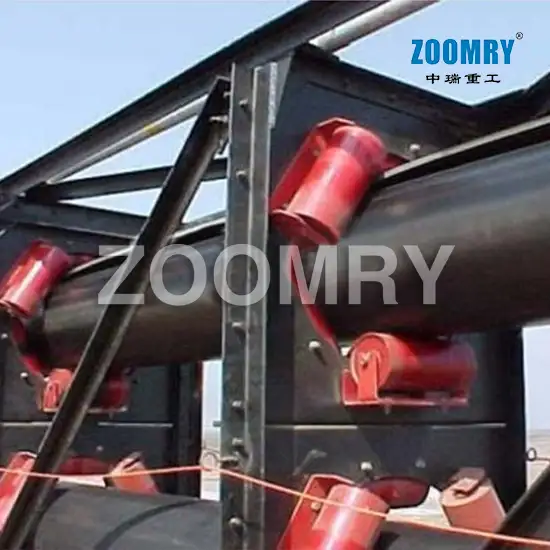
Enclosed dust-free conveying — 100mm to 850mm diameter
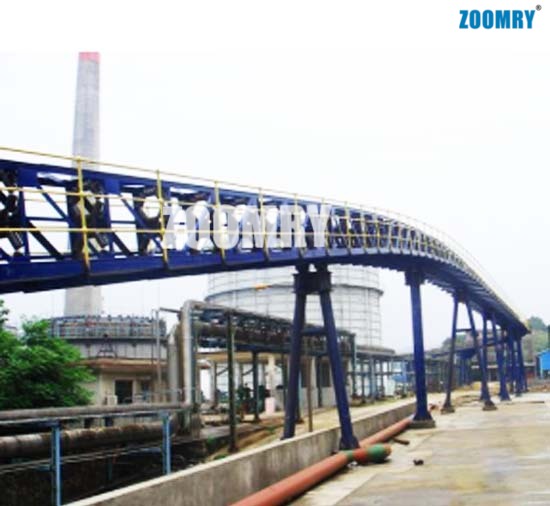
Tight curves and steep inclines for complex terrain
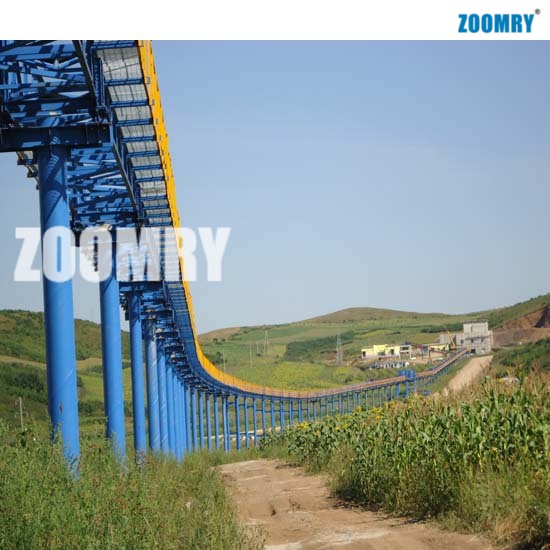
Overland curved conveying for long-distance transport
Industry Applications
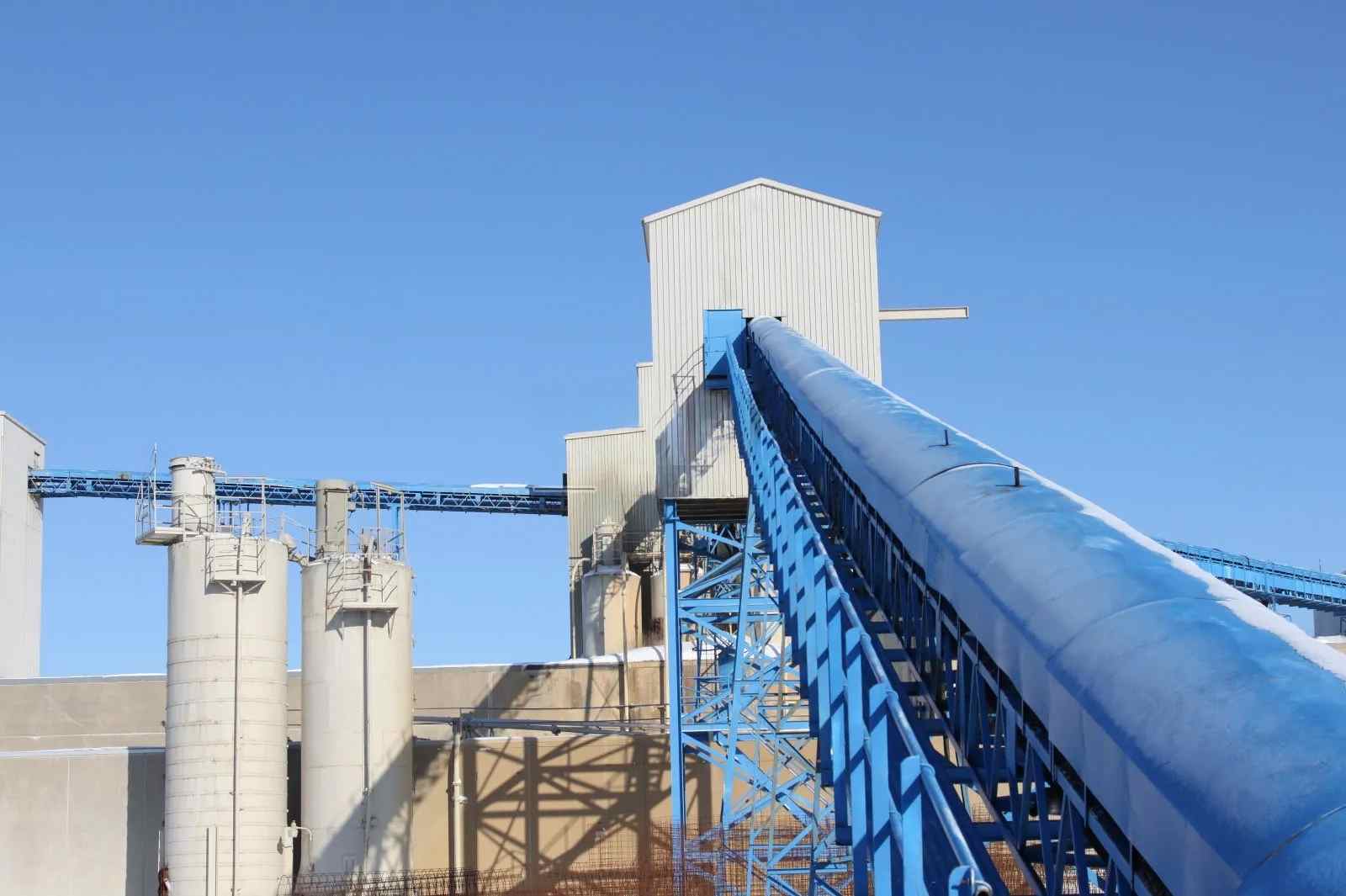
Enclosed pipe conveyors for dust-free cement handling
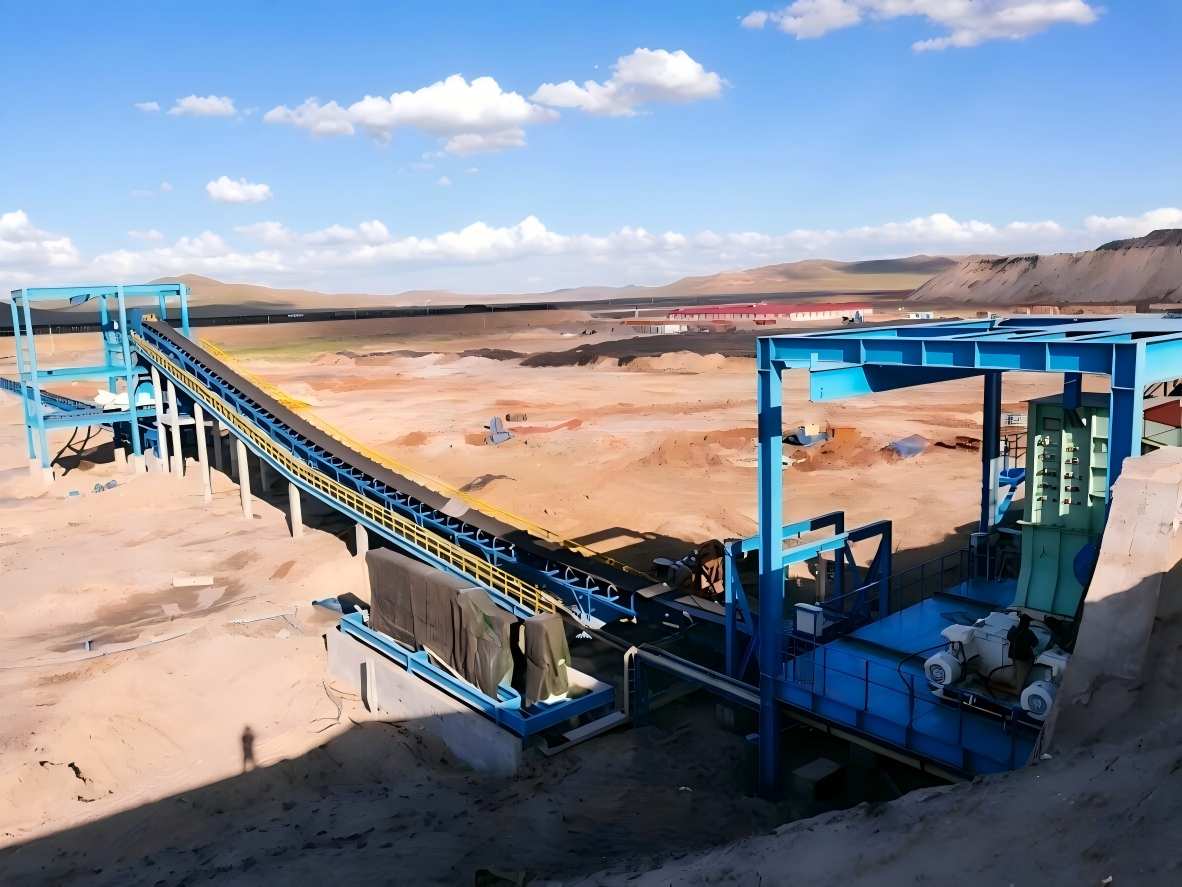
Pipe conveyors for ore and mineral transport in complex terrain
Need a Pipe Belt Conveyor for Your Project?
Contact ZOOMRY for pipe belt conveyor specifications, route feasibility assessment, and expert guidance tailored to your material and site conditions.
Request Pipe Conveyor Feasibility Assessment →