 ZOOMRY

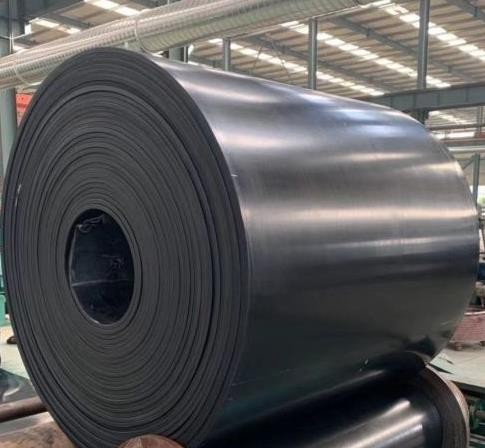
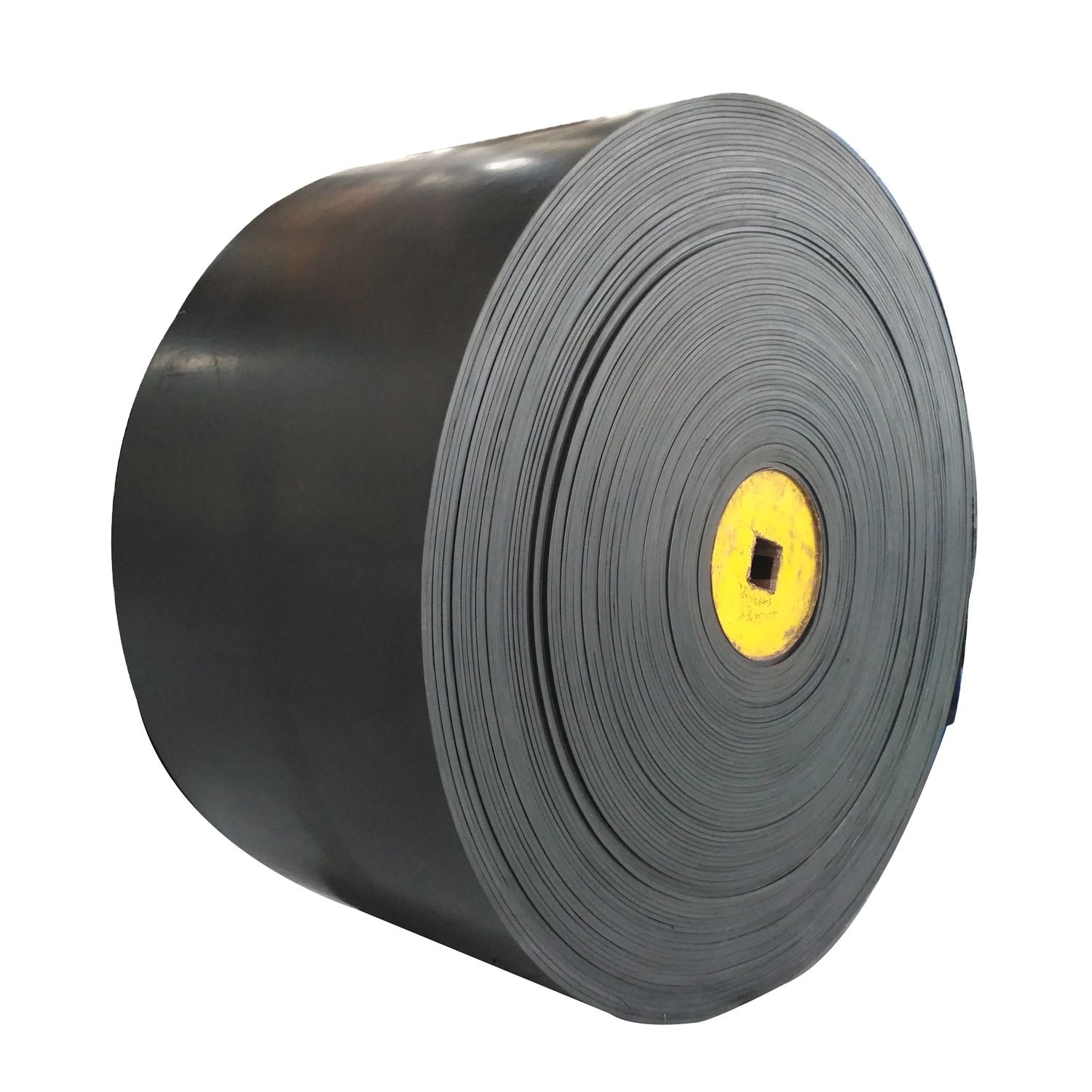
ZOOMRY EP Conveyor Belts feature a polyester (Dacron) warp and polyamide (nylon) weft carcass — delivering excellent troughability, low elongation under load, and superior water resistance. Unlike nylon NN belts, EP belts maintain dimensional stability in humid conditions, resist mold growth, and provide higher tensile strength per ply — making them the most widely used fabric belt type in mining, cement, and port operations worldwide.
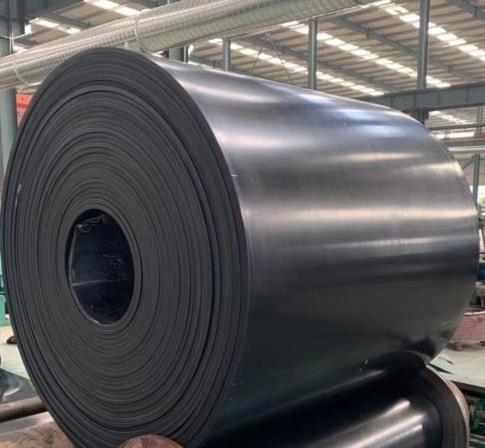
ZOOMRY EP Conveyor Belt — Polyester-Nylon Carcass, Low Elongation, Superior Water Resistance
Why Choose EP Belts Over NN Belts?
The key difference lies in the warp fiber. EP belts use polyester (Dacron) in the warp direction, which provides low elongation and high tensile strength — the polyester fibers stretch minimally under sustained tension, maintaining consistent belt length and reducing take-up adjustments. NN belts use nylon in both directions, offering maximum elasticity but higher elongation. For long-distance conveyors, inclined conveyors, and any application where belt stretch must be minimized, EP belts are the superior choice.
Additionally, EP belts resist moisture and mold growth far better than NN belts. Polyester fibers are hydrophobic — they do not absorb water or lose strength when wet — while nylon fibers can absorb up to 4% moisture, causing dimensional changes and carcass degradation in humid environments. For outdoor installations, wet processing plants, and tropical climates, EP belts maintain their mechanical properties throughout their service life.
EP Belt Specifications
The following table shows the complete range of EP conveyor belt fabric specifications — from light-duty EP-80 to heavy-duty EP-450 — with corresponding tensile strengths by ply count.
|
Fabric Structure |
Fabric Specs |
Ply Thickness (mm/p) |
Strength Series (N/mm) |
Cover Thickness (mm) |
Width (mm) |
Length (m) |
||||||
|---|---|---|---|---|---|---|---|---|---|---|---|---|
| 2Ply | 3Ply | 4Ply | 5Ply | 6Ply | Upper | Lower | ||||||
|
Polyester (EP) |
Polyamide (P) weft |
EP-80 | 0.6 | 160 | 240 | 320 | 400 | 480 | 1.5–12 | 0–4.5 | 400–2500 | ≤300 |
| EP-100 | 0.75 | 200 | 300 | 400 | 500 | 600 | 500–2500 | |||||
| EP-150 | 1 | 300 | 450 | 600 | 750 | 900 | ||||||
| EP-200 | 1.1 | 400 | 600 | 800 | 1000 | 1200 | ||||||
| EP-250 | 1.25 | 500 | 750 | 1000 | 1250 | 1500 | ||||||
| EP-300 | 1.35 | 600 | 900 | 1200 | 1500 | 1800 | ||||||
| EP-350 | 1.45 | - | 1050 | 1400 | 1750 | 2100 | 800–2500 | |||||
| EP-400 | 1.55 | - | - | 1600 | 2000 | 2400 | ||||||
| EP-450 | 1.7 | - | - | 2000 | 2500 | 3000 | 1000–2500 | |||||
Why Choose Our EP Conveyor Belts?
- High tensile strength with heavy load capacity: The polyester warp fibers provide superior tensile strength — supporting heavy loads over long distances with minimal stretch.
- Low work elongation: Unlike all-nylon belts that stretch under sustained tension, EP belts maintain dimensional stability — reducing take-up adjustments and splice maintenance.
- Strong resistance to aging: Polyester fibers resist chemical degradation, UV exposure, and biological attack — maintaining mechanical properties throughout the belt's service life.
- Superior troughability: The combination of rigid polyester warp and flexible nylon weft allows the belt to form stable troughs on standard idler sets, ensuring smooth material containment.
- Long lifespan: EP belts resist moisture, mold, and mildew — delivering extended service life in outdoor, humid, and wet processing environments where NN belts degrade.
Related Industry Solutions
Need Custom EP Conveyor Belts?
Contact ZOOMRY for EP polyester-nylon conveyor belts engineered to your specific tensile strength, ply count, and cover grade requirements.
Contact Us Today