 ZOOMRY

Heap leaching conveyor systems are mobile bulk material handling networks that build and manage ore stacking pads in gold, copper, silver, and uranium recovery operations. These systems integrate tracked radial stackers, telescopic stackers, grasshopper conveyors, and hopper feeders to place crushed ore in precise lifts across leach pads. Proper equipment selection directly affects leach solution distribution, metal recovery efficiency, and total operating cost. This guide covers equipment types, corrosion protection strategies, and selection criteria for heap leaching operations.
What Is Heap Leaching and Why Conveyor Systems Matter
Heap leaching is a hydrometallurgical process where crushed ore is stacked in engineered lifts on a lined pad, then irrigated with a leaching solution — typically dilute cyanide for gold and silver, or sulfuric acid for copper and uranium. The solution percolates through the ore pile, dissolving target metals, which are collected from the pad base for downstream recovery.
Conveyor systems play a central role in this process by transporting crushed ore from the crushing circuit to the leach pad and distributing it in controlled layers. Compared with truck haulage on suitable routes, mobile conveying and stacking equipment can reduce truck movements, road-maintenance demand, and operating labor while placing ore with minimal ground pressure and precise lift control. This helps preserve pad permeability — a critical factor for solution flow and metal recovery.
A well-designed heap leach conveying system can reduce reliance on haul trucks and dozers by providing continuous ore transfer and controlled placement. The result is lower fuel consumption, reduced labor, improved pad compaction control, and more uniform ore placement.
Key Equipment for Heap Leaching Conveyor Systems
A complete heap leaching conveyor system typically combines several equipment types, each serving a specific function in the ore placement sequence.
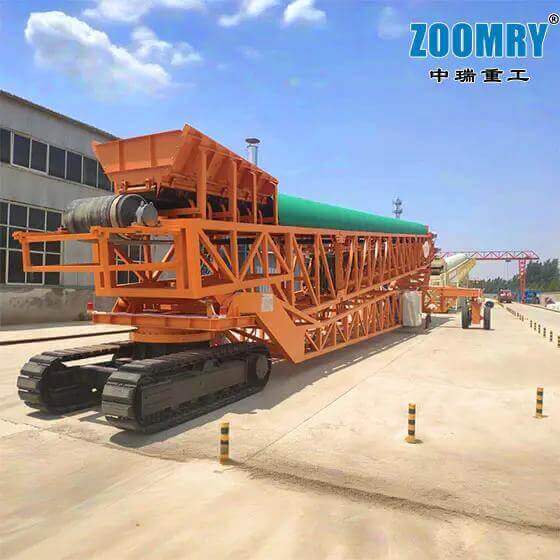
Tracked Radial Stacker
The tracked radial stacker is the primary ore placement machine on most heap leach pads. Its crawler undercarriage distributes weight across a wide track area, providing low ground pressure for operation on soft or newly placed ore — subject to pad bearing capacity and site engineering review. Radial slewing allows the stacker to build large arc-shaped stockpiles from a single feed point, reducing the number of conveyor relocations required as the pad expands.
For heap leaching, tracked radial stackers typically handle capacities from 450 to 3,500 m³/h with belt widths from 800 to 1,600 mm. The ability to operate on uncompacted ore without sinking is the primary selection driver over wheeled alternatives.
Mobile Telescopic Stacker
The mobile telescopic stacker provides variable discharge height and reach, enabling precise lift-by-lift ore placement without repositioning the machine. The telescopic boom extends and retracts hydraulically, allowing the operator to build lifts in horizontal layers rather than a single conical pile. This layered stacking improves solution distribution uniformity and reduces segregation of fine and coarse particles.
For heap leach applications, telescopic stackers with 360° slewing and boom lengths up to 55 meters offer the flexibility needed to cover large pad areas from limited feed positions.
Grasshopper Conveyor
Grasshopper conveyors serve as relocatable link conveyors that bridge the gap between the fixed crushing circuit and the mobile stacking equipment on the leach pad. Their modular, field-bolted design allows quick repositioning as the active stacking zone advances. On heap leach operations, grasshopper conveyors are typically positioned on compacted access lanes or berms, with the radial stacker working from the discharge end.
Standard configurations deliver 200–550 t/h with 20 or 25 meter lengths, making them suitable for heap leach operations with moderate crushing circuit output.
Hopper Feeder
A hopper feeder receives crushed ore from haul trucks or the primary crusher discharge and meters it onto the conveying system at a controlled rate. In heap leach circuits, hopper feeders are often paired with the first grasshopper conveyor or directly with the radial stacker feed conveyor. Tracked hopper feeders offer the mobility to follow the advancing pad face without dedicated foundations.
Corrosion Protection for Aggressive Leaching Environments
Heap leaching environments expose conveying equipment to some of the most aggressive corrosion conditions in bulk material handling. Cyanide solutions are highly alkaline, while sulfuric acid systems create acidic conditions that rapidly degrade standard steel components. Equipment specified for heap leach service must address this reality from the design stage.
HDPE rollers can offer strong corrosion resistance in many acidic, alkaline, and high-salinity conveying environments when the polymer grade, bearing sealing, and service conditions are correctly specified. Their low mass and non-metallic roller shell can help reduce corrosion-related maintenance and may contribute to lower belt and roller wear, depending on ore abrasiveness, belt construction, alignment, and operating conditions.
For corrosion resistant HDPE rollers in aggressive acid or high-salinity environments, sealed bearings and non-magnetic, anti-static properties further extend service intervals. Structural steel components should receive multi-layer protective coating systems — epoxy zinc-rich primer, epoxy intermediate coat, and polyurethane topcoat — with total dry film thickness suitable for continuous chemical exposure.
Belt selection is equally important. Cover compounds must resist chemical degradation from the specific leach solution in use. For sulfuric acid copper heap leaching, acid-resistant belt covers are recommended. For cyanide gold systems, alkali-resistant compounds provide longer service life.
Mobile vs Fixed Conveyor Systems in Heap Leaching
| Factor | Mobile Conveyor System | Fixed Conveyor System |
|---|---|---|
| Pad expansion | Easily relocates as leach pad grows | Requires extension or new installation |
| Ground pressure | Low — tracked machines distribute load | Higher — requires compacted foundation |
| Capital cost | Moderate — equipment reusable across pads | High — dedicated infrastructure |
| Lift placement | Precise — telescopic boom control | Limited to fixed discharge points |
| Best application | Active pad building, multi-lift stacking | Crushing circuit to pad transfer |
Most heap leach operations use a combination: fixed or semi-fixed conveyors transport crushed ore from the crushing circuit to the pad perimeter, while mobile equipment handles final placement. This hybrid approach optimizes both throughput and flexibility.
Selection Criteria for Heap Leach Conveyor Equipment
Selecting the right heap leaching conveyor equipment requires evaluating several site-specific factors:
- Leach solution chemistry: Cyanide (alkaline) vs sulfuric acid (acidic) determines corrosion protection requirements for rollers, frames, and belt covers.
- Ore particle size: Crushed ore from -25mm to -50mm affects belt width, trough angle, and impact protection needs at transfer points.
- Pad ground conditions: Soft or uncompacted ore surfaces favor tracked machines with low ground pressure over wheeled alternatives.
- Lift height requirements: Multi-lift pads up to 10-15 meters require telescopic boom reach or radial stacker discharge height sufficient for the upper lifts.
- Production rate: Crushing circuit output — typically 200 to 3,500 t/h — must match conveyor and stacker capacity to avoid bottlenecks.
- Climate and UV exposure: High-altitude or desert heap leach operations require UV-stabilized belts and components rated for temperature extremes.
Installation and Maintenance Considerations
- Pad access planning: Design conveyor routes and stacker working positions before pad construction begins. Relocation paths must remain accessible as lifts increase in height.
- Spill containment: Ore spillage along the conveyor route can create preferential solution flow channels. Specify sealed transfer points and Belt Cleaners to minimize material loss.
- Belt cleaning: Residual ore fines on the return belt accelerate roller wear and can introduce acidic or alkaline material into bearings. Primary and secondary belt cleaners should be standard on heap leach conveyors.
- Roller inspection: HDPE rollers resist chemical attack but still require periodic inspection for bearing wear, especially in high-dust transfer zones.
- Corrosion monitoring: Structural steel components should be inspected for coating integrity at scheduled intervals. Touch-up coatings extend equipment life in continuously aggressive environments.
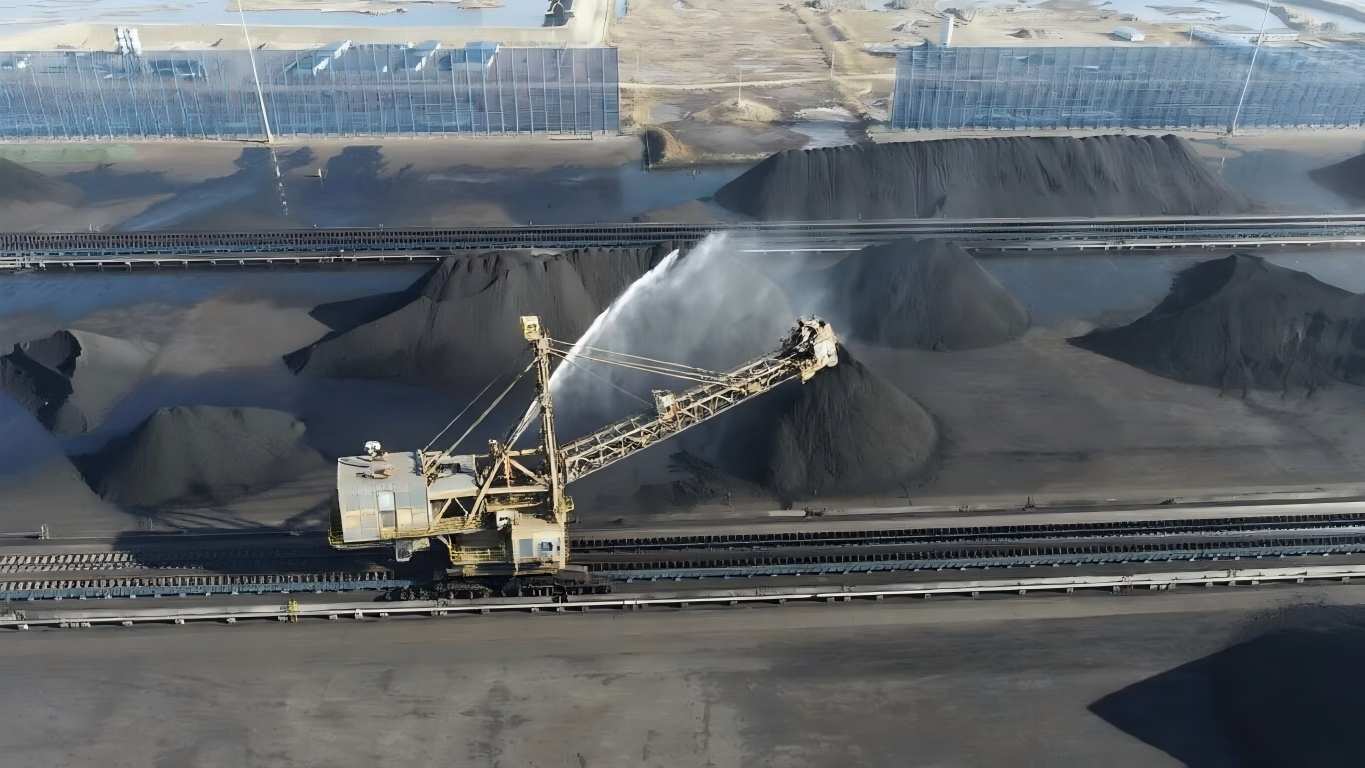
Heap leaching conveyor systems are a long-term investment that directly affects metal recovery economics. The right combination of tracked radial stackers, telescopic stackers, grasshopper conveyors, and corrosion-resistant components enables precise ore placement, extended equipment life, and lower operating costs. For project-specific selection, ZOOMRY can provide heap leaching conveyor solutions engineered for your ore type, leach chemistry, and pad configuration. See our EPC project cases for examples of bulk material handling systems in mining applications worldwide.
Related Products
Low ground pressure — radial stacking on soft leach pads
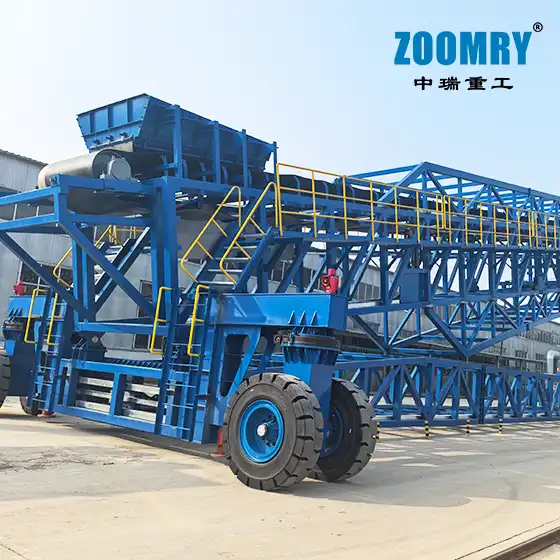
Layer-by-layer ore placement — boom up to 55m
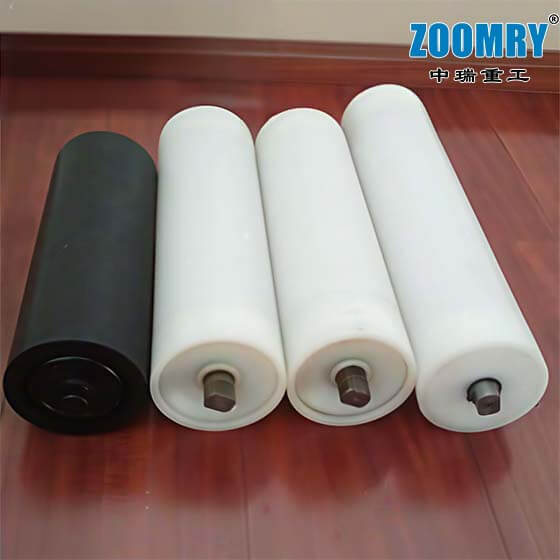
Corrosion-resistant roller option for chemically aggressive conveying environments
Industry Applications
Gold, copper, silver & uranium ore stacking systems
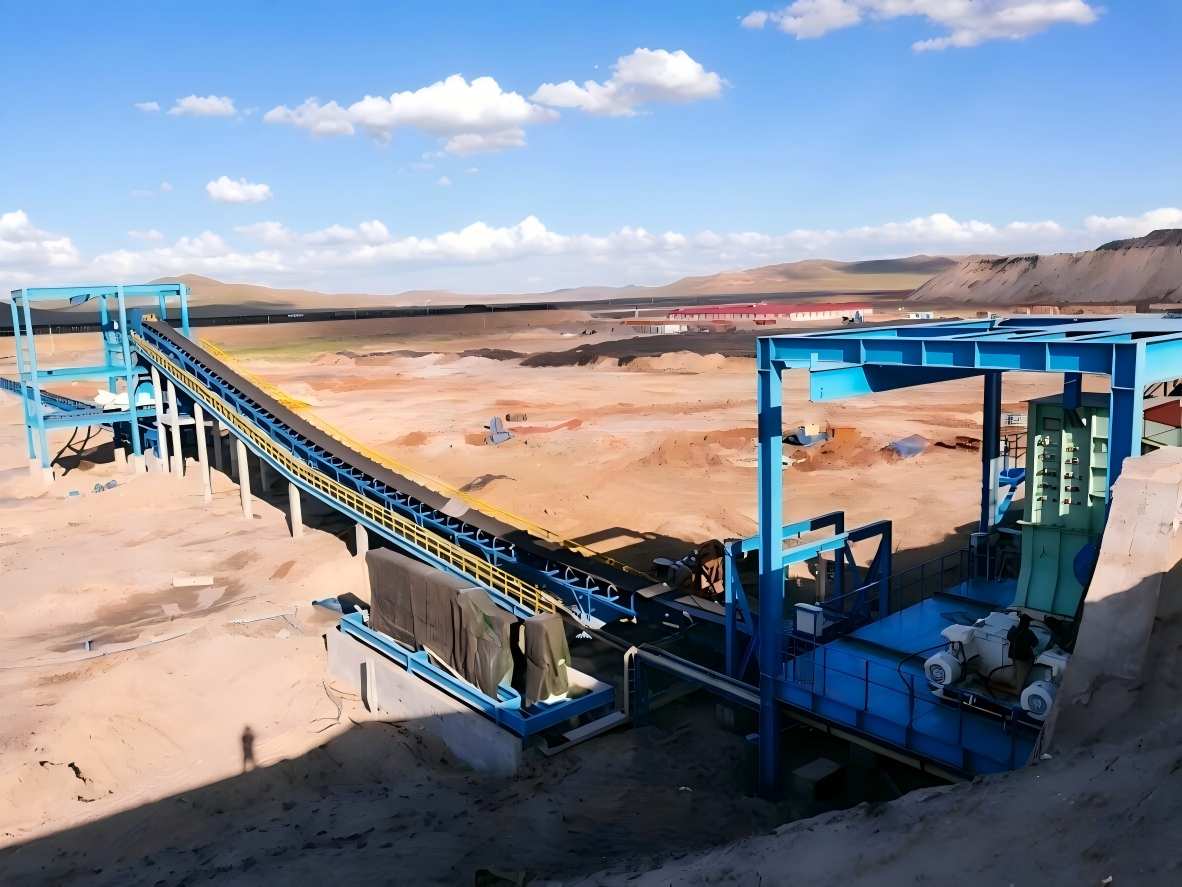
Heavy-duty conveyor systems for surface mining
Need a Heap Leaching Conveyor System for Your Operation?
Contact ZOOMRY for heap leaching conveyor equipment specifications, corrosion protection recommendations, and expert guidance tailored to your ore type and pad configuration.
Contact Us →