 ZOOMRY

Quick answer: A stacker reclaimer both stacks and reclaims material in one machine, while a stacker conveyor only stacks and relies on loaders or separate reclaim equipment to move material out. For high-throughput stockyards with continuous reclaim requirements, a Bucket Wheel Stacker Reclaimer (500–3,000 m³/h) is the right choice. For flexible, multi-product stockpiles where reclaim is handled by loaders, a radial or tracked stacker conveyor is more cost-effective.
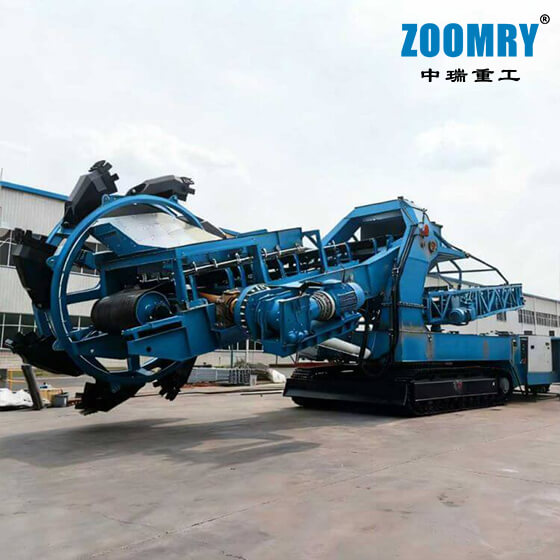
What Is a Stacker Reclaimer?
A stacker reclaimer is a combined machine that builds a stockpile with a boom conveyor and reclaims material with a bucket wheel or scraper chain. It is the standard equipment for large coal yards, iron ore stockyards, and port terminals where material must move in and out continuously.
- Function: stacking + reclaiming in one unit.
- Capacity: 500–3,000 m³/h.
- Reclaiming method: bucket wheel (continuous), typically with 8–12 buckets.
- Mobility: rail-mounted (standard) or tracked.
- Best for: high-volume, continuous operations where blending and precise reclaiming are required.
For model-level specifications, see the Bucket Wheel Stacker Reclaimer page.
What Is a Stacker Conveyor?
A stacker conveyor builds a stockpile but does not reclaim. It receives material from a belt conveyor or truck and stacks it into a conical, kidney-shaped, or radial pile. Reclaim is handled separately by a wheel loader, excavator, or a dedicated reclaimer.
- Function: stacking only.
- Capacity: 500–3,500 m³/h (radial telescopic), 100–1,000 t/h (tracked radial).
- Reclaiming method: none — requires loader or separate reclaimer.
- Mobility: wheeled, tracked, or radial.
- Best for: multi-product stockyards, temporary stockpiles, and operations where reclaim is handled by loaders.
For model-level specifications, see the telescopic stacker and tracked radial stacker pages.
Head-to-Head Comparison
| Feature | Stacker Reclaimer | Stacker Conveyor |
|---|---|---|
| Primary function | Stacking + reclaiming | Stacking only |
| Reclaiming method | Bucket wheel (continuous) | Requires wheel loader, excavator, or separate reclaimer |
| Capacity range | 500–3,000 m³/h | 500–3,500 m³/h (radial telescopic); 100–1,000 t/h (tracked radial) |
| Mobility | Rail-mounted or tracked | Wheeled, tracked, or radial |
| CAPEX | High | Low to moderate |
| Operating cost | Lower per tonne at high throughput (no loader re-handling) | Higher per tonne where loader re-handling is required |
| Best for | Large, fixed stockyards with continuous reclaim | Multi-product, flexible, or temporary stockpiles |
When to Choose a Stacker Reclaimer
- High continuous throughput: you need to move 500–3,000 m³/h consistently, in and out.
- Blending requirements: you need precise layered reclaiming to blend different grades of ore or coal.
- Fixed terminal: the stockyard is permanent and you want to minimise loader labour and re-handling costs.
- Single-machine footprint: rail-mounted or tracked stacker reclaimers occupy one travel line and serve the whole stockyard.
If the stockyard is permanent and reclaim is continuous, the stacker reclaimer replaces both a stacker and a separate reclaim machine. See the bucket wheel stacker reclaimer range for rail-mounted and tracked configurations.
When to Choose a Stacker Conveyor
- Multi-product flexibility: you handle different materials (aggregates, grain, coal) and need to move between piles.
- Lower initial budget: you want to avoid the CAPEX of a reclaiming machine and the rail or foundation works it requires.
- Loader-based reclaim: your site already uses wheel loaders or excavators for reclaim, and you want to eliminate double-handling at the stacking stage.
- Temporary or shifting stockpiles: the stockyard layout changes, or the operation is temporary.
If reclaim is already handled by loaders, a stacker conveyor removes the stacking bottleneck without adding a second machine. See the telescopic stacker and tracked radial stacker ranges.
The Cost Question: CAPEX vs Cost per Tonne
The comparison is often framed as CAPEX versus operating cost. A stacker reclaimer has a higher purchase price, but it removes the loader fleet and the re-handling labour that a stacker conveyor depends on. A stacker conveyor has a lower purchase price, but the loader that reclaims material carries fuel, labour, and maintenance costs for the life of the stockyard.
The deciding variable is annual throughput. At low throughput with infrequent reclaim, the loader cost is small and the stacker conveyor wins on total cost. At high continuous throughput, the loader fleet becomes the dominant operating cost, and the stacker reclaimer wins. The crossover point depends on material, loader cost, and operating hours, and should be calculated per project rather than assumed.
| Cost Factor | Stacker Reclaimer | Stacker Conveyor + Loader |
|---|---|---|
| Purchase price | Higher | Lower |
| Civil works | Rail or foundation required | Minimal |
| Reclaim labour | None (machine reclaims) | Loader operator + fuel + maintenance |
| Re-handling | None | Material handled twice (stack, then reclaim) |
| Best at | High continuous throughput | Low or intermittent throughput |
Frequently Asked Questions
Can a stacker conveyor reclaim material?
No. A stacker conveyor is a stacking-only machine. Reclaim requires a wheel loader, an excavator, or a dedicated reclaimer such as a Bucket Wheel Reclaimer.
What is the capacity of a ZOOMRY stacker reclaimer?
ZOOMRY bucket wheel stacker reclaimers cover 500–3,000 m³/h, with 8–12 buckets and single bucket volumes of 0.25–0.71 m³.
Can a stacker reclaimer operate on unpaved ground?
Yes. The tracked configuration is designed for soft ground, unpaved yards, and temporary mining sites, with ground pressure of ≤193 kPa.
What is the reclaiming deviation of a ZOOMRY Bucket Wheel Reclaimer?
ZOOMRY bucket wheel reclaimers achieve a reclaiming deviation of ≤2% with load-adaptive torque control, supporting precise layered blending.
Which is better for a multi-product stockyard?
For multi-product stockyards where the material mix changes and reclaim is intermittent, a stacker conveyor with loader reclaim is usually more flexible and lower in CAPEX. For a single-product, high-throughput stockyard, a stacker reclaimer removes the loader fleet and lowers cost per tonne.
Related Equipment
500–3,000 m³/h stacking and reclaiming
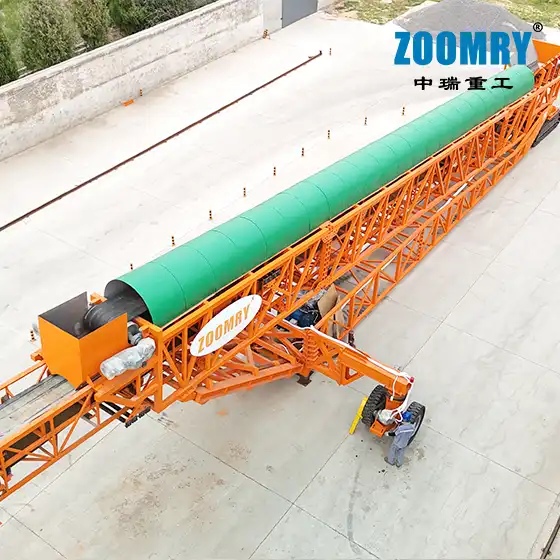
Mobile stockpiling with adjustable discharge height
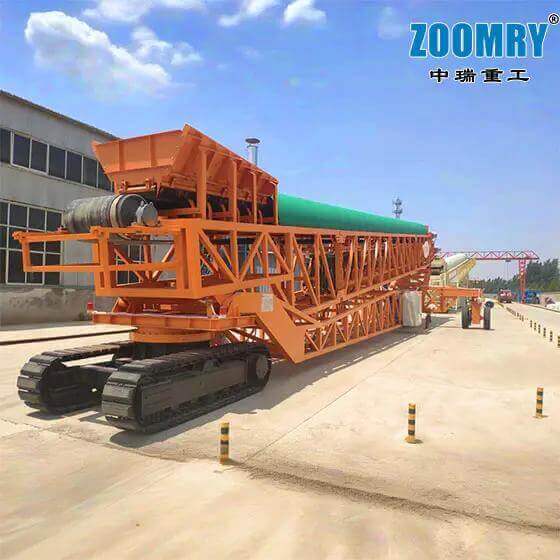
Crawler mobility for soft ground and temporary stockpiles
Related Reading
For a comparison of stacker reclaimer types, read Stacker Reclaimer Selection: Bucket Wheel vs Radial Telescopic. For bucket wheel equipment faults and fixes, see Bucket Wheel Stacker Reclaimer Common Faults and Solutions. For integrated stockyard and port projects, explore the ZOOMRY EPC project case library.
Not Sure Which Stockyard System You Need?
Share your stockyard throughput, material type, reclaim method, and site layout. ZOOMRY engineers will recommend a stacker reclaimer, a stacker conveyor, or a combination of both.
Contact Our Engineers →