 ZOOMRY

What Is a Steel Cord Conveyor Belt?
A steel cord conveyor belt is a high-tensile rubber conveyor belt that uses longitudinally arranged steel cords as its main tension member, instead of the multiple textile plies used in fabric conveyor belts. This construction provides high tensile strength, substantially lower elongation than multi-ply fabric belts, and dependable resistance to demanding bulk-material conveying conditions.
Steel cord belts are commonly selected for long-distance belt conveyors, high-tension overland routes, and heavy-duty applications in mining, cement, and port operations.
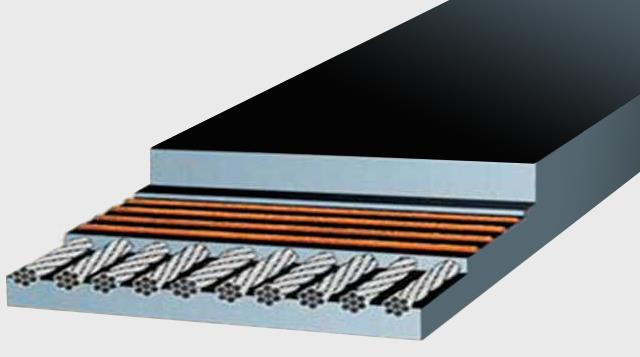
Steel cord conveyor belt — longitudinal steel cords embedded in rubber for high-tension conveying
Need a project-specific steel cord belt specification?
Explore ZOOMRY Steel Cord Conveyor Belt options for project-specific tensile strength, belt width, cover compound, and splicing requirements.
Steel Cord Conveyor Belt Construction
A steel cord conveyor belt is built around a single layer of evenly spaced steel cords running in the longitudinal direction of the belt. The cords are formed from multiple high-strength steel wires and embedded in a rubber compound that bonds the belt structure together.
Typical construction layers include:
- Top cover rubber: Protects the belt from abrasion, impact, cutting, and material temperature.
- Steel cord layer: Provides the primary tensile strength of the belt.
- Core rubber bonding layer: Bonds the covers to the reinforcement layer and protects against moisture.
- Bottom cover rubber: Resists wear from pulleys and conveyor rollers.
Steel Cord Belt Strength Grades: ST630–ST4000
Steel cord belts are designated by the ST prefix followed by their nominal tensile strength in N/mm. For example, an ST1600 belt has a nominal tensile strength of 1,600 N/mm. Higher ST grades are generally used when the conveyor has greater operating tension, longer center distance, or higher lift.
| Grade | Tensile Strength (N/mm) | Typical Application |
|---|---|---|
| ST630 | 630 | Short overland conveyors and selected mobile or plant applications |
| ST1000 | 1,000 | Medium-distance overland and industrial plant conveyors |
| ST1600 | 1,600 | Long overland and higher-lift conveyor systems |
| ST2500 | 2,500 | High-tension overland and high-lift applications |
| ST4000 | 4,000 | Maximum-tension applications requiring project-specific engineering |
For complete specifications including cord diameter, pitch, belt width ranges, and intermediate grades (ST800/ST1250/ST2000/ST3150), see the steel cord conveyor belt specifications table.
Cover Grade Options
The rubber cover compound should be selected according to the conveyed material, temperature, abrasion level, and environmental conditions.
| Cover Type | Best For |
|---|---|
| Standard Rubber | General bulk materials: coal, limestone, aggregates, grain |
| Abrasion-Resistant (DIN Y/Z) | Iron ore, copper ore, quartz, granite, crushed rock |
| Heat-Resistant (T1/T2/T3) | Cement clinker, sinter, coke, hot bulk materials |
| Flame-Retardant (ISO 340) | Coal handling, underground mining, controlled industrial environments |
| Cold / Oil / Chemical-Resistant | Cold-climate mining, fertilizer, salt, chemical handling |
Steel Cord vs Fabric Conveyor Belt
| Feature | Steel Cord Belt | Fabric Belt |
|---|---|---|
| Reinforcement | Longitudinal steel cords | Textile plies (EP/NN) |
| Tensile Strength | Up to 4,000 N/mm | Typically lower |
| Elongation | Low | Higher |
| Pulley Diameter | Larger required | Smaller acceptable |
| Best For | Long-distance, high-tension | Moderate distance, compact layouts |
For a detailed comparison, see Steel Cord vs Fabric Conveyor Belt: Which One Do You Need?
When Should You Choose a Steel Cord Belt?
- Long-distance conveying: Route has long center distance or requires fewer transfer points.
- High calculated belt tension: Fabric belt range is not suitable for required tension.
- Limited take-up travel: Lower elongation reduces take-up travel requirement.
- Heavy-duty conditions: High tonnage, abrasive material, or demanding loading conditions.
Frequently Asked Questions
How are steel cord conveyor belts spliced?
Steel cord belts are usually joined by hot vulcanized splicing. Cord ends are prepared according to the specified splice layout, embedded in fresh rubber compound, and cured under controlled heat and pressure.
Can a steel cord belt be used on a curved conveyor?
Yes. Steel cord belts can be used in selected horizontal and vertical curve applications when belt construction, route geometry, tension distribution, and transition zones are engineered together. See Long Distance Curved Belt Conveyor solutions.
What is the minimum pulley diameter for a steel cord belt?
Minimum pulley diameter increases as steel cord diameter and tensile strength increase. Required diameters must be confirmed using the belt manufacturer's specification and applicable conveyor design standard.
Need a Steel Cord Belt Specification?
Share your conveyor length, lift height, belt width, material data, and capacity. ZOOMRY engineers can recommend the appropriate belt grade and cover compound.
View Steel Cord Belt Products →