 ZOOMRY

A truck unloader is a drive-over receiving hopper system that enables dump trucks to discharge bulk material directly into a conveyor or stacker — reducing the need for wheel loader re-handling. Instead of trucks traveling to a distant stockpile area and waiting for a loader, they reverse onto a ramp, tip their load into the hopper, and depart quickly. This guide covers how truck unloaders work, the different types and configurations available, and how to select the right model for your operation.
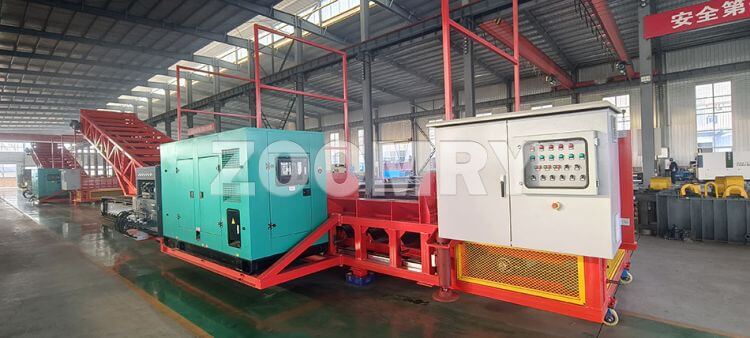
ZOOMRY truck unloader — drive-over hopper system for direct truck-to-conveyor transfer
What is a Truck Unloader and How Does It Work?
In traditional bulk material handling, dump trucks deliver material to a stockpile area where a wheel loader re-handles it — pushing, lifting, and loading it onto a conveyor or stacker. This double handling adds time to each truck cycle, consumes fuel, and degrades material through multiple transfer points.
A truck unloader reduces this step. The process is simple:
- A dump truck reverses onto the drive-over ramp and tips its load directly into the receiving hopper.
- The hopper's reinforced grid filters oversize material while an impact bed absorbs the discharge shock.
- A belt feeder meters material at a controlled rate onto an inclined discharge conveyor.
- The conveyor transfers material to a mobile stacker, belt conveyor, or ship loader — ready for stockpiling or vessel loading.
Types of Truck Unloaders: Complete Comparison
ZOOMRY offers multiple truck unloader configurations, each optimized for specific ground conditions, throughput requirements, and budgets. The table below compares the main models side by side.
| Model | Chassis | Ramps | Capacity | Best Application |
|---|---|---|---|---|
| Wheeled Drive-Over System | Wheeled | 2 / 4 | 200 – 1,800 t/h (standard) | Aggregate quarries, fixed stockyards, concrete plants |
| Two Ramp Drive-Over Hopper | Wheeled / Tracked | 2 | 200 – 1,800 t/h (standard) | Small-medium quarries, tight sites, budget-conscious projects |
| Tracked Truck Unloader | Tracked (Crawler) | 2 / 4 | 200 – 1,800 t/h | Soft ground mining, unpaved yards, temporary sites |
| Crawler Truck Unloader | Crawler (Tracked) | 2 / 4 | 200 – 1,800 t/h (standard) | Port quayside, truck-to-vessel direct loading |
| Barge / Ship Loading | Wheeled / Tracked | 2 / 4 | Up to 2,200 t/h | Inland waterways, river ports, barge loading |
| Truck Unloader for Sale | Wheeled / Tracked | 2 / 4 | 200 – 1,800 t/h (standard) | Budget-conscious buyers, small-medium operations |
How to Choose the Right Truck Unloader: 3 Key Decisions
Decision 1: Wheeled vs Tracked vs Crawler — Which Chassis?
Your ground conditions determine the right chassis type. Wheeled truck unloaders are towable and work best on firm, level ground — quarry floors, concrete pads, and paved stockyards. They cost less to maintain and reposition quickly behind a site tractor. Tracked and crawler truck unloaders are self-propelled and designed for soft, muddy, or uneven terrain where wheels would bog down — common in open-pit mines after rain, unpaved port yards, and temporary construction sites.
| Factor | Wheeled | Tracked / Crawler |
|---|---|---|
| Ground | Firm, level | Soft, muddy, uneven |
| Mobility | Towable — needs tractor | Self-propelled — no towing |
| Repositioning | 10 – 15 minutes | Under 5 minutes |
| Maintenance Cost | Lower | Slightly higher (track wear) |
| Recommended Models | Wheeled Drive-Over / Two Ramp | Tracked / Crawler |
Decision 2: 2-Ramp vs 4-Ramp — How Many Trucks Per Hour?
Ramp count directly impacts throughput. A 2-ramp configuration handles up to 30 trucks per hour — one truck unloads while the next waits. A 4-ramp configuration handles up to 60 trucks per hour — two trucks unload simultaneously on dual approach lanes. The 4-ramp setup requires a wider site footprint but helps reduce truck queuing in high-volume operations.
Rule of thumb: If your site handles fewer than 30 trucks per hour, a 2-ramp truck unloader is the right choice. Beyond 30 trucks per hour, consider a 4-ramp wheeled drive-over system.
Decision 3: Which Application — Quarry, Mining, Port, or Barge?
| Application | Typical Material | Downstream Equipment | Recommended Model |
|---|---|---|---|
| Quarry / Aggregate | Sand, gravel, crushed stone | Stacker, crusher | Wheeled Drive-Over or Two Ramp |
| Mining | Iron ore, copper, coal | Conveyor, crusher | Tracked Truck Unloader |
| Port / Terminal | Coal, grain, fertilizer, ore | Ship loader | Crawler Truck Unloader |
| Inland Waterway / Barge | Coal, grain, aggregates | Barge loader | Barge / Ship Loading |
| Budget-Focused | Any bulk material | Stacker, conveyor | Truck Unloader for Sale |
Frequently Asked Questions
Q: What is the difference between a truck unloader and a hopper feeder?
A truck unloader includes a drive-over ramp that allows dump trucks to tip directly into the hopper — designed specifically for truck receiving. A hopper feeder is a broader category that includes belt and chain plate feeders for various loading methods (wheel loader, excavator, or truck). Truck unloaders are a sub-type of hopper feeder, optimized for the truck-to-conveyor workflow.
Q: What factors affect truck unloader pricing?
Pricing depends on chassis type (wheeled is more economical than tracked), ramp configuration (2-ramp is lower cost than 4-ramp), belt width, and optional features such as radio control, dust suppression, and diesel generator sets. For budget-conscious operations, our truck unloader for sale offers competitive pricing with shorter lead times. Contact ZOOMRY with your site specifications for a project-specific quotation.
Q: What materials can a truck unloader handle?
Truck unloaders handle a wide range of bulk materials: aggregates (sand, gravel, crushed stone), ores (iron, copper, bauxite), coal, grain, fertilizer, woodchips, and demolition debris. The EP Conveyor Belt and hopper grid are specified to match your material's abrasiveness and particle size. For corrosive materials like salt or fertilizer, stainless steel hopper liners and HDPE rollers are available.
Q: Can I use a truck unloader for ship loading?
Yes. Our crawler truck unloader is designed for quayside truck-to-vessel operations — feeding directly into mobile ship loaders. For inland waterways and barge loading, the truck unloader for barge/ship loading offers a 5.8 m discharge height suited to barge freeboard.
Related Equipment
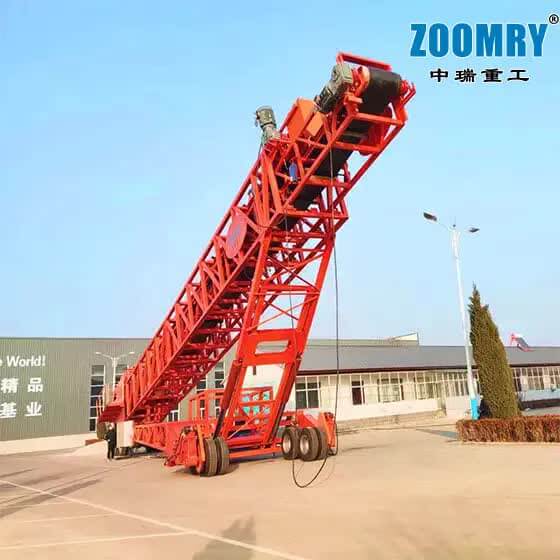
Telescopic stacker that receives material from truck unloader discharge.
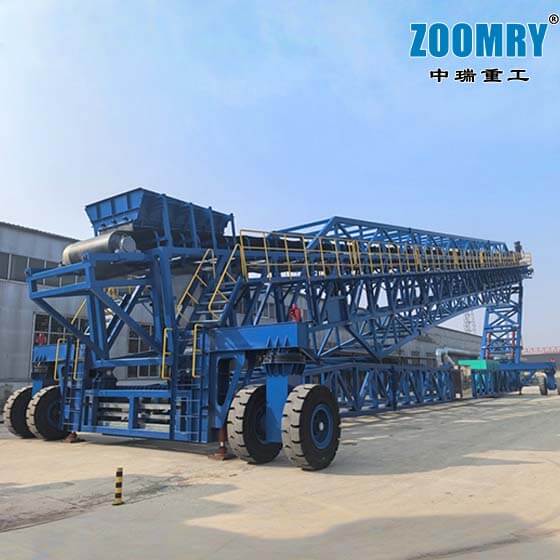
Receives material from crawler truck unloaders for vessel loading.
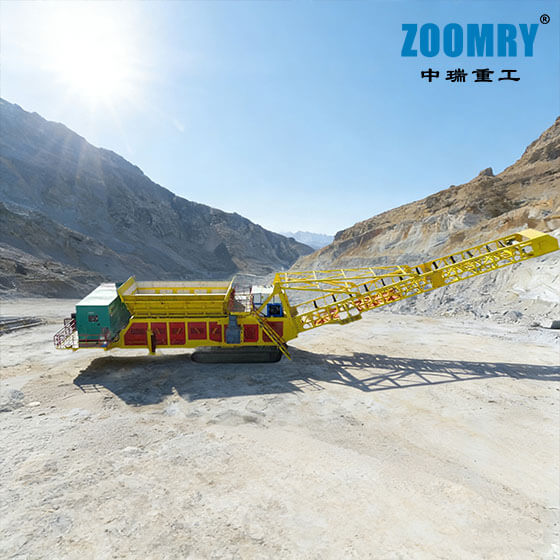
Regulates feed rate to downstream conveyor or crusher systems.
Industry Solutions
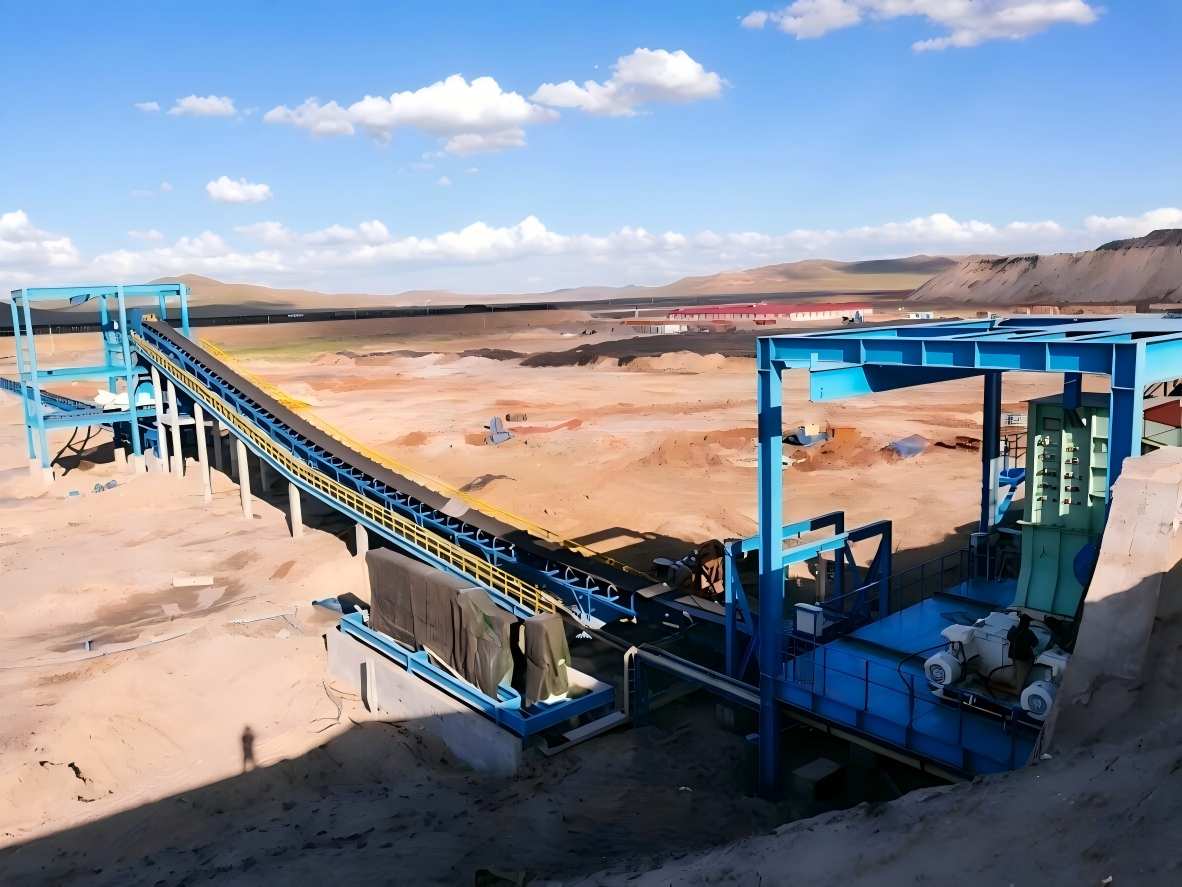
Tracked truck unloaders for soft ground mine receiving and crusher feeding.

Truck receiving systems for quayside and terminal operations.
Need Help Selecting the Right Truck Unloader?
Tell us your ground conditions, truck fleet size, and material type. Our engineers will recommend the optimal truck unloader configuration — wheeled, tracked, crawler, or barge loading — for your operation.
Get a Quote →