 ZOOMRY

Quick answer: A truck unloader and hopper feeder work as a pair: the unloader receives material from the truck, and the hopper feeder meters it onto the downstream conveyor at a controlled rate. Matching the two is what determines whether a receiving station runs continuously or stalls. The unloader sets the peak receiving rate; the hopper feeder sets the steady feed rate to the conveyor. Get the ratio wrong, and either the truck queues or the downstream conveyor starves.
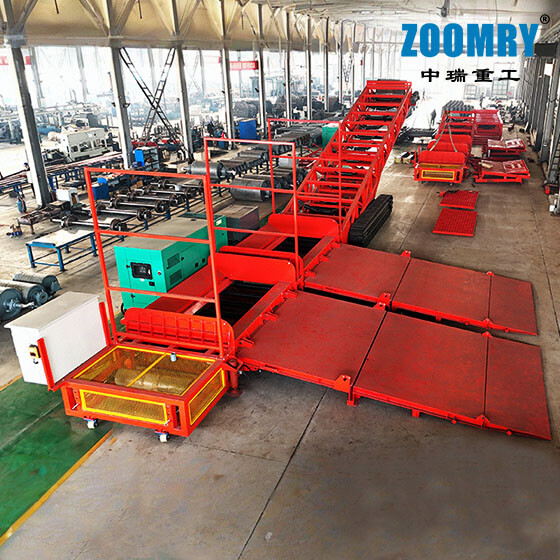
Why the Two Machines Are Designed Together, Not Separately
A truck unloader on its own is a receiving hopper. A hopper feeder on its own is a metering device. In a receiving station, they are two stages of one process:
- Stage 1 — Receive: the truck reverses onto the unloader ramp, tips into the hopper, and leaves. This stage is bursty: material arrives in truckloads, not at a steady rate.
- Stage 2 — Meter: the hopper feeder draws from the receiving hopper and feeds the downstream conveyor at a steady rate, regardless of whether a truck is currently tipping.
The unloader determines how fast trucks can be emptied. The hopper feeder determines how fast the downstream conveyor is fed. If the feeder is undersized, the receiving hopper overflows and trucks queue. If the unloader is undersized, the feeder runs empty and the downstream conveyor starves. The two must be sized against the same target throughput.
Capacity Matching: Unloader vs Hopper Feeder
ZOOMRY truck unloaders and hopper feeders overlap in capacity range, but they are rated on different bases and should not be matched by headline number alone.
| Equipment | Model range | Capacity | Rated on |
|---|---|---|---|
| Truck unloader | ZRLS-TU1400 / TU1800, ZRLD-TU1400 / TU1800 | 200–1,800 t/h standard; up to 3,000 t/h custom | Peak receiving rate while a truck is tipping |
| Hopper feeder | HF-ST, HF-LF, HF-TR, HF-HD, ZRHF-C3500 | 800–3,000 TPH standard; 3,500 TPH flagship | Steady feed rate to the downstream conveyor |
The unloader's rated capacity is the rate at which it can empty a truck, which is higher than the average rate the station actually needs. The hopper feeder's rated capacity is the steady rate it delivers to the conveyor. The feeder should be sized to the station's target average throughput, not to the unloader's peak. Sizing the feeder to the unloader peak over-specifies the conveyor and wastes capital; sizing it below the target average starves the conveyor between trucks.
For hopper feeder model detail, see the hopper feeder range. For unloader model detail, see the truck unloader range.
The Truck Turnaround Calculation
The reason to pair the two machines is truck turnaround. A receiving station that makes trucks wait is a station that limits the whole haul cycle.
A truck unloader removes the wheel loader from the receiving process: the truck tips directly into the hopper and leaves. Per-truck cycle time drops from roughly 8–10 minutes with loader re-handling to under 3 minutes with a drive-over unloader. But that gain only holds if the receiving hopper has enough buffer to absorb the tipping burst while the feeder keeps the conveyor running.
The buffer is the receiving hopper volume. A larger hopper absorbs more trucks in a burst; a smaller hopper forces tighter spacing between trucks. The hopper feeder then draws from that buffer at a steady rate. If the hopper is too small for the truck arrival rate, trucks queue even though the unloader itself is fast enough.
Matching the Configuration to the Site
Both machines come in mobile configurations, and the pairing should follow the site rather than the catalogue.
| Site condition | Truck unloader | Hopper feeder |
|---|---|---|
| Paved yard, fixed stockyard | Wheeled (ZRLS-TU1400 / TU1800) | Static (HF-ST) or Low Feed (HF-LF) |
| Soft ground, unpaved port yard | Tracked (ZRLD-TU1400 / TU1800) | Tracked (HF-TR) |
| High-volume, continuous operation | Wheeled or tracked TU1800 | Heavy Duty (HF-HD) or ZRHF-C3500 |
| Frequent relocation | Tracked | Tracked |
For the tracked configurations, see the tracked truck unloader and tracked hopper feeder pages. For high-volume receiving, see the heavy duty hopper feeder.
Common Sizing Mistakes in Receiving Stations
- Matching the feeder to the unloader peak. The unloader's rated capacity is a peak tipping rate, not the station's average throughput. Sizing the feeder to that peak over-specifies the downstream conveyor.
- Undersizing the receiving hopper. A fast unloader with a small hopper still queues trucks, because the buffer cannot absorb the tipping burst.
- Ignoring material bulk density. Sand, grain, and ore have different bulk densities, so a station sized in t/h for one material is not automatically valid for another. Confirm capacity against the actual material.
- Treating the two machines as separate purchases. The unloader and feeder are one process. Buying them independently, from different suppliers, without a shared capacity target, is the most common cause of a station that runs below its design rate.
When a Single Machine Is Enough
Not every site needs both machines. If the downstream conveyor can absorb the truck tipping rate directly, a truck unloader alone is sufficient. If the site receives material from a loader rather than trucks, a hopper feeder alone is sufficient. The pair is justified when truck arrival is bursty and the downstream conveyor needs a steady feed — which is the case at most ports, mines, and high-volume quarries.
For the functional differences between the two machines, read Truck Unloader vs Hopper Feeder. For hopper feeder selection criteria, see How to Choose the Right Hopper Feeder.
Frequently Asked Questions
Do I need both a truck unloader and a hopper feeder?
Only if truck arrival is bursty and the downstream conveyor needs a steady feed. If the conveyor can absorb the tipping rate directly, a truck unloader alone is enough. If material arrives by loader rather than truck, a hopper feeder alone is enough.
How do I match the hopper feeder capacity to the truck unloader?
Size the feeder to the station's target average throughput, not to the unloader's peak tipping rate. The unloader's rated capacity is a peak; the feeder's rated capacity is the steady rate delivered to the conveyor.
How large should the receiving hopper be?
The hopper must be large enough to absorb the tipping burst from arriving trucks while the feeder keeps the conveyor running. Hopper volume depends on truck size, arrival rate, and the feeder's steady rate. It is sized per project, not from a catalogue figure.
Can the two machines be supplied as one system?
Yes. ZOOMRY supplies the truck unloader and hopper feeder as an integrated receiving station, with both machines sized against the same target throughput and configured for the same site conditions.
What materials can the combined station handle?
Coal, ore, aggregates, grain, fertilizer, and other bulk materials. Belt type, hopper liner, and feeder design are selected according to material abrasiveness, moisture, and particle size.
Related Equipment
Wheeled, tracked, and crawler drive-over receiving hoppers
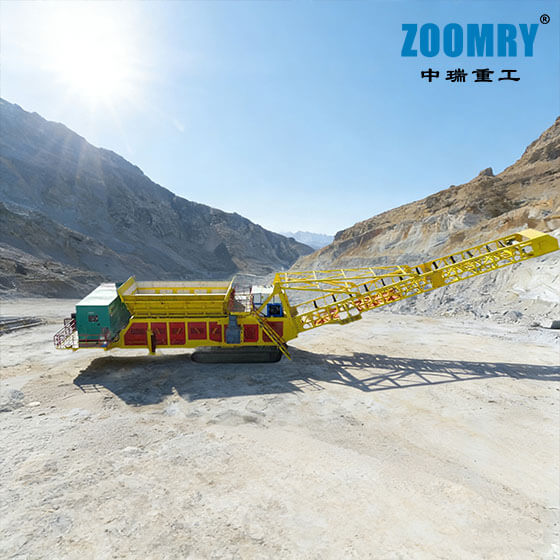
Static, low feed, tracked, and heavy duty configurations
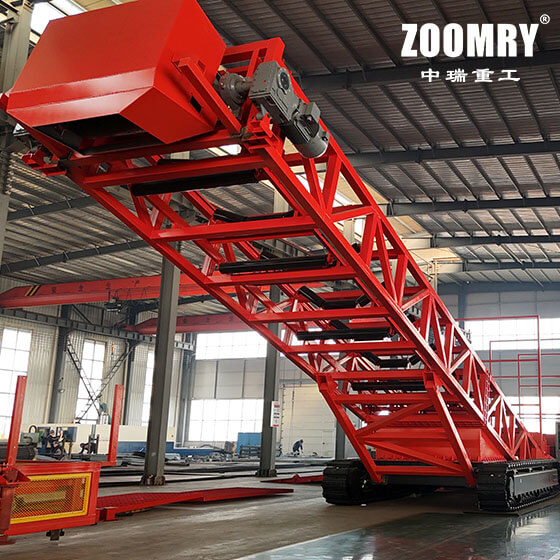
Crawler mobility for soft ground and quayside receiving
Related Reading
For how a drive-over hopper works, read What Is a Truck Unloader? Working Principle, Types & Applications. For drive-over, wheeled, tracked, and custom flip-type configurations, see Truck Unloader Types, Configurations & How They Work. For a port system combining truck unloading with ship loading, see the truck unloader + mobile ship loader solution. For receiving stations in port and mine projects, explore the ZOOMRY EPC project case library.
Designing a Receiving Station?
Share your truck fleet size, material type, target throughput, and site ground conditions. ZOOMRY engineers will size the truck unloader and hopper feeder against the same target and recommend the configuration for your site.
Contact Our Engineers →