 ZOOMRY

The difference between a Conveyor Pulley and a conveyor roller lies in their function within the belt conveyor system. A pulley is a large-diameter cylinder that drives or redirects the belt — it transmits power from the motor to the belt at the head end, or changes the belt's direction at the tail, bend, or take-up positions. A roller (also called an idler) is a smaller-diameter cylinder mounted in a frame that supports the belt and the material on it, allowing the belt to move with minimal friction. Pulleys power and guide the belt; rollers support it along its length.
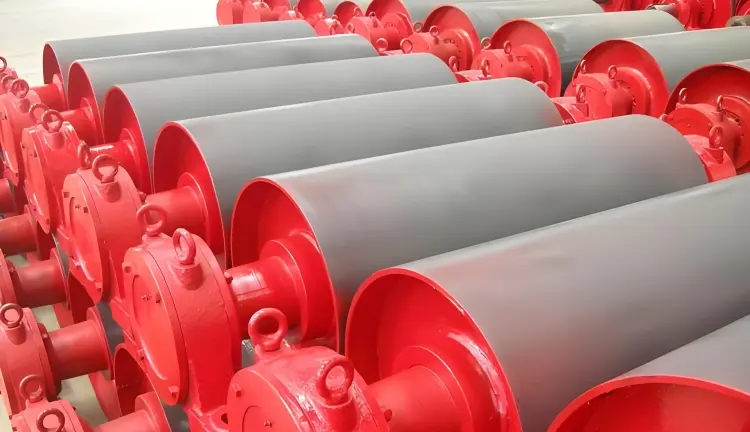
Core Functional Difference
A conveyor pulley is the powered component of the conveyor system. It is connected to the drive motor through a gear reducer or coupling and rotates to move the belt. Pulleys are also used at non-driven positions — tail pulleys redirect the belt at the return end, bend pulleys change the belt direction, snub pulleys increase the wrap angle around the drive pulley, and take-up pulleys maintain belt tension.
A conveyor roller, also called an idler, is a passive component. It does not drive the belt — it rotates freely as the belt moves over it. Rollers are mounted in frames at regular intervals along the conveyor. Carrying rollers support the loaded side of the belt in a trough shape, return rollers support the empty side of the belt on its way back, and impact rollers absorb the force of material falling onto the belt at loading points.
Key Differences at a Glance
| Comparison Factor | Conveyor Pulley | Conveyor Roller |
|---|---|---|
| Function | Drives or redirects the belt | Supports the belt and material |
| Power source | Connected to the drive motor | Passive — rotates with the belt |
| Quantity per conveyor | Typically 2–6 pulleys per conveyor | Hundreds to thousands, spaced along the belt |
| Diameter | Large — typically 200–1,800 mm | Small — typically 63.5–219 mm |
| Mounting | Fixed to the conveyor frame at head, tail, bend, and take-up positions | Mounted in idler frames at regular intervals |
| Service life | 50,000+ hours with proper maintenance | 40,000–50,000+ hours depending on type and environment |
| Cost | Higher per unit — larger, heavier, more complex | Lower per unit — but many more units |
Conveyor Pulley Types
Pulleys are classified by their position and function within the conveyor system.
Drive Pulley (Head Pulley)
The drive pulley is the powered pulley at the discharge end of the conveyor. It transmits torque from the motor to the belt, driving the entire belt loop. Drive pulleys are fitted with lagging — rubber, ceramic, or diamond-grooved rubber — to increase friction between the pulley and the belt and prevent slippage. The drive pulley / head pulley is the most heavily loaded pulley in the system.
Tail Pulley
The tail pulley is located at the return end of the conveyor. It redirects the belt from the return side back to the carrying side. A tail pulley / bend pulley may be smooth or lagged, depending on the application and belt tension.
Snub Pulley
A snub pulley increases the wrap angle of the belt around the drive pulley, improving traction and reducing the required belt tension. It is typically positioned near the drive pulley.
Take-Up Pulley
A take-up pulley maintains proper belt tension as the belt stretches or contracts under load and temperature change. It may be gravity-operated or mechanically tensioned.
Conveyor Roller Types
Rollers are classified by their position and function along the conveyor.
Carrying Rollers (Troughing Idlers)
Carrying rollers support the loaded side of the belt and form it into a trough shape that contains the material. A troughing carrying idler is typically configured as a three-roller set at 20°, 35°, or 45° trough angles.
Return Rollers
Return rollers support the empty side of the belt on its return path to the tail pulley. They may be flat, V-return, spiral, or rubber-disc types, depending on material characteristics and carryback.
Impact Rollers
Impact rollers are installed at loading points where material falls onto the belt. Rubber cushion rings absorb the impact energy and protect the belt from damage.
Self-Aligning Rollers
Self-aligning rollers automatically correct belt misalignment by pivoting in response to belt drift. They are used on both the carrying and return sides in long conveyors where belt tracking is critical.
Why the Distinction Matters
For maintenance and procurement teams, the difference between pulleys and rollers affects several practical decisions:
- Spare parts inventory: Pulleys are ordered individually and are specific to each conveyor position. Rollers are ordered in large quantities and are often interchangeable between positions.
- Inspection frequency: Pulleys are inspected for lagging wear, shaft condition, and bearing temperature. Rollers are inspected for rotation resistance, seal condition, and shell wear.
- Failure impact: A pulley failure stops the entire conveyor. A single roller failure causes localized problems but may not stop production immediately.
- Cost structure: Pulleys are higher-cost items purchased infrequently. Rollers are lower-cost items purchased in volume and replaced more often.
Selection Factors
- Belt tension: Determines pulley diameter and lagging type, and roller load rating.
- Belt width: Determines pulley face width and roller length.
- Material characteristics: Abrasive or sticky materials affect roller seal selection and lagging choice.
- Operating environment: Corrosive, dusty, or high-temperature environments affect material selection for both pulleys and rollers.
- Service life targets: Both pulleys and rollers are specified for extended service life under proper operating conditions, with maintenance intervals set accordingly.
Frequently Asked Questions
Is a pulley the same as a roller?
No. A pulley drives or redirects the belt and is connected to the drive system. A roller supports the belt along its length and rotates freely. The two components have different functions, sizes, and mounting arrangements.
How many pulleys does a conveyor have?
A typical conveyor has 2 to 6 pulleys: a drive pulley, a tail pulley, and optionally bend pulleys, a snub pulley, and a take-up pulley. Long or complex conveyors may have additional pulleys for specific functions.
How many rollers does a conveyor have?
The number of rollers depends on conveyor length, belt width, and roller spacing. A long overland conveyor may have thousands of rollers. Roller spacing is determined by belt load, belt sag limits, and material characteristics.
Can a roller be used as a pulley?
No. Rollers are not designed to transmit drive torque or handle the belt tension present at pulley positions. Using a roller in place of a pulley would result in rapid failure. Pulleys and rollers are engineered for different load conditions and must be selected accordingly.
Related Products
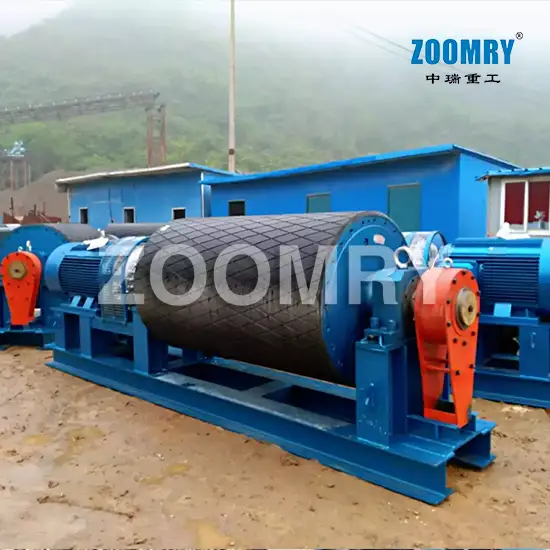
Drive, tail, bend, snub, and take-up pulleys
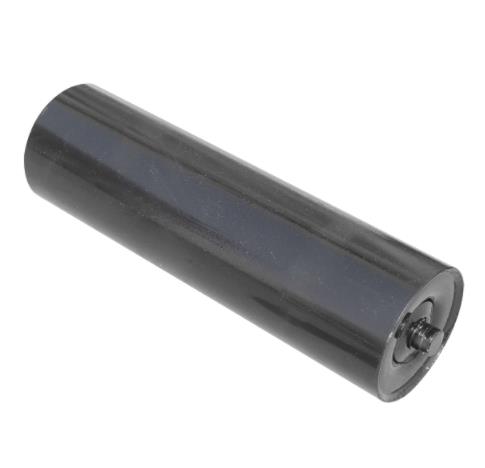
Carrying, return, impact, and self-aligning rollers
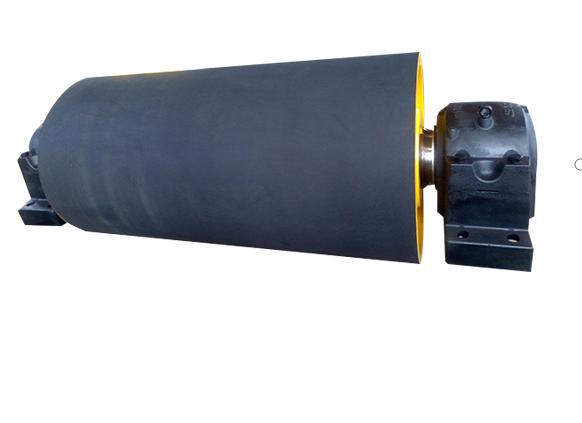
Increases drive pulley wrap angle and belt traction
Industry Applications
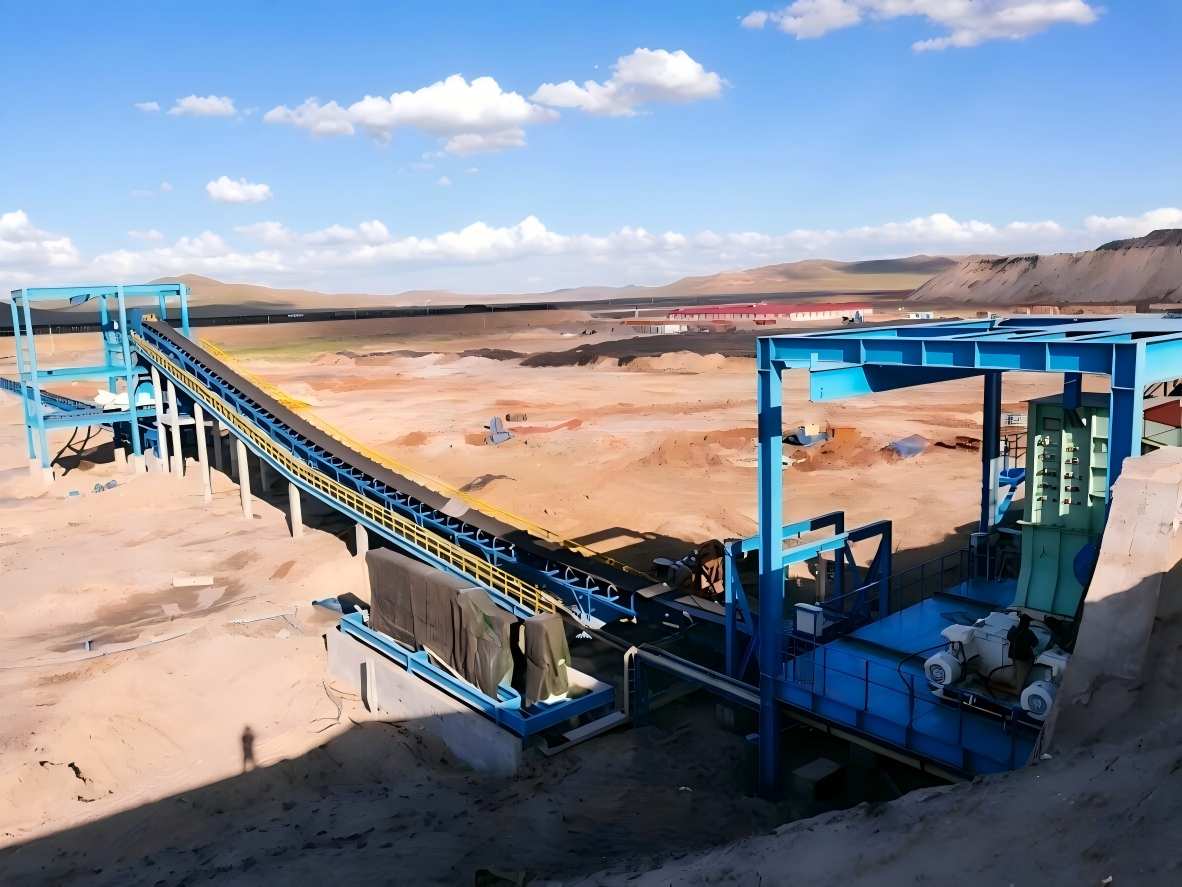
Pulleys and rollers for high-capacity mine conveyors

Conveyor components for quarry and aggregate operations
Selecting Conveyor Pulleys and Rollers for Your System?
Share your belt width, tension, material characteristics, and operating environment. ZOOMRY can help match pulleys and rollers to your conveyor requirements.
Contact Us →