 ZOOMRY

When planning a new bulk handling route, one of the first major decisions is whether to use a traditional open belt conveyor or a Pipe conveyor. Both have proven track records, but they serve different types of projects — and choosing the wrong one can cost you in maintenance, environmental compliance, and operational efficiency.
ZOOMRY is an engineering-driven EPC provider specializing in mobile bulk handling equipment and complex-terrain environmentally friendly conveying systems — serving ports, mines, and industrial plants since 2002. This article draws on that experience to compare the two systems across four key dimensions: dust control, terrain adaptability, investment, and maintenance. By the end, you will have a clear framework to decide which system fits your specific site conditions and project goals.
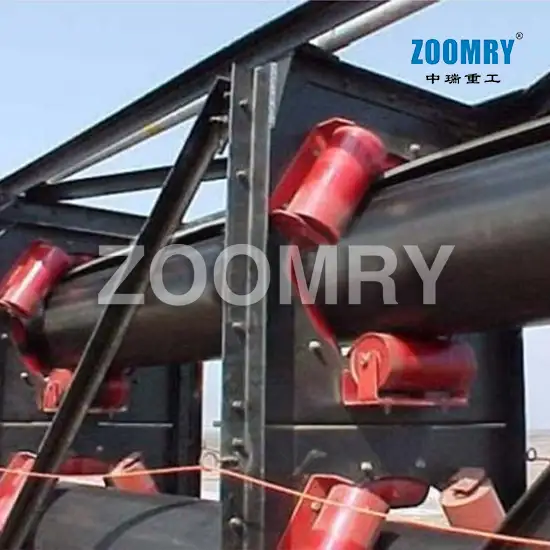
A pipe conveyor system encloses material in a sealed tubular belt — reducing dust emissions and enabling tighter curves compared to open belt designs.
What is the difference between a pipe conveyor and an open belt conveyor?
The fundamental difference is in how the belt is supported and shaped during operation.
An open belt conveyor uses troughing idlers to create a U-shaped carrying surface. The material sits exposed on top of the belt, making it easy to load and unload at transfer points.
A pipe conveyor (tubular conveyor) uses six idler rollers arranged in a hexagon to form the belt into a sealed tubular shape. The material is fully enclosed from the loading point to the discharge point.
From mobile shiploaders that load vessels from barges to Capesize, to pipe conveyors that navigate mountains with minimal environmental impact — ZOOMRY delivers complete system solutions that reduce dust emissions, minimize land use, and lower total operating costs. This structural difference drives every other performance gap between the two systems — from dust containment to route flexibility to maintenance frequency.
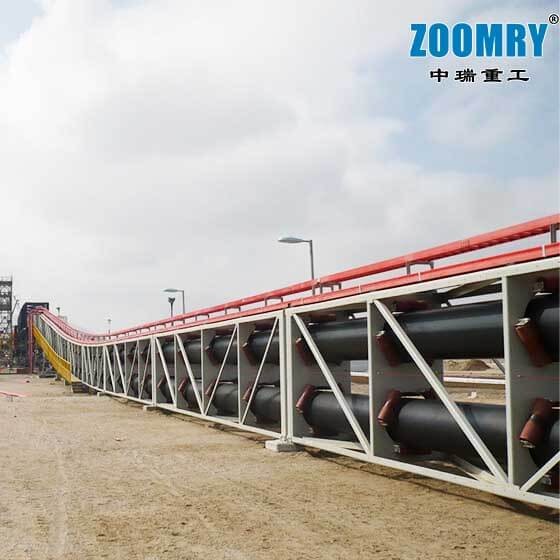
The sealed tubular structure of a pipe Conveyor Belt eliminates dust escape and enables single-flight transport over long distances.
Four key comparisons
1. Dust control and environmental compliance
Open belt conveyor: Dust emission typically ranges from 20 to 30 mg/m³ at transfer points and along exposed sections. Covers or enclosures can be added, but they increase cost and do not eliminate leakage entirely.
Pipe conveyor: The fully enclosed design contains dust at the source. Typical emission levels are ≤5 mg/m³ — well below most regulatory limits for sensitive areas.
Decision factor: If your site is near residential areas, water bodies, or in a region with tightening particulate regulations, the pipe conveyor offers a clear advantage without requiring additional dust suppression infrastructure.
2. Terrain adaptability and route flexibility
Open belt conveyor: Handles straight routes or gentle horizontal curves. Sharp turns require multiple transfer stations, each adding cost, maintenance points, and dust emission sources.
Pipe conveyor: Capable of navigating tighter curves (minimum radius around 50m) and steeper inclines (up to 30°) in a single flight. This flexibility allows the system to follow natural terrain, avoid obstacles, and reduce the number of transfer points.
Decision factor: For projects crossing hills, waterways, or built-up areas, the pipe conveyor system can eliminate transfer stations and simplify the overall system layout.
3. Initial investment and operating cost
Open belt conveyor: Lower upfront cost. Standardized components are widely available, and installation is straightforward. However, ongoing costs — spillage cleanup, dust suppression, belt tracking adjustments, and potential environmental penalties — accumulate over time.
Pipe conveyor: Higher initial investment due to the more complex idler arrangement and sealed structure. But operators typically report 20-35% lower total operating cost over a 10-year horizon, primarily from reduced spillage, lower power consumption, and fewer maintenance interventions on long-distance routes.
Decision factor: If capital is constrained and the route is straight and flat, the belt conveyor system may be the practical choice. If the project has a longer time horizon and complex routing, the pipe conveyor's lower operating cost often offsets the higher upfront expense.
4. Maintenance requirements
Open belt conveyor: Easier access to components. Belt tracking and idler alignment can be adjusted quickly. But spillage requires regular cleanup, and exposed components are subject to wear from material and weather.
Pipe conveyor: The enclosed design protects components from material contamination, reducing wear on idlers and bearings. However, accessing the belt for inspection or replacement requires more specialized procedures.
Decision factor: For operations with limited maintenance staff, the pipe conveyor's longer component life can reduce overall workload, provided the team is trained on proper inspection procedures.
Comparison summary
| Dimension | Pipe Conveyor | Open Belt Conveyor |
|---|---|---|
| Dust emission | ≤5 mg/m³ | 20–30 mg/m³ |
| Terrain adaptability | Tight curves (50m radius), inclines up to 30° | Straight or gentle curves |
| Initial investment | Higher | Lower |
| 10-year operating cost | 20-35% lower | Higher (spillage cleanup + dust control) |
| Best-fit scenarios | Complex terrain, strict emission zones, long single flights | Flat routes, moderate regulations, capital-constrained projects |
Values shown are typical industry reference ranges. Actual performance depends on specific design parameters, material characteristics, and site conditions. Design basis: ISO 5048 and CEMA 6th Edition.
When to choose each system
Choose an open belt conveyor when:
- The route is straight or has only gentle horizontal curves
- Land is available for multiple transfer stations if needed
- Local dust regulations are moderate and can be managed with standard covers or water sprays
- The material is free-flowing and does not generate excessive dust
- Capital expenditure is the primary constraint
Choose a pipe conveyor when:
- The route includes tight horizontal or vertical curves (navigating around buildings, waterways, or existing infrastructure)
- The material is dusty, fine, or prone to segregation
- The site requires a single-flight conveyor over 5km or more
- Environmental permits require near-zero dust emissions
- The project has a long time horizon where operating cost savings outweigh initial capital differences
Frequently Asked Questions
Can a pipe conveyor handle high-temperature materials?
Yes. Pipe conveyor belts are available with heat-resistant cover grades (HR, SHR, UHR) capable of handling continuous temperatures up to 200°C — suitable for cement clinker, sinter, and other hot bulk materials.
How long can a pipe conveyor run in a single flight?
ZOOMRY pipe conveyor systems are engineered for single flights up to 15km. Multi-flight overland networks can extend to 70km in total distance.
Does a pipe conveyor require more maintenance than an open belt system?
Not necessarily. While pipe conveyors have more idlers, the sealed design protects bearings from contamination — often resulting in longer component life and lower maintenance frequency compared to open belt systems handling dusty materials.
Is a pipe conveyor more expensive to install?
The initial capital cost is typically higher due to the more complex idler arrangement and structural requirements. However, the elimination of transfer stations, reduced land use, and lower long-term operating costs often make it the more economical choice for projects with complex routing or strict environmental requirements.
Related Conveyor Products
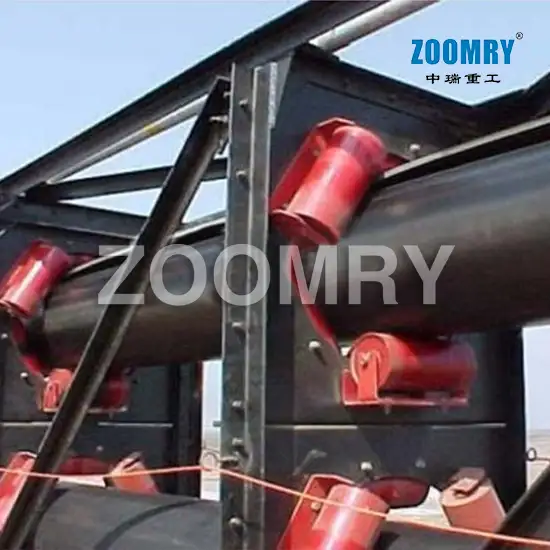
Fully enclosed bulk material transport with ≤5mg/m³ dust emission; handles tight curves and steep inclines in a single flight.
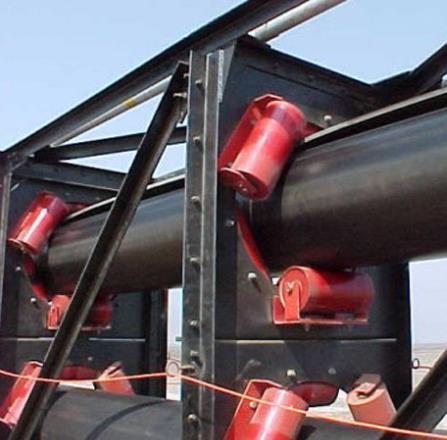
Steel cord and fabric carcass options; forms a sealed tube through hexagonal idler groups; inclines up to 30°.
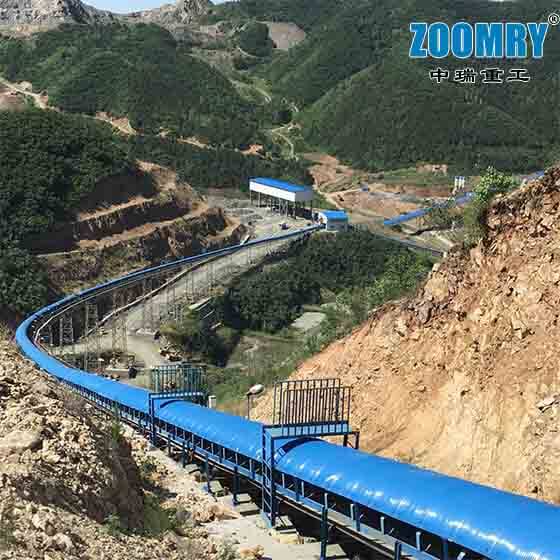
Changes direction up to 180° without transfer points; eliminates dust generation at intermediate transfer stations.
Related Industry Solutions

Woodchips and sawdust require enclosed conveying to prevent combustible dust release. Pipe conveyors fully seal the material path, meeting ATEX and NFPA safety standards for biomass handling.
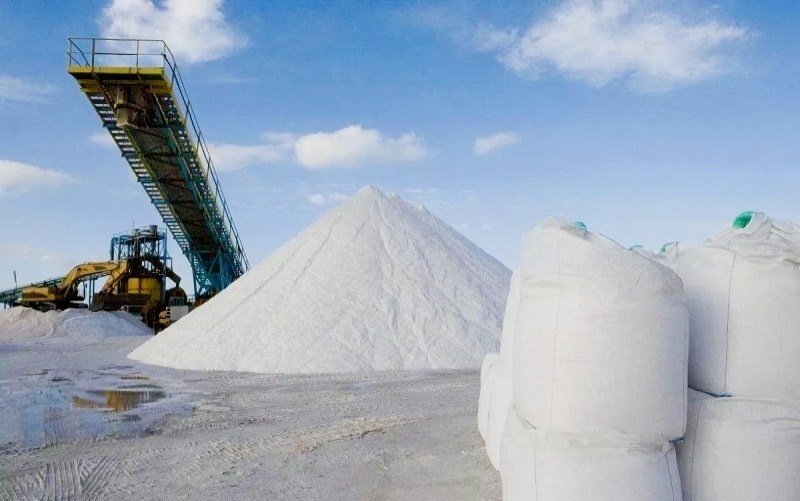
Trona ore and soda ash are hygroscopic and corrosive. Pipe conveyors protect against moisture absorption and chemical corrosion, while eliminating dust emissions in alkaline processing plants.
Still unsure which system fits your project?
With ISO, CE, and EAC certifications and 20+ years of engineering experience, ZOOMRY delivers tailored bulk handling solutions. Tell us your project requirements — our team will respond within 24 hours.
Contact ZOOMRY Engineering Team →