 ZOOMRY

In bulk material handling, the choice between a Pipe conveyor and an open trough conveyor is not simply about cost — it's about matching the conveying system to the material, the environment, and the long-term operational demands of the site. While trough conveyors dominate in high-capacity, straight-line applications, pipe conveyors solve problems that open systems fundamentally cannot: containing dust, navigating tight curves, and protecting sensitive materials from the environment. As a manufacturer with a 40,000m² production facility and 300+ equipment sets, ZOOMRY designs and manufactures both systems in-house, giving us a direct perspective on where each technology performs best.
This guide walks through the five key decision factors — material characteristics, terrain, environmental regulations, space constraints, and total cost of ownership — to help you determine when a pipe conveyor system is the right choice over a conventional open belt conveyor.
Decision Factor 1: Material Containment and Dust Control
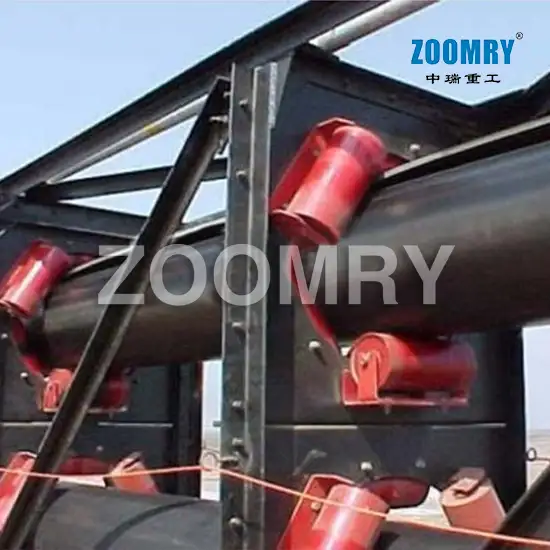
The most immediate difference between the two systems is how they handle the material during transport. An open trough conveyor carries material on a flat or troughed Conveyor Belt, exposed to wind, rain, and surrounding activity. A pipe conveyor forms the same belt into a sealed tubular shape — typically 100mm to 850mm in diameter — completely enclosing the material from the loading point to the discharge.
This fundamental difference determines when each system is appropriate:
- Choose an open trough conveyor when handling non-hazardous, non-dusty materials in outdoor environments where some material loss from wind or spillage is acceptable. Coal stockyards, aggregate quarries, and iron ore transfer — where throughput and cost per ton are the priorities — are classic trough conveyor applications.
- Choose a pipe conveyor when the material is dusty, hazardous, or valuable. Cement, fly ash, chemical powders, and grain are materials where even 1% material loss represents either an environmental violation or a significant financial cost. ZOOMRY's patented fully enclosed conveyor with layered dust extraction achieves emission levels of ≤5mg/m³ — meeting the most stringent EU environmental standards without secondary dust collection systems.
A cement plant in Vietnam replaced its open conveyor with a ZOOMRY pipe belt conveyor and eliminated a $120,000 annual dust suppression water treatment cost — while recovering approximately 800 tons of cement dust per year that had previously been lost as airborne particulate.
Decision Factor 2: Terrain Navigation and Curve Capability
Open trough conveyors are fundamentally straight-line machines. Adding a horizontal curve requires a transfer tower — an expensive structure with its own dust generation point, maintenance requirements, and potential bottleneck. Each transfer tower adds $200,000–$500,000 to project cost and creates a permanent maintenance access requirement.
Pipe conveyors navigate horizontal and vertical curves without transfer points. The enclosed belt passes through hexagonal idler panels that maintain the tubular shape while guiding the belt through turns as tight as 45° with a radius of curvature down to 150 meters. This single capability eliminates transfer towers entirely — along with their associated dust, noise, maintenance, and capital costs.
- Choose an open trough conveyor when the conveying route is relatively straight with minimal elevation changes. If one or two transfer towers can handle the routing requirements, the lower belt cost of an open system may justify the tower investment.
- Choose a pipe conveyor when the terrain demands multiple curves, the route passes through environmentally sensitive areas where transfer towers would be difficult to permit, or the conveying distance exceeds 3km with complex topography. ZOOMRY's tubular conveyor systems handle inclines up to 30° — significantly steeper than the 18° limit of open trough conveyors — making them the only viable option for quarry-to-plant routes with steep elevation changes.
Decision Factor 3: Material Protection from the Environment
In open systems, material is directly exposed to rain, snow, wind, and sunlight throughout the conveying route. For most ores and aggregates, this exposure is acceptable. For certain materials, it is not.
- Hygroscopic materials — fertilizers, salt, potash, sugar — absorb moisture from rain and humidity. Wet fertilizer cakes on the belt, corrodes conveyor rollers, and requires manual cleaning that stops production. ZOOMRY's pipe conveyors protect these materials from the moment they enter the tube to the moment they discharge.
- Food-grade materials — grain, soybeans, rice — require protection not just from moisture but from bird droppings, insects, and airborne contaminants. A pipe conveyor provides this protection without the cost of building a covered conveyor gallery, which typically adds 40–60% to the structural cost of an open system.
- Materials that contaminate the environment — chemical powders, hazardous waste, heavy metal concentrates — are the strongest case for pipe conveyors. In many jurisdictions, open conveying of these materials is simply not permitted. The pipe conveyor's sealed envelope is often the only approved solution short of fully enclosed pneumatic systems, which have 3–5× higher energy costs.
Decision Factor 4: Space Constraints and Right-of-Way
A pipe conveyor's cross-section is significantly smaller than an equivalent-capacity open trough conveyor. A 600mm diameter pipe conveyor can carry the same volume as a 1,200mm wide trough belt — in roughly half the width. In congested plants, urban environments, or routes that must share a corridor with roads, pipelines, or power lines, this compact footprint is a decisive advantage.
Beyond width, the pipe conveyor's ability to climb steeper angles (30° vs 18°) shortens the overall conveyor length. For a quarry application with a 100-meter vertical rise, a pipe conveyor might require 200 meters of belt length where a trough conveyor needs 330 meters — a 40% reduction in structural steel, civil works, and land acquisition.
Decision Factor 5: Total Cost of Ownership
Comparing initial capital costs is misleading. Pipe conveyors have higher belt costs — the specialized belting with reinforced edges and the hexagonal idler panels add approximately 20–35% to the equipment cost per meter compared to an equivalent trough conveyor. But this comparison ignores the costs that pipe conveyors eliminate:
- No transfer towers to build, power, or maintain
- No dust suppression systems, water treatment, or EPA compliance costs
- No covered gallery structures for material protection
- No spillage cleanup labor or equipment
- Minimal land acquisition due to narrower right-of-way and shorter route length
When these eliminated costs are accounted for, projects with two or more curves, environmentally sensitive materials, or steep terrain often show a 15–25% lower total installed cost for pipe conveyors — and a 30–50% lower 10-year operating cost due to the elimination of transfer point maintenance, spillage cleanup, and regulatory compliance expenses.
Quick Decision Reference
| If Your Project Requires... | Recommended System |
|---|---|
| Straight route, non-dusty material, low cost per ton priority | Open Trough Conveyor |
| Dusty, hazardous, or valuable material requiring full containment | Pipe Conveyor |
| Multiple horizontal curves or tight terrain with elevation changes | Pipe Conveyor |
| Materials sensitive to rain, moisture, or contamination | Pipe Conveyor |
| Narrow right-of-way or congested plant layout | Pipe Conveyor |
| Steep incline beyond 18° | Pipe Conveyor |
| High-capacity, long-distance, straight overland route | Open Trough Conveyor |
The decision between pipe and trough conveyors ultimately comes down to one question: does your material, route, or regulatory environment demand containment? If yes, the pipe conveyor is not an expensive alternative — it is the economical solution, because it eliminates the costs that an open system would generate in spillage, dust control, transfer towers, and regulatory compliance. Unlike resellers who source equipment from third parties, ZOOMRY manufactures all core conveyor components — from idlers and pulleys to complete pipe conveyor systems — in our 40,000m² production facility with full-process quality testing. View ZOOMRY's pipe conveyor EPC project cases to see proven results from cement, mining, and chemical applications worldwide.
Related Products
Enclosed dust-free conveying — 100mm to 850mm diameter
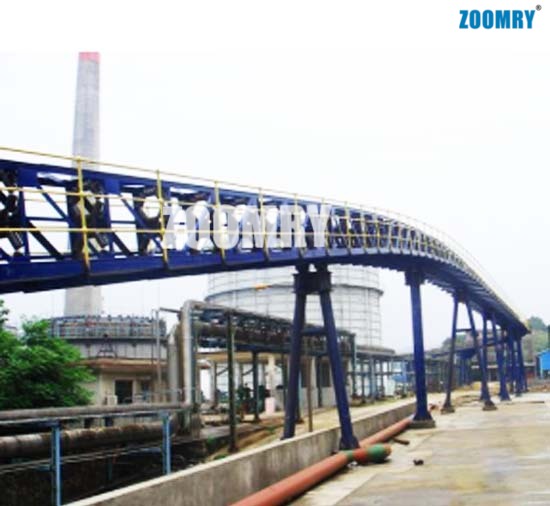
Tight curves and steep inclines — up to 30° incline
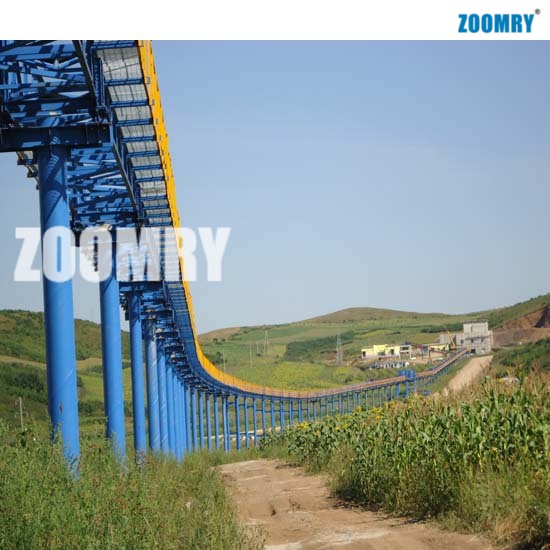
Overland curved conveying — single flight up to 15 km
Industry Applications
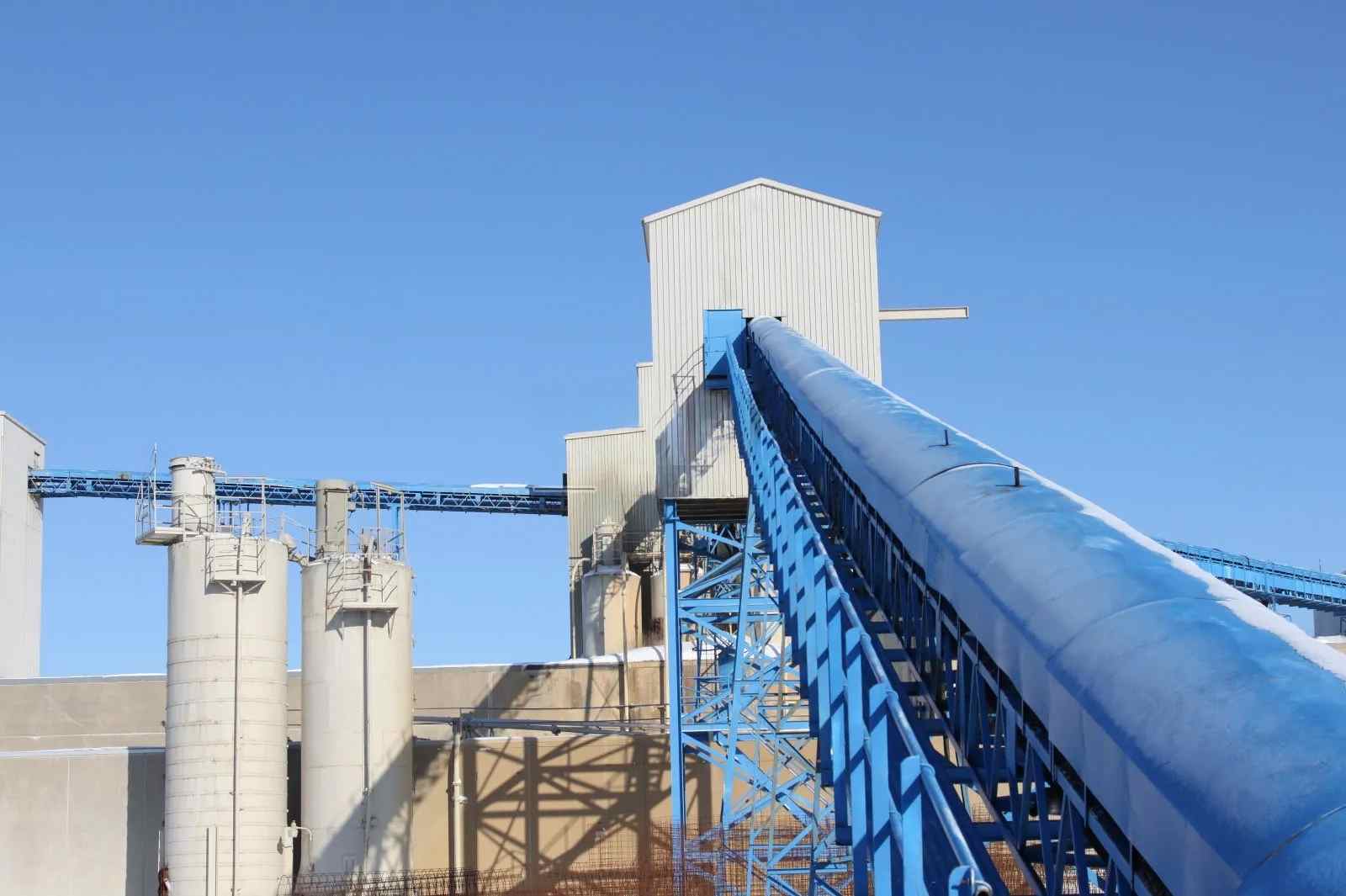
Enclosed pipe conveyors for dust-free cement handling
Corrosion-resistant pipe conveyors for fertilizer plants
Need Help Deciding Between Pipe and Trough Conveyor?
Contact ZOOMRY's engineering team for a technical comparison based on your material type, route topography, and environmental requirements.
Contact Us →