 ZOOMRY

A Pipe conveyor is a modern type of enclosed belt conveying equipment — also known as a tubular belt conveyor. It transports bulk materials by curling the Conveyor Belt into a tubular shape, combining the benefits of both pipeline transport and traditional belt conveyor systems. This innovative design enables large conveying angles (up to 30°), tight horizontal and vertical curves, and a compact body capable of 3D bending — making it the ideal solution for complex terrain, environmentally sensitive areas, and applications where dust and spillage control are paramount.
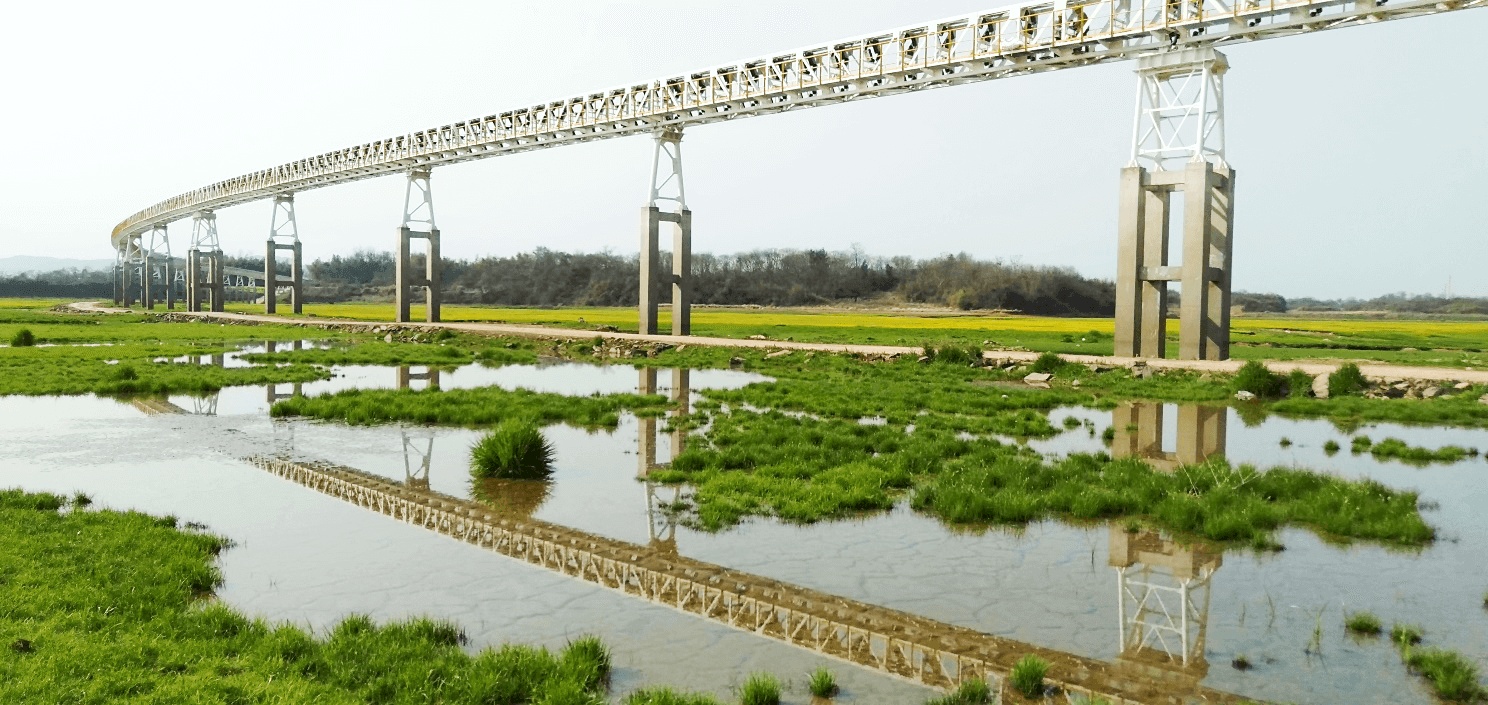
ZOOMRY Pipe Conveyor System — Enclosed Tubular Design for Dust-Free, Spillage-Free Bulk Material Conveying
How Does a Pipe Conveyor Work?
The working principle of a pipe conveyor centers on transforming a flat conveyor belt into a sealed tubular shape during transport. Here's how the process works step by step:
The conveyor belt serves as both the material carrier and the force transmission medium. At the loading point, material is fed onto the belt in its flat, open state — just like a conventional conveyor. As the belt moves forward, it passes through a series of hexagonal idler roller groups that progressively fold the belt edges upward and inward, forming a sealed circular tube around the material. Six idler rolls arranged in a hexagon apply uniform pressure, creating an overlap zone that locks the belt closed.
The driving device — typically consisting of an electric motor, gear reducer, and drive pulley — rotates the pulley, and friction between the pulley surface and the belt drives the entire system forward. Unlike ordinary belt conveyors that leave material exposed, the pipe conveyor maintains its sealed tubular cross-section throughout the entire conveying route. At the discharge point, the hexagonal idler groups gradually release the belt back to its flat shape, allowing material to discharge cleanly.
This sealed conveying method means the material is completely enclosed from loading to discharge — protected from wind, rain, and contamination, while preventing dust, spillage, and environmental pollution along the entire route. Single-flight distances can reach up to 15 kilometers, with multi-flight systems extending even further.
Where Are Pipe Conveyors Used?
The pipe conveyor's enclosed design, flexible layout, and stable conveying performance make it suitable for efficient, long-distance material transport under complex terrain. It is widely deployed across multiple industries:
- Mining & Quarrying: Transporting iron ore, copper ore, gold ore, bauxite, and overburden across long distances with zero dust emissions and minimal environmental impact.
- Cement & Building Materials: Conveying limestone, clinker, raw meal, fly ash, and gypsum from quarry to plant and between process stages — protecting hygroscopic materials from rain and humidity.
- Coal & Power Generation: Enclosed coal transport from mine to power plant, eliminating combustible dust emissions and protecting the material from moisture.
- Chemical & Fertilizer: Dust-free handling of corrosive materials such as fertilizers, soda ash, and chemical powders where environmental containment is mandatory.
- Ports & Terminals: Dust-free ship loading and unloading operations for coal, grain, ores, and mineral concentrates in environmentally regulated port areas.
- Grain, Paper & Food Processing: Hygienic, sealed transport protecting sensitive materials from contamination and moisture.
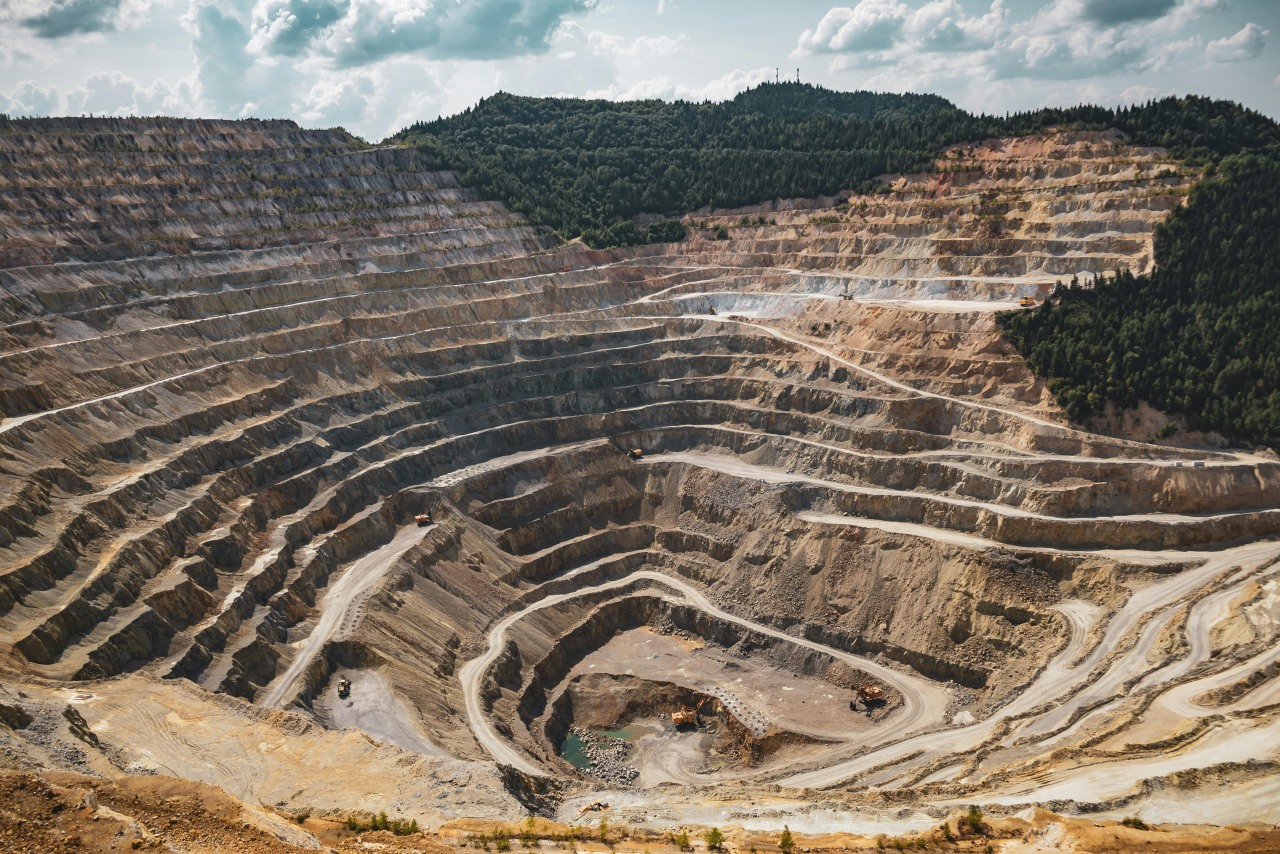
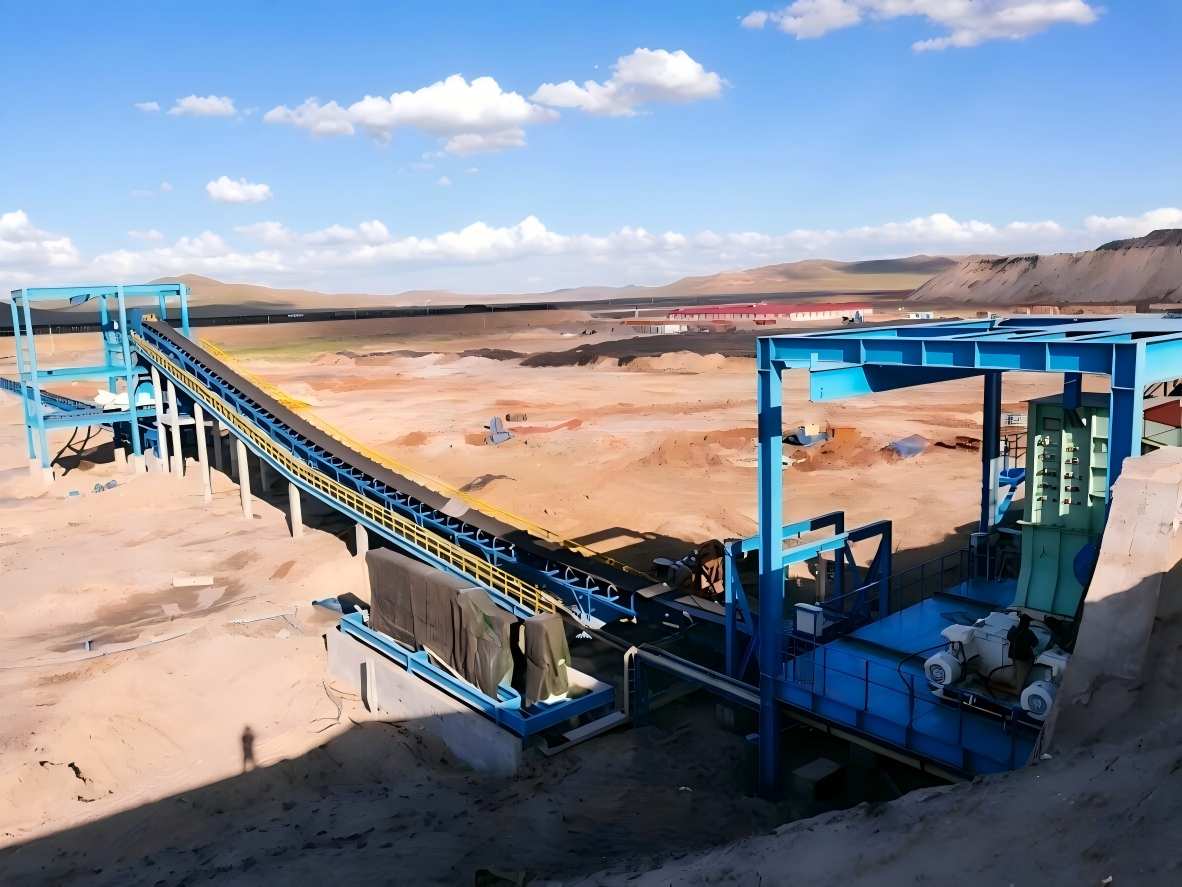
ZOOMRY Pipe Conveyor in Mining Application — Enclosed Long-Distance Transport Across Complex Terrain
What Are the Main Components of a Pipe Conveyor?
Tubular Conveyor Belt: The most critical component of the pipe conveyor. Manufactured from strong, wear-resistant rubber with embedded steel wire ropes or fabric layers for tensile strength and flexibility, the belt is designed to repeatedly form into a tube and return to flat shape. The overlap section effectively seals material inside, preventing leakage and environmental pollution. ZOOMRY offers both steel cord and fabric carcass pipe belts depending on tension requirements.
Driving Device: Consists of an electric motor, gear reducer, and drive pulley. Motor power is selected based on conveying distance, material weight, and lift height to ensure stable, efficient belt movement. Variable frequency drives enable soft starting and speed adjustment for varying throughput requirements.
Idler Roller System: The hexagonal idler arrangement is the defining feature of pipe conveyor technology. Six Conveyor idlers form a circle around the belt, guiding it into a tube shape. Load-bearing idlers support the filled belt, while return idlers support the empty belt on its return path. ZOOMRY idlers feature precision bearings, low rotation resistance (≤2N), and multi-stage labyrinth seals for 50,000+ hour service life.
Tensioning Device: Maintains proper belt tension to prevent slippage on the drive pulley and compensate for belt elongation over time. Gravity take-up systems automatically adjust tension as conditions change, while hydraulic tensioners provide precise control for long-distance installations.
Enclosed System: The belt's tubular shape itself provides the primary enclosure, but additional cover plates, side sealing plates, and Rain Covers at the loading and discharge points ensure complete environmental protection. This multi-layer sealing approach prevents dust leaks and environmental pollution throughout the entire conveying route.
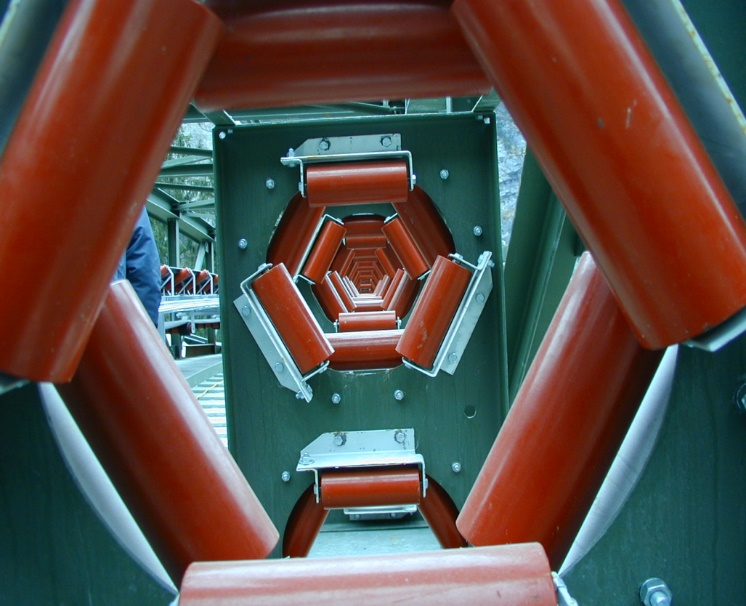
ZOOMRY Pipe Conveyor Hexagonal Idler Roller System — Six-Roll Configuration for Stable Tubular Belt Formation
What Are the Key Features of Pipe Conveyors?
Environmental Protection and Energy Saving: The enclosed tubular design completely prevents material spillage and dust emissions — meeting stringent environmental regulations without requiring additional conveyor covers or enclosures. Compared to truck haulage over the same distance, a pipe conveyor reduces carbon emissions and energy consumption per ton-kilometer by over 40%, while eliminating road dust and traffic congestion. The low rolling resistance of ZOOMRY idlers (≤2N) further reduces motor power requirements.
High Efficiency and Stability: Using high-strength tubular conveyor belts and a precision-engineered idler system, pipe conveyors handle large-capacity, long-distance conveying tasks with continuous 24/7 operation. The enclosed belt path protects the material from wind, rain, and contamination throughout transport — maintaining consistent product quality regardless of weather conditions.
Flexible 3D Route Adaptation: One of the pipe conveyor's strongest advantages is its ability to handle tight horizontal and vertical curves — turning radii as small as 30 meters — and inclines up to 30°. This allows the conveyor to follow natural terrain contours, eliminating the need for multiple transfer points, tunnels, bridges, and extensive earthworks. A single pipe conveyor can replace a series of conventional conveyors with transfer towers, simplifying the system and reducing capital cost.
Low Maintenance Cost: The reasonable modular design, durable components (idlers, pulleys, belts), and long maintenance cycles reduce daily maintenance workload and downtime. ZOOMRY's HDPE rollers and sealed-for-life bearings in the idler system minimize routine greasing requirements, while the enclosed belt path protects all components from environmental exposure — extending service life to 50,000+ hours.
What to Consider When Purchasing a Pipe Conveyor?
Installation and Delivery Services: Choose a manufacturer with proven, reliable delivery and installation capabilities. ZOOMRY has over 20 years of experience in bulk material handling and has delivered pipe conveyor systems to projects across 100+ countries — from initial site survey and 3D topographic mapping through to on-site installation, commissioning, and operator training.
Certification and Quality Assurance: The supplier must hold multiple international product certifications that guarantee quality and reliability. ZOOMRY is certified to ISO 9001, ISO 14001, CE, and EAC standards, with each pipe conveyor system undergoing rigorous factory testing including belt formation tests, idler alignment verification, and full-load trial operation before shipment.
Product Selection and Customization: Choose the right pipe diameter, belt width, and drive configuration for your specific material characteristics, throughput requirements, and route conditions. ZOOMRY's engineering team analyzes your material samples and 3D route data to specify the optimal tubular conveyor configuration — including belt specification, idler spacing, drive power, and tensioning strategy.
Intelligent Control and Monitoring: Consider whether smart control and remote monitoring features are needed. ZOOMRY offers PLC automation with HMI touchscreen interfaces, real-time belt tracking and tension monitoring, rip detection systems, and SCADA integration — enabling predictive maintenance and minimizing unplanned downtime across the entire conveying system.
Related Solutions
Need a Custom Pipe Conveyor Solution?
Contact ZOOMRY's engineering team to discuss your pipe conveyor project — backed by 20+ years of bulk material handling expertise and 500+ successful projects worldwide.
Contact Us Today